Updates

  1. Person pages list letters, writing, profiles and links as sortable tables with filters, and show each person's companies as links; Fund letters show each letter's description in its own column.
  2. Experts show a checked job title and a short description of each person; 30 more people have photographs.
  3. Every company, fund, university and publication the experts work for has a page listing the people there.
  4. Fund letters show each letter's thesis and filter by it; 225 person pages list the essays, columns and newsletter issues the person wrote.
  5. Person pages list every essay and newsletter issue a person wrote, and their own books as a table in List view.
  6. Recommends shows the five largest kinds of book and the rest under More; browse pictures load sooner.
  7. Podcasts and talks link the original episode, filter by Audio and video or Press, and list each publisher once.
  8. Pages are wider, Recommends has List and Grid, and a filter clicked again turns off.
  9. Book cards sit in a ruled grid with Open Library and Goodreads links and each book's one-line note.
  10. Funds is now Investors; each investor's styles are buttons that filter the table.
  11. Podcasts and talks on a person's page filter by year and publisher and show as a list or a grid of pictures.
  12. Quotes show only people's own words: 472 summaries written by list sites are gone.
  13. Country pages open from Browse again, and every link on the shelf lands on a page.
  14. Subject and person pages show their sections as tabs, and each book appears once on a person's page.
  15. Book cards show the quote, who said it and the source; grids show five cards to a row.
  16. On a phone, a menu holds the sections, search, Updates, Feedback and dark mode.
  17. Feedback takes a screenshot of the page with no browser prompt, opens a screenshot full size when you click it, and clears itself once sent.
  18. Book cards are centred, search names the topic each book sits in, and any text cut short shows whole on hover.
  19. Search groups its results by kind: people, companies, geographies, subjects, topics, books, funds, fund letters and papers.
  20. The Books table lists who recommended each book by name, and the browser tab names the section you are in.
  21. Feedback can take a screenshot of the page, or one you paste or choose, and opens in the corner beside Updates.
  22. Each rail button reopens its section where you left it, and Browse, Table and People show on every book and subject page.
  23. Filters grey out choices that hold nothing instead of hiding them, and Books › People filters by authors or recommenders.
  24. Feedback takes a subject line and up to three screenshots.
  25. Biographies are grouped by the person they are about: 41 new pages, from Abraham Lincoln to Lee Kuan Yew.
  26. Sport splits into 23 sports, and Religion into one topic per faith.
  27. Book lists show as cards: the cover, one recommendation quote and every recommender by name.
  28. Seventeen subjects that had two or three pages under different names now have one page each.
  29. Every page lists its Experts as authors and recommenders, with a link to them on the Experts tab.
  30. Economics, Financial history, Financial panics and Accounting are subjects of their own, with one page per financial crisis.
  31. Book, person and subject pages open inside the app, so the tabs stay in view.
  32. 996 more book covers, and photographs or logos for 227 more people and companies.
  33. Books › Browse shows every subject as cards, and the rail holds Fund letters, Papers, Experts, Books and Funds.
  34. Every topic over 150 books splits into narrower topics, each with a page of its own.

Send feedback

What is it?
Screenshots, up to 3 (optional)
or paste one with Ctrl+V

We use your email only to reply to you.

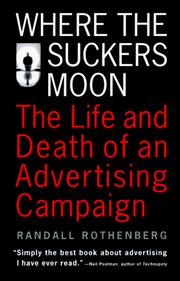
Where the Suckers Moon

Where the Suckers Moon

Randall Rothenberg
1994
T3 487 pages · about 8h 7m to read Open Librarygoodreads

One agency account, followed in forensic detail.

Summary

Rothenberg followed Subaru of America through its 1991 advertising agency review and the campaign that followed, with access to both the client and the agencies. The company had built its American position on inexpensive four-wheel-drive cars sold to a distinct niche, then lost its way as competitors added all-wheel drive and as the yen appreciated.

The book documents the agency review in detail, including the pitch process, the relationships and the politics, and the selection of Wieden and Kennedy, then known almost entirely for Nike. The resulting campaign attacked the conventions of car advertising directly, refusing to show cars being driven on mountain roads and instead running commercials in which a copywriter talked about how car advertising lies. It failed commercially. Sales continued to fall, the relationship broke down, and Subaru moved on.

Rothenberg uses the case to make an argument about the advertising business. He shows that agencies sell a product whose effect cannot be measured with confidence, that client organisations therefore buy on relationships and internal politics, and that creative reputation is a currency that circulates within the industry rather than a proxy for commercial results. He also documents the structural economics: the commission system, the consolidation of agencies into holding companies, and the resulting misalignment between what agencies were paid for and what clients needed.

The book is long and closely reported, which is its strength and its difficulty. It is a case study of a single failed campaign, and the generalisations rest on that case plus Rothenberg's reporting on the industry. It predates digital advertising entirely, so the measurement problem it describes has changed shape substantially, though the underlying question of what advertising does has not been settled.

Key takeaways 7

  1. Advertising effectiveness cannot be measured with confidence, so agencies are selected on relationships and reputation instead.
  2. Creative reputation circulates as currency inside the advertising industry and correlates weakly with client sales.
  3. Subaru's position depended on a niche that disappeared once mainstream manufacturers added all-wheel drive.
  4. A campaign that attacks the conventions of its category wins industry admiration without necessarily moving product.
  5. The agency review process forces incumbents to compete on presentation rather than on accumulated knowledge of the client.
  6. Commission-based agency compensation rewarded media spending rather than results, which shaped what agencies recommended.
  7. Client-side marketing decisions are driven by internal political needs at least as much as by analysis of the market.

Who should read it

Marketers and founders buying agency services who want a detailed account of how the selection process and the incentives actually work.

Who recommended it 1

Jason Friedreported

Similar books 6

Chosen by shared topics, the entries that hold them, and the people who recommended both.

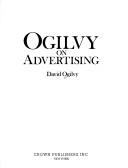
David Ogilvy · 1963

How to win and keep agency clients and write advertising that sells.

David Ogilvy · 1983

Rules for advertising that sells, drawn from direct-response testing.

“Ogilvy is a brilliant guy and a terrific writer. Really enjoyed this book and learned a lot.” — Mohnish Pabrai

Source: Mohnish's Bookshelf — Books on Sales & Marketing, entry 40

Recommended by: Mohnish Pabrai, David Cancel, Ev Williams and 1 other

Tim Hwang · 2020

The case that programmatic advertising is a mispriced market.

Tim Wu · 2016

How media from the penny press to social media capture attention and resell it.

Claude C. Hopkins · 1923

Advertising as a measurable discipline: test every element against response.

Recommended by: Patrick O'Shaughnessy

Vance Packard · 1957

How 1950s advertisers used psychological research to sway buyers.

Where it sits in the reference 2

Business models
Industries

Topics

Sales and MarketingCompany HistoriesAdvertising, copywriting and persuasion