Updates

  1. Person pages list letters, writing, profiles and links as sortable tables with filters, and show each person's companies as links; Fund letters show each letter's description in its own column.
  2. Experts show a checked job title and a short description of each person; 30 more people have photographs.
  3. Every company, fund, university and publication the experts work for has a page listing the people there.
  4. Fund letters show each letter's thesis and filter by it; 225 person pages list the essays, columns and newsletter issues the person wrote.
  5. Person pages list every essay and newsletter issue a person wrote, and their own books as a table in List view.
  6. Recommends shows the five largest kinds of book and the rest under More; browse pictures load sooner.
  7. Podcasts and talks link the original episode, filter by Audio and video or Press, and list each publisher once.
  8. Pages are wider, Recommends has List and Grid, and a filter clicked again turns off.
  9. Book cards sit in a ruled grid with Open Library and Goodreads links and each book's one-line note.
  10. Funds is now Investors; each investor's styles are buttons that filter the table.
  11. Podcasts and talks on a person's page filter by year and publisher and show as a list or a grid of pictures.
  12. Quotes show only people's own words: 472 summaries written by list sites are gone.
  13. Country pages open from Browse again, and every link on the shelf lands on a page.
  14. Subject and person pages show their sections as tabs, and each book appears once on a person's page.
  15. Book cards show the quote, who said it and the source; grids show five cards to a row.
  16. On a phone, a menu holds the sections, search, Updates, Feedback and dark mode.
  17. Feedback takes a screenshot of the page with no browser prompt, opens a screenshot full size when you click it, and clears itself once sent.
  18. Book cards are centred, search names the topic each book sits in, and any text cut short shows whole on hover.
  19. Search groups its results by kind: people, companies, geographies, subjects, topics, books, funds, fund letters and papers.
  20. The Books table lists who recommended each book by name, and the browser tab names the section you are in.
  21. Feedback can take a screenshot of the page, or one you paste or choose, and opens in the corner beside Updates.
  22. Each rail button reopens its section where you left it, and Browse, Table and People show on every book and subject page.
  23. Filters grey out choices that hold nothing instead of hiding them, and Books › People filters by authors or recommenders.
  24. Feedback takes a subject line and up to three screenshots.
  25. Biographies are grouped by the person they are about: 41 new pages, from Abraham Lincoln to Lee Kuan Yew.
  26. Sport splits into 23 sports, and Religion into one topic per faith.
  27. Book lists show as cards: the cover, one recommendation quote and every recommender by name.
  28. Seventeen subjects that had two or three pages under different names now have one page each.
  29. Every page lists its Experts as authors and recommenders, with a link to them on the Experts tab.
  30. Economics, Financial history, Financial panics and Accounting are subjects of their own, with one page per financial crisis.
  31. Book, person and subject pages open inside the app, so the tabs stay in view.
  32. 996 more book covers, and photographs or logos for 227 more people and companies.
  33. Books › Browse shows every subject as cards, and the rail holds Fund letters, Papers, Experts, Books and Funds.
  34. Every topic over 150 books splits into narrower topics, each with a page of its own.

Send feedback

What is it?
Screenshots, up to 3 (optional)
or paste one with Ctrl+V

We use your email only to reply to you.

Subprime Attention Crisis

Subprime Attention Crisis

Tim Hwang
2020
T3 176 pages · about 2h 56m to read Open Librarygoodreads

The case that programmatic advertising is a mispriced market.

Summary

Tim Hwang, who worked on public policy at Google, argues that the programmatic digital advertising market has structural similarities to the subprime mortgage market before 2008, and that it may be similarly overvalued.

His argument runs through several claims. Attention is bought and sold through automated exchanges as a commodity, in units of impressions whose actual value is poorly measured and highly variable. The market is opaque: buyers cannot see where their advertisements appear or verify that a human saw them. Fraud is substantial, with bot traffic and domain spoofing consuming a meaningful share of spending. Measurement of effectiveness is weak, and the studies that have used proper experimental design, including work at eBay and by Facebook's own researchers, have repeatedly found effects far smaller than the industry reports. Meanwhile ad blocking and user indifference reduce actual attention delivered.

Hwang's conclusion is that the market rests on a belief about the value of targeted advertising that has not been established, that the belief could correct suddenly rather than gradually, and that because digital advertising funds most of the open web, a correction would have consequences well beyond the advertising industry. The book is short and argues by analogy, which is its weakness: the mortgage comparison is suggestive rather than demonstrated, and Hwang does not engage seriously with the case that targeting does work at scale for direct response advertisers. The material on measurement and on fraud is well documented.

Key takeaways 7

  1. Programmatic advertising trades attention as a commodity whose actual value is poorly measured and highly variable between impressions.
  2. Buyers cannot verify where their advertisements appeared or whether a human saw them, which makes the market opaque in a specific technical sense.
  3. Properly designed experiments have repeatedly found advertising effects far smaller than the industry's attributed figures.
  4. Fraud including bot traffic and domain spoofing consumes a substantial share of programmatic spending.
  5. The digital advertising market rests on a belief about targeting effectiveness that has not been established experimentally.
  6. Hwang argues that a correction in advertising values would be sudden rather than gradual, as beliefs about opaque assets usually correct.
  7. Most of the open web is funded by this market, so its repricing would have consequences beyond advertising.

Who should read it

Investors in advertising-funded businesses and operators buying digital media who want the sceptical case on measurement, fraud and effectiveness.

Similar books 6

Chosen by shared topics, the entries that hold them, and the people who recommended both.

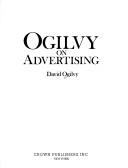
David Ogilvy · 1963

How to win and keep agency clients and write advertising that sells.

David Ogilvy · 1983

Rules for advertising that sells, drawn from direct-response testing.

“Ogilvy is a brilliant guy and a terrific writer. Really enjoyed this book and learned a lot.” — Mohnish Pabrai

Source: Mohnish's Bookshelf — Books on Sales & Marketing, entry 40

Recommended by: Mohnish Pabrai, David Cancel, Ev Williams and 1 other

Tim Wu · 2016

How media from the penny press to social media capture attention and resell it.
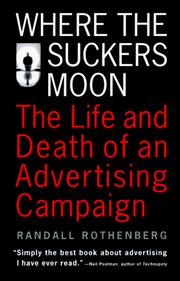
Randall Rothenberg · 1994

One agency account, followed in forensic detail.

Recommended by: Jason Fried

Claude C. Hopkins · 1923

Advertising as a measurable discipline: test every element against response.

Recommended by: Patrick O'Shaughnessy

Vance Packard · 1957

How 1950s advertisers used psychological research to sway buyers.

Where it sits in the reference 2

Business models
Industries

Topics

Sales and MarketingTechnology and ComputingTech strategy and platform economicsAdvertising, copywriting and persuasion