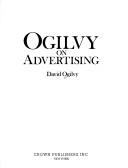
Ogilvy on Advertising
The craft, and the agency economics behind it.
Summary
Ogilvy founded Ogilvy and Mather and wrote this in 1983 as a practical manual, illustrated with campaigns and stating rules derived from direct response testing rather than from creative theory. His central position is that advertising exists to sell, that its effectiveness is measurable, and that most advertising fails because agencies pursue creativity for its own sake.
The rules come from data he collected through direct response work, where results were countable. Headlines are read five times more often than body copy, so a weak headline wastes most of the expenditure. Long copy sells more than short copy for considered purchases, contrary to agency preference. Photographs outperform illustrations. Captions under photographs are read by twice as many people as body copy. Testimonials work. Humour rarely sells. Brand image built consistently over years produces more than any single campaign.
He also covers research, arguing that agencies should test everything and that most do not because testing exposes weak work; the discipline of understanding the product thoroughly before writing anything; and the management of an agency, including hiring, client relationships and the pitch process. His chapters on how to get a job in advertising and how to run an agency are dated but revealing about the business.
The medium-specific advice belongs to print, television and direct mail as they existed in 1983, and much of the tactical material does not transfer. The underlying discipline, that advertising should be tested against sales rather than judged aesthetically, transfers completely and is still not widely practised.
Key takeaways 8
- Advertising exists to sell, and any measure of its quality other than whether it sells is a substitution.
- Headlines are read roughly five times more often than body copy, so most of the expenditure depends on the headline alone.
- Long copy outsells short copy for considered purchases, which contradicts the preference of most agencies and clients.
- Direct response advertising provides measurable results, and its lessons apply to brand advertising where measurement is absent.
- Understanding the product thoroughly before writing anything is what produces the specific claim that makes an advertisement work.
- Humour and entertainment rarely sell, because the audience remembers the execution rather than the product.
- A consistent brand image built over years produces more than any individual campaign, and changing it repeatedly destroys the accumulation.
- Agencies avoid testing because it exposes weak work, which is why most advertising is judged aesthetically rather than by results.
Who should read it
Founders and marketers who want testable rules from someone who measured results, with the medium-specific tactics treated as historical.
Who recommended it 4 · 1 direct
“Ogilvy is a brilliant guy and a terrific writer. Really enjoyed this book and learned a lot.”
Similar books 6
Chosen by shared topics, the entries that hold them, and the people who recommended both.
How to win and keep agency clients and write advertising that sells.
Recommended by: Mohnish Pabrai, David Cancel, Sam Parr
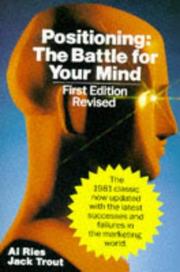
Marketing happens in the buyer's mind: find an open position there and own it.
Recommended by: Patrick Collison, Aaron Levie, David Cancel and 4 others

The case that programmatic advertising is a mispriced market.

How media from the penny press to social media capture attention and resell it.
How 1950s advertisers used psychological research to sway buyers.
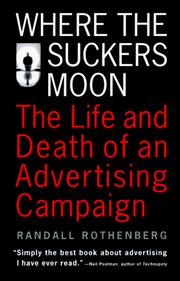
One agency account, followed in forensic detail.
Recommended by: Jason Fried
Where it sits in the reference 3
Topics