
Brian Armstrong
Co-founded the cryptocurrency platform Coinbase with Fred Ehrsam and drew attention for barring political activism at work; also co-founded NewLimit, an anti-aging start-up.
 Coinbase
10 articles · 42 books they recommend
More 14
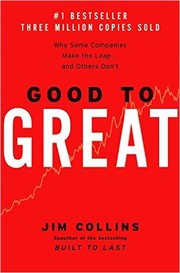
What eleven companies did to turn fifteen ordinary years into fifteen great ones.
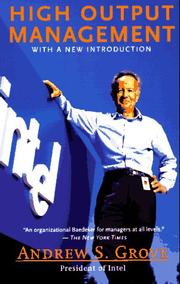
Management as production: a manager's output is the output of the team they lead.
Also recommended by: Nat Eliason, Tim Ferriss, Andrew Chen and 23 others
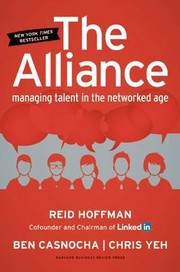
Employment as an honest alliance: set tours of duty between firm and employee.
Also recommended by: Brad Feld, Phil Libin
Eight CEOs who beat the market by allocating capital, not by running operations.
Also recommended by: Andrew Wilkinson, Dan Loeb, Francois Rochon and 11 others

Fifteen commitments for leading from curiosity instead of defensiveness.
Also recommended by: Alex Lieberman, Austin Rief, Drew Houston and 2 others

A fable of two rival firms showing why organisational health beats clever strategy.
Also recommended by: Mohnish Pabrai, Ali Abdaal

Also recommended by: Tim Ferriss, Ali Abdaal

Marquet's account of transforming the USS Santa Fe from the worst-performing submarine in the Navy to the best. The specific mechanism — moving from leader-follower to leader-leader by pushing control down while moving competence and clarity up — is one of the most rigorously documented leadership case studies in print.
Also recommended by: Jason Fried, Simon Sinek
How the NeXT and Pixar years changed Steve Jobs into the leader who rebuilt Apple.
Also recommended by: Mohnish Pabrai, Bill Gates, Ed Catmull and 4 others
How a running-shoe importer became Nike, surviving one cash crisis after another.
Also recommended by: Andrew Wilkinson, Bill Gates, Mohnish Pabrai and 24 others
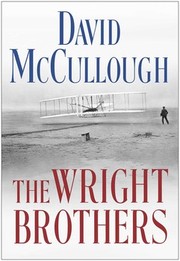
From a Dayton bicycle shop to the first powered flights and the 1908 demonstrations.
Also recommended by: Ali Abdaal, Mohnish Pabrai, Morgan Housel and 2 others
Fictional sexual scenes, each read by an evolutionary biologist for its instincts.
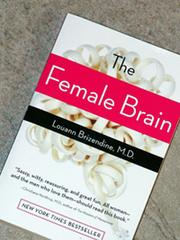

A collection of Richard Feynman's best short works.
Also recommended by: Larry Page
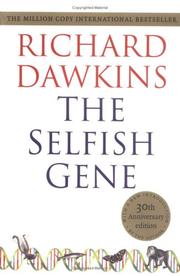
Selection acts on genes; bodies are vehicles that genes build to copy themselves.
Also recommended by: Balaji S. Srinivasan, Charlie Munger and 9 others

A novel in which industrialists vanish from an economy run by government directives.
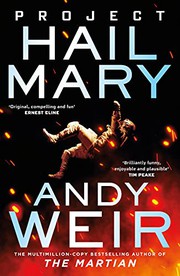
A novel of an amnesiac astronaut sent to stop a microbe that is dimming the sun.
Also recommended by: Bill Gates, Austen Allred, Delian Asparouhov and 3 others
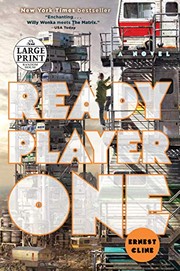
A novel of a teenager hunting 1980s-themed puzzles in a virtual world for a fortune.
Also recommended by: Andrew Wilkinson, Astro Teller and 6 others

Krug's web usability primer has stayed relevant for over two decades because its core argument — that good interfaces require no instruction — is timeless. The chapters on navigation conventions and usability testing with five users are still the most practical introduction to the discipline.

How machine learning and robots will displace work faster than institutions adapt.
Also recommended by: Antonio García Martínez

Kurzweil's optimistic counterpoint to the safety literature. His law of accelerating returns and the vision of intelligence explosion as fundamentally benign is the premise that alignment researchers are most directly arguing against. Reading it gives the other side of the debate its strongest formulation.
Also recommended by: Patrick Collison, Daniel Petre, Jensen Huang and 4 others
The case for free markets and limited government, policy area by policy area.

The theory behind microfinance methods such as group lending, and their effects.

Operating manual for scaling a company from fifty to thousands
Also recommended by: Balaji S. Srinivasan, Matt Mullenweg and 9 others

Argument that online communities can become sovereign; crypto-native politics
Also recommended by: Balaji S. Srinivasan, Eric Jorgenson and 3 others
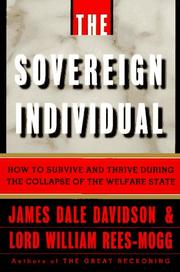
1997 forecast of digital money weakening the nation state
Also recommended by: Balaji S. Srinivasan, Nat Eliason and 10 others

Subtitled 'Big Ideas from the Computer Age'; collects early essays
Also recommended by: Patrick Collison
A physicist's stories, from fixing radios as a boy to Los Alamos and beyond.

A short case against all lying, white lies included.
Also recommended by: Nat Eliason, Naval Ravikant, Vinod Khosla and 2 others


Twenty-two rules of marketing, such as being first is better than being better.
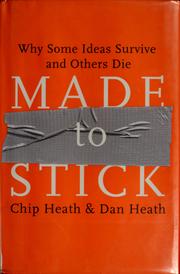
Six traits of memorable ideas, from simple and unexpected to emotional stories.
Also recommended by: Andrew Wilkinson, Mohnish Pabrai and 9 others
| Update on ResearchHub and ResearchCoin | Medium | 2022-03-05 |
| How crypto enables economic freedom | Medium | 2021-09-23 |
| Lessons from WhatsApp on international expansion | Medium | 2021-08-27 |
| Our Mission, Strategy and Culture | Medium | 2021-07-02 |
| Embracing decentralization at Coinbase | Medium | 2021-06-29 |
| Culture at Coinbase | Medium | 2021-06-09 |
| Announcing Coinbase Fact Check: Decentralizing truth in the age of misinformation | Medium | 2021-05-26 |
| A follow up to Coinbase as a “mission focused” company | Medium | 2020-10-08 |
| Coinbase is a mission focused company | Medium | 2020-09-27 |
| Who should join Coinbase: Builders | Medium | 2020-07-29 |
| The Last Man Standing in Crypto Paywall | The Wall Street Journal | 2024 |
| Coinbase CEO Brian Armstrong is obsessed with self-improvement. Can he improve fast enough to turn his company around? Paywall | Fortune | 2022 |
| Coinbase CEO Brian Armstrong is one of tech's most polarizing figures. Here's what it's like to work for him. Paywall | Business Insider | 2020 |