Updates

  1. Person pages list letters, writing, profiles and links as sortable tables with filters, and show each person's companies as links; Fund letters show each letter's description in its own column.
  2. Experts show a checked job title and a short description of each person; 30 more people have photographs.
  3. Every company, fund, university and publication the experts work for has a page listing the people there.
  4. Fund letters show each letter's thesis and filter by it; 225 person pages list the essays, columns and newsletter issues the person wrote.
  5. Person pages list every essay and newsletter issue a person wrote, and their own books as a table in List view.
  6. Recommends shows the five largest kinds of book and the rest under More; browse pictures load sooner.
  7. Podcasts and talks link the original episode, filter by Audio and video or Press, and list each publisher once.
  8. Pages are wider, Recommends has List and Grid, and a filter clicked again turns off.
  9. Book cards sit in a ruled grid with Open Library and Goodreads links and each book's one-line note.
  10. Funds is now Investors; each investor's styles are buttons that filter the table.
  11. Podcasts and talks on a person's page filter by year and publisher and show as a list or a grid of pictures.
  12. Quotes show only people's own words: 472 summaries written by list sites are gone.
  13. Country pages open from Browse again, and every link on the shelf lands on a page.
  14. Subject and person pages show their sections as tabs, and each book appears once on a person's page.
  15. Book cards show the quote, who said it and the source; grids show five cards to a row.
  16. On a phone, a menu holds the sections, search, Updates, Feedback and dark mode.
  17. Feedback takes a screenshot of the page with no browser prompt, opens a screenshot full size when you click it, and clears itself once sent.
  18. Book cards are centred, search names the topic each book sits in, and any text cut short shows whole on hover.
  19. Search groups its results by kind: people, companies, geographies, subjects, topics, books, funds, fund letters and papers.
  20. The Books table lists who recommended each book by name, and the browser tab names the section you are in.
  21. Feedback can take a screenshot of the page, or one you paste or choose, and opens in the corner beside Updates.
  22. Each rail button reopens its section where you left it, and Browse, Table and People show on every book and subject page.
  23. Filters grey out choices that hold nothing instead of hiding them, and Books › People filters by authors or recommenders.
  24. Feedback takes a subject line and up to three screenshots.
  25. Biographies are grouped by the person they are about: 41 new pages, from Abraham Lincoln to Lee Kuan Yew.
  26. Sport splits into 23 sports, and Religion into one topic per faith.
  27. Book lists show as cards: the cover, one recommendation quote and every recommender by name.
  28. Seventeen subjects that had two or three pages under different names now have one page each.
  29. Every page lists its Experts as authors and recommenders, with a link to them on the Experts tab.
  30. Economics, Financial history, Financial panics and Accounting are subjects of their own, with one page per financial crisis.
  31. Book, person and subject pages open inside the app, so the tabs stay in view.
  32. 996 more book covers, and photographs or logos for 227 more people and companies.
  33. Books › Browse shows every subject as cards, and the rail holds Fund letters, Papers, Experts, Books and Funds.
  34. Every topic over 150 books splits into narrower topics, each with a page of its own.

Send feedback

What is it?
Screenshots, up to 3 (optional)
or paste one with Ctrl+V

We use your email only to reply to you.

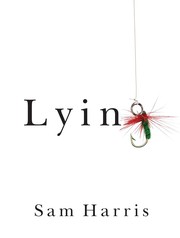
Lying

Lying

Sam Harris
2013
105 pages · about 1h 45m to read Open Librarygoodreads

Summary

Harris makes a short and absolute case against lying, including white lies told to spare feelings. His argument is that deception is a form of coercion because it removes the other person's ability to act on accurate information, and that the liar arrogates to themselves the decision about what another person may know. He distinguishes lying from withholding, arguing that a person is not obliged to disclose everything but is obliged not to state what they believe to be false. This allows a great deal of tact without permitting deception.

His practical argument concerns the accumulating costs. A lie requires maintenance, must be remembered, generates further lies to protect it, and creates a permanent risk of discovery that changes the relationship it was meant to protect. He argues that white lies are the most damaging category because they are constant, because they deprive people of information they need, and because the person telling them learns nothing about how the other person would have handled the truth.

He covers specific cases including lying to children about Santa Claus, praising work you think is poor, and the classic murderer at the door problem, which he treats as a genuine exception under conditions of duress against someone who has forfeited their claim to honest dealing.

The book is very short, essentially an essay. It contains no research and Harris offers no empirical evidence about whether honest people fare better. The position is absolutist and Harris does not seriously engage with the strongest objections. Its value is the clarity of the distinction between lying and withholding, which is directly usable in professional situations where the alternative to a lie is assumed to be cruelty.

Key takeaways 8

  1. Lying is a form of coercion because it removes the other person's ability to act on accurate information.
  2. A liar decides unilaterally what another person is permitted to know, which is the specific harm regardless of the liar's intention.
  3. Withholding information is different from stating what you believe to be false, which permits tact without permitting deception.
  4. White lies are the most damaging category because they are constant and deprive people of information they need to make decisions.
  5. Every lie requires maintenance, must be remembered, and generates further lies to protect it.
  6. A relationship built on a lie is not protected by it, since discovery changes the relationship more than the truth would have.
  7. Telling someone an uncomfortable truth gives them information and also gives you information about how they handle it, which lying forecloses.
  8. Harris allows exceptions under duress against someone who has forfeited any claim to honest dealing, which is the only case he concedes.

Who should read it

Anyone whose work involves regular feedback, negotiation or difficult conversations, wanting a clear argument and the lying versus withholding distinction.

Who recommended it 6 · 3 direct

Elon Muskreported
Tim Ferrissreported

Similar books 6

Chosen by shared topics, the entries that hold them, and the people who recommended both.
Ayn Rand · 1936

A novel in which industrialists vanish from an economy run by government directives.

Viktor E. Frankl · 1968

Life in Nazi concentration camps, and logotherapy: finding meaning to survive.

“I have been deeply influenced by the existentialist and eminent psychiatrist Viktor Frankl, who wrote the perennial best seller Man's Search for Meaning, one of the most influential books I've ever…” — Frank Martin

Source: Martin on one of the most influential books he has read and reread

Recommended by: Frank Martin, Mohnish Pabrai, Nat Eliason and 24 others
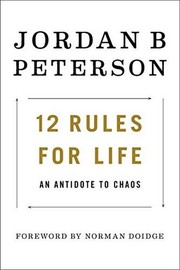
Jordan Peterson · 2015

Twelve rules for living, each drawn from clinical practice, biology and myth.

Where it sits in the reference 0

No entry holds this book yet. It reached the reference because someone recommended it.

Topics

PhilosophyPsychology and BehaviourMoral and political philosophySocial psychology, persuasion and influence