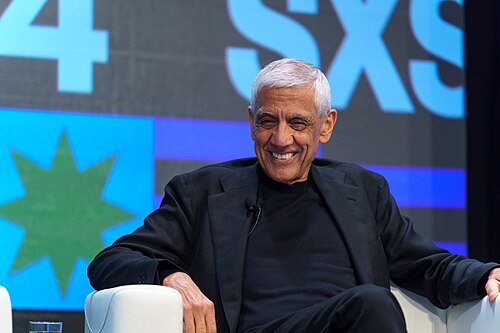
Vinod Khosla
Co-founded Sun Microsystems and made his fortune from early venture bets on networking, software and alternative energy; owns the Seattle Seahawks and signed the Giving Pledge.
 Khosla Ventures
 Sun Microsystems
 Seattle Seahawks
10 articles · 50 books they recommend · 55 appearances
More 20
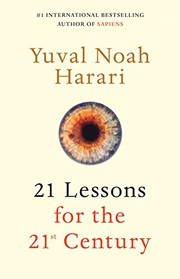
Twenty-one essays on today's challenges, from technology and politics to truth.
Also recommended by: Bill Gates, Alfred Lin, Anna Cheng and 3 others
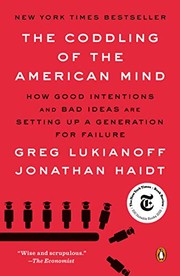
Three false beliefs taught to young Americans, and how they harm their minds.
Also recommended by: Eric Weinstein, Julian Shapiro and 1 other
Network science on how success and reputation compound unequally
Also recommended by: Nassim Nicholas Taleb
How the global elite's efforts to change the world keep the status quo in place.
Also recommended by: Alexis Ohanian, Tristan Harris
Also recommended by: Bill Gates, Keith Rabois
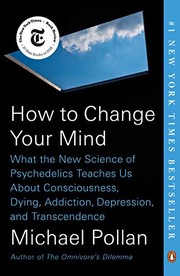
The history and revival of psychedelic research, and the author's own trips.
Also recommended by: Bill Gates, Bryan Johnson, James Cameron and 6 others
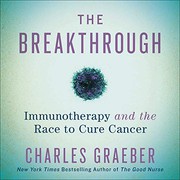
The scientists racing to make the immune system fight cancer: immunotherapy's story.
Also recommended by: Keith Rabois
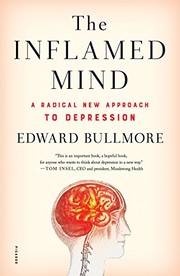
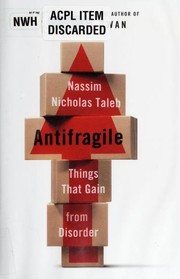
Incerto volume 4
Also recommended by: Mohnish Pabrai, Nat Eliason and 24 others
Also recommended by: Ray Dalio, Esther Dyson
A short case against all lying, white lies included.
Also recommended by: Nat Eliason, Naval Ravikant, Brian Armstrong and 2 others
Explains an action by tracing its causes back from neurons to hormones to evolution.
Also recommended by: Andrew Wilkinson, Bill Gates, Bryan Johnson and 4 others
Source: 2017 Book Recommendations — Vinod Khosla on Medium (@vkhosla)
Also recommended by: Nat Eliason
Why organisms, cities and companies follow power laws set by their supply networks.
Also recommended by: Nat Eliason, Bill Miller, Marc Benioff and 1 other
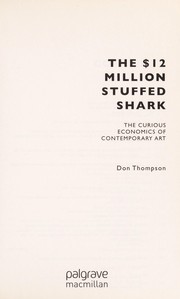
How prices are set in the contemporary art market, from dealers to auction houses.
Also recommended by: Tim Ferriss, Diana Kimball
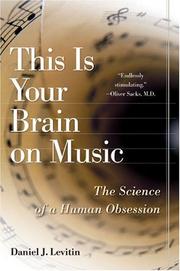
The foundational science for any serious musician. Levitin explains what the auditory cortex actually does with rhythm, timbre, and expectation — why a note landing slightly behind the beat feels groovy rather than wrong, and why tension-resolution in harmony triggers the same neurochemistry as certain drugs. Knowing the mechanics does not kill the magic; it deepens it.
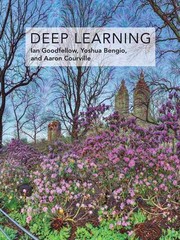
The textbook on deep learning: how machines learn layered concepts from data.
Source: 2017 Book Recommendations — Vinod Khosla on Medium (@vkhosla)
Also recommended by: Elon Musk, Satya Nadella
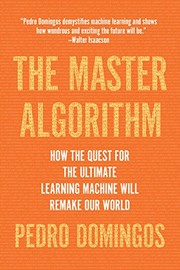
The five schools of machine learning, and the search for one algorithm to unite them.
Source: 2017 Book Recommendations — Vinod Khosla on Medium (@vkhosla)
Also recommended by: Shane Parrish, Sam Altman
Why organisations kill breakthrough projects, and how structure can protect them.
Also recommended by: Arianna Huffington, Bill Gates and 7 others
Venture capital from Arthur Rock to SoftBank, and why a few big bets pay for all.
Also recommended by: Andrew Wilkinson, Anthony Pompliano and 3 others
Also recommended by: Andrew Wilkinson, Chris Dixon and 1 other
Harari's concern — that humans may cede decision-making to opaque systems through preference rather than coercion — reframes the alignment problem as a cultural and political challenge, not only a technical one. Less rigorous than Bostrom or Russell, but more widely read, making it a useful lens for understanding public discourse.
Source: 2017 Book Recommendations — Vinod Khosla on Medium (@vkhosla)
Also recommended by: Andrew Wilkinson, Bill Gates, Nat Eliason and 6 others
How shared fictions such as money, nations and gods let humans cooperate at scale.
Also recommended by: Andrew Wilkinson, Bill Gates, Mohnish Pabrai and 37 others
Challenger-brand economics against a dominant incumbent.
How Google and others turn behaviour into data to predict and steer what people do.
Also recommended by: Benedict Evans
Also recommended by: Aileen Lee, Austen Allred, Keith Rabois
The case that ageing is a disease that can be treated, and the theory behind it.
Also recommended by: David Friedberg, Jason Fried and 3 others
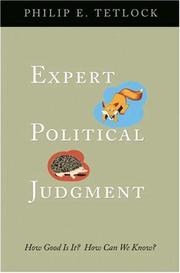
A 20-year test of 28,000 expert forecasts: foxes with many models beat hedgehogs.
Also recommended by: Marc Andreessen, Michael Mauboussin and 1 other
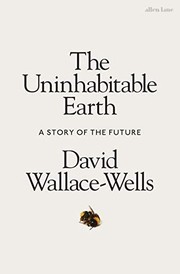
Wallace-Wells's inventory of worst-case climate projections is included here not as a climate book but as a case study in what happens when institutions consistently discount long-term risk. The scenarios he describes are already visible in the data; they were predictable decades ago. This is what the failure of long-term thinking looks like from inside it.
Also recommended by: George Hatzis
The Stuyvesant Town deal and the largest real estate loss on record.
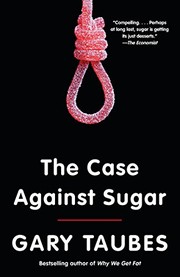
Background on how the obesity market got as large as it is.
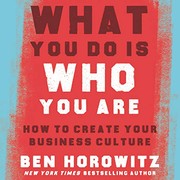
Culture is how people behave when the leader is absent, and must be designed.
Also recommended by: Matt Mullenweg, Andrew Chen, Anu Hariharan and 1 other
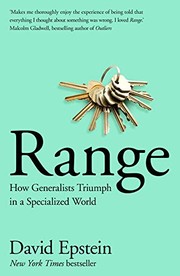
Early specialisation works only where rules are stable; elsewhere breadth wins.
Also recommended by: Bill Gates, Abi Tyas Tunggal, Alex Lieberman and 10 others
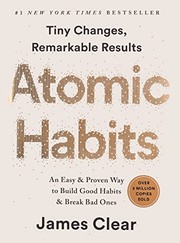
Build habits by making them obvious, attractive, easy and satisfying.
Also recommended by: Ali Abdaal, Balaji S. Srinivasan and 20 others
Source: 2017 Book Recommendations — Vinod Khosla on Medium (@vkhosla)
Also recommended by: Shane Parrish
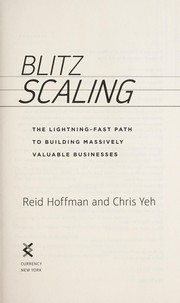
When and how to put speed before efficiency to capture a market before rivals.
Also recommended by: Anthony Pompliano, Bill Gates, Biz Stone and 6 others
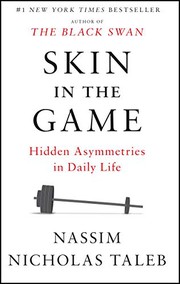
Incerto volume 5
Also recommended by: Nat Eliason, Ana Fabrega, Ben Horowitz and 11 others
| Mazama Energy Unveils the World’s Hottest Enhanced Geothermal System: A 629 °F (331 °C)… | Medium | 2025-10-28 |
| How to Hire an Executive | Medium | 2024-11-01 |
| Welcome Back! | Medium | 2024-01-09 |
| Where AI Meets Copyright Law, Present and Future | Medium | 2023-10-20 |
| What is at stake in this AI based techno-economic war between the West and China? | Medium | 2023-09-11 |
| A few Critical Climate Technology Breakthroughs Multiplied by “Instigators” is desperately needed | Medium | 2020-07-15 |
| Khosla Ventures’ entrepreneurs are responding with amazing diversity to COVID-19 solutions for… | Medium | 2020-03-31 |
| The Twenty Minute VC Podcast — My episode with Harry Stebbings | Medium | 2020-02-25 |
| 2019 Book Recommendations | Medium | 2020-01-15 |
| “Venture Assistance”: A philosophical view of what entrepreneurs need beyond just funding… | Medium | 2018-06-17 |
| Despite Setbacks, Investor Is Bullish on Clean Technology Paywall | The New York Times | 2012 |