Updates

  1. Person pages list letters, writing, profiles and links as sortable tables with filters, and show each person's companies as links; Fund letters show each letter's description in its own column.
  2. Experts show a checked job title and a short description of each person; 30 more people have photographs.
  3. Every company, fund, university and publication the experts work for has a page listing the people there.
  4. Fund letters show each letter's thesis and filter by it; 225 person pages list the essays, columns and newsletter issues the person wrote.
  5. Person pages list every essay and newsletter issue a person wrote, and their own books as a table in List view.
  6. Recommends shows the five largest kinds of book and the rest under More; browse pictures load sooner.
  7. Podcasts and talks link the original episode, filter by Audio and video or Press, and list each publisher once.
  8. Pages are wider, Recommends has List and Grid, and a filter clicked again turns off.
  9. Book cards sit in a ruled grid with Open Library and Goodreads links and each book's one-line note.
  10. Funds is now Investors; each investor's styles are buttons that filter the table.
  11. Podcasts and talks on a person's page filter by year and publisher and show as a list or a grid of pictures.
  12. Quotes show only people's own words: 472 summaries written by list sites are gone.
  13. Country pages open from Browse again, and every link on the shelf lands on a page.
  14. Subject and person pages show their sections as tabs, and each book appears once on a person's page.
  15. Book cards show the quote, who said it and the source; grids show five cards to a row.
  16. On a phone, a menu holds the sections, search, Updates, Feedback and dark mode.
  17. Feedback takes a screenshot of the page with no browser prompt, opens a screenshot full size when you click it, and clears itself once sent.
  18. Book cards are centred, search names the topic each book sits in, and any text cut short shows whole on hover.
  19. Search groups its results by kind: people, companies, geographies, subjects, topics, books, funds, fund letters and papers.
  20. The Books table lists who recommended each book by name, and the browser tab names the section you are in.
  21. Feedback can take a screenshot of the page, or one you paste or choose, and opens in the corner beside Updates.
  22. Each rail button reopens its section where you left it, and Browse, Table and People show on every book and subject page.
  23. Filters grey out choices that hold nothing instead of hiding them, and Books › People filters by authors or recommenders.
  24. Feedback takes a subject line and up to three screenshots.
  25. Biographies are grouped by the person they are about: 41 new pages, from Abraham Lincoln to Lee Kuan Yew.
  26. Sport splits into 23 sports, and Religion into one topic per faith.
  27. Book lists show as cards: the cover, one recommendation quote and every recommender by name.
  28. Seventeen subjects that had two or three pages under different names now have one page each.
  29. Every page lists its Experts as authors and recommenders, with a link to them on the Experts tab.
  30. Economics, Financial history, Financial panics and Accounting are subjects of their own, with one page per financial crisis.
  31. Book, person and subject pages open inside the app, so the tabs stay in view.
  32. 996 more book covers, and photographs or logos for 227 more people and companies.
  33. Books › Browse shows every subject as cards, and the rail holds Fund letters, Papers, Experts, Books and Funds.
  34. Every topic over 150 books splits into narrower topics, each with a page of its own.

Send feedback

What is it?
Screenshots, up to 3 (optional)
or paste one with Ctrl+V

We use your email only to reply to you.

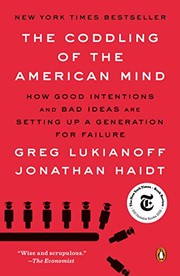
The Coddling of the American Mind

The Coddling of the American Mind

Greg Lukianoff, Jonathan Haidt
2018
T2 352 pages · about 5h 52m to read Open Librarygoodreads

Applies antifragility to universities; safety culture as manufactured fragility

Summary

Lukianoff, a free speech lawyer, and Haidt, a social psychologist, argue that three beliefs increasingly taught to young Americans are both false and psychologically harmful. The untruths are that what does not kill you makes you weaker, that you should always trust your feelings, and that life is a battle between good people and evil people.

Their argument is that these beliefs contradict established findings. Antifragility means that children require exposure to stressors to develop capability. Cognitive behavioural therapy works by identifying and correcting distorted thinking rather than trusting it, and the distortions it treats, including catastrophising, emotional reasoning and dichotomous thinking, are precisely what campus culture teaches. Us-versus-them thinking is a well-documented tribal default that institutions should suppress rather than encourage.

They identify six contributing causes: rising adolescent anxiety and depression from around 2012, paranoid parenting, the decline of unsupervised play, the growth of campus administrative bureaucracy, the intensification of political polarisation, and the rise of what they call justice thinking that focuses on equal outcomes.

The correlation between smartphone adoption and adolescent mental health is the empirical claim most disputed, and researchers including Amy Orben and Andrew Przybylski have argued that the effect sizes are very small. Critics also argue that the authors generalise from a small number of elite institutions and that they understate the substantive issues behind campus protests. The application of cognitive distortion categories to institutional culture is the most original element.

Key takeaways 8

  1. Children are antifragile and require exposure to stressors, difficulty and unsupervised conflict to develop capability.
  2. Protecting young people from discomfort produces the fragility that the protection was intended to prevent.
  3. Cognitive behavioural therapy works by identifying and correcting distorted thinking, which means teaching people to trust their feelings reverses the treatment.
  4. Campus culture teaches the specific cognitive distortions that therapy exists to correct, including catastrophising and emotional reasoning.
  5. Dividing people into good and evil groups is a tribal default that institutions should suppress rather than reinforce.
  6. Adolescent anxiety and depression rose sharply from around 2012, coinciding with smartphone and social media adoption.
  7. The decline of unsupervised play removed the setting in which children learned to resolve conflict without adult intervention.
  8. The correlation between smartphone use and adolescent mental health is disputed, with several researchers finding effect sizes too small to support the causal claim.

Who should read it

Readers thinking about how institutions handle disagreement and discomfort, with the empirical claims about smartphones treated as contested.

Who recommended it 4

Vinod Khoslareported

Similar books 6

Chosen by shared topics, the entries that hold them, and the people who recommended both.

Nassim Nicholas Taleb · 2012

Incerto volume 4

“Nassim Taleb, author of the new book Antifragile, praises volatility and criticises those who would artificially damp it at great unseen cost. Taleb advises us to be 'anti-fragile'. This is exactly…” — Seth Klarman

Source: Klarman on Taleb's praise of volatility and what Baupost strives for

Recommended by: Mohnish Pabrai, Nat Eliason and 25 others

Nassim Nicholas Taleb · 2018

Incerto volume 5

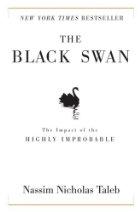
Nassim Nicholas Taleb · 2007

Rare, unforeseen, high-impact events drive history, explained only after the fact.

“The message of The Black Swan is how important it is to realize that the things everyone rules out can still come to pass.” — Howard Marks

Source: Oaktree memo 'The Limits to Negativism'

Recommended by: Howard Marks, Marc Andreessen, Nat Eliason and 18 others

Peter Thiel, David O. Sacks · 1995

Subtitled 'Multiculturalism and Political Intolerance on Campus'

Where it sits in the reference 1

Mental models

Topics

Sociology and CultureEducation and LearningConsumer culture and cultural criticism