
Marc Andreessen
Co-wrote Mosaic, the first web browser to display images inline, and co-founded Netscape; also co-founded Ning and Opsware.
 Andreessen Horowitz
 Netscape
Pmarchive — archive of Marc Andreessen's pmarca blog
"Why Software Is Eating the World" and the pmarca essays are primary sources that later technology writing quotes directly; he has essays rather than books.
1 book of their own · 42 articles · 177 books they recommend · 50 appearances
Standalone edition of the 2023 a16z essay; Andreessen has written no conventional book
| The Techno-Optimist Manifesto | Standalone edition of the 2023 a16z essay; Andreessen has written no conventional book | 2025 | – |
More 22


Source: Top 10 science fiction novelists of the '00s—so far (pmarca blog archive)
Also recommended by: Nat Eliason, Patrick Collison
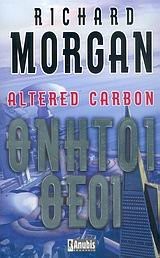
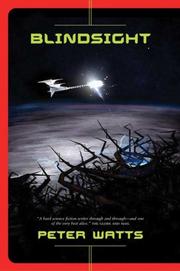
Source: Top 10 science fiction novelists of the '00s—so far (pmarca blog archive)
Also recommended by: Ryan Shea, Zooko Wilcox
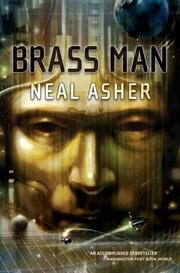

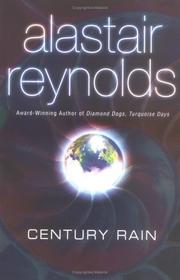

A novel of wartime codebreakers and their descendants building a data haven.
Also recommended by: Ev Williams, Peter Thiel, Tim Ferriss
A novel of a feudal space empire fighting over a desert planet and its spice.
Also recommended by: Patrick Collison, Stewart Brand, Andrew Chen and 7 others

A novel: a mathematician foresees an empire's fall and plans to shorten the dark age.
Also recommended by: Balaji S. Srinivasan, Adam Gazzaley and 10 others



Retirees join Earth's colonial army in an interstellar war against advanced species.
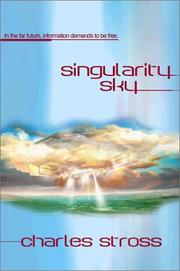
In 2380, a wormhole-linked commonwealth of 600 worlds sees a distant star vanish.
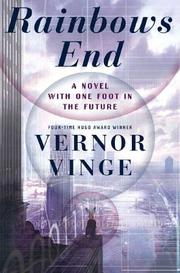
A poet cured of Alzheimer's wakes in 2025 San Diego to a world of smart lenses.

Ancient machines built to suppress intelligent life awaken after a fatal discovery.

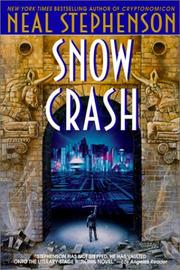
A novel of a hacker in a corporate-run America and its virtual world, the Metaverse.
Also recommended by: Nat Eliason, Naval Ravikant, Alexis Ohanian and 11 others
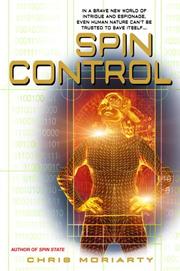









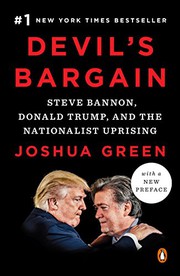
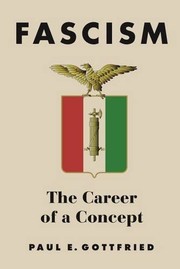
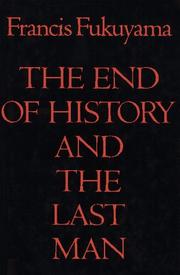
Why liberal democracy may be the end state of political change, and how people react.
Also recommended by: Peter Thiel
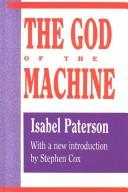
An inquiry into the nature of freedom and the uses of power.
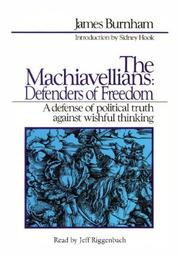
Elite theory: who actually rules, and why stated aims mislead
“The book that I always recommend on this topic is called "The Machiavellians," which is this sort of a famous book from the 1940s” — Marc Andreessen
Source: The a16z Show — Marc Andreessen with David Senra (transcript)
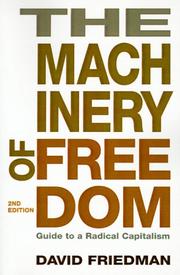
The case for anarcho-capitalism, a society run on markets without a state.
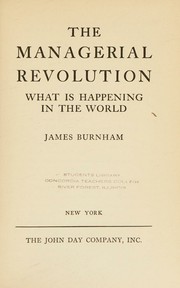
Why managers and technocrats would replace capitalists as society's ruling class.
Voters hold systematic biases about economics, so democracies choose bad policies.
“The median American is a moderate national socialist – statist to the core on both economic and social policy.” — Marc Andreessen
Source: @pmarca, 'Thread: Books I've recently read and recommend'
Also recommended by: Patrick Collison
Argument that online communities can become sovereign; crypto-native politics
Also recommended by: Balaji S. Srinivasan, Brian Armstrong and 3 others

1997 forecast of digital money weakening the nation state
Also recommended by: Balaji S. Srinivasan, Nat Eliason and 10 others

Also recommended by: Antonio García Martínez
Also recommended by: Keith Rabois

How the NeXT and Pixar years changed Steve Jobs into the leader who rebuilt Apple.
Also recommended by: Mohnish Pabrai, Bill Gates, Brian Armstrong and 4 others
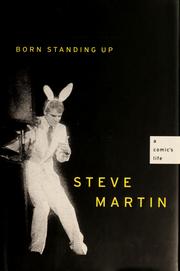
A comedian's eighteen years building a stand-up act, and why he quit it.
Also recommended by: Bill Gurley, James Altucher, Jason Calacanis and 1 other

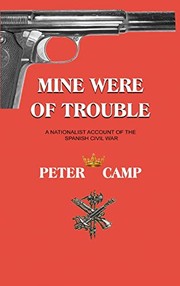
A British volunteer's account of fighting for Franco's Nationalists in Spain.
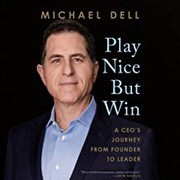
Dell's founder on the buyout, the Icahn fight and VMware
Also recommended by: Andrew Wilkinson, Bill Gates, Eric Schmidt and 5 others


Joseph Kennedy's contested years as US ambassador to Britain on the eve of war.
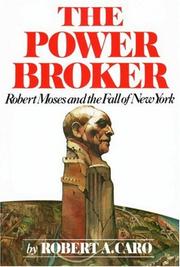
How an unelected official amassed power and used it to rebuild New York.
Also recommended by: Balaji S. Srinivasan, Jim Collins and 7 others
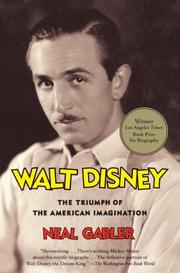
Walt Disney's life from Missouri to Mickey Mouse, the 1941 strike and Disneyland.
“the author, Neal Gabler, who has written the best biography on Walt Disney. And it's a phenomenal book.” — Marc Andreessen
Source: The Tim Ferriss Show Transcripts: Marc Andreessen (#163)
Also recommended by: Brian Chesky

Building Creative Artists Agency into Hollywood's top agency, then failing at Disney.
Also recommended by: Ben Horowitz, Benedict Evans and 3 others
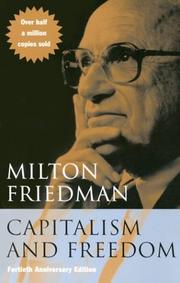
Economic freedom as a condition of political freedom, applied to policy questions.
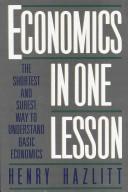
Hazlitt's 1946 distillation of Bastiat's 'broken window' insight: good economic reasoning requires seeing both what is visible and what is made invisible by a policy. A short book that teaches a single analytical habit, and that habit is genuinely useful regardless of your politics.
Also recommended by: Christopher Bloomstran, Changpeng Zhao and 2 others
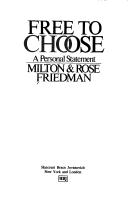
The case for free markets and limited government, policy area by policy area.
Also recommended by: Brian Armstrong, Mohnish Pabrai and 1 other

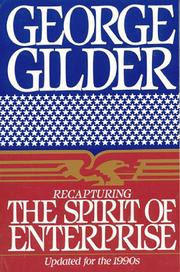
Supply-side case for entrepreneurs as the actual source of growth
“on how economic systems that encourage aggressive entrepreneurship build the most for the benefit of the most” — Marc Andreessen
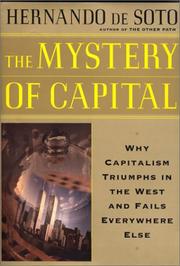
The poor hold assets but lack the property records that turn them into capital.
Also recommended by: Mohnish Pabrai
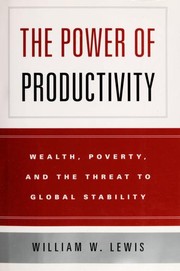
Sector-level explanation of why productivity differs so much between countries
“on how technology-driven productivity growth improves human welfare and creates more jobs and higher wages” — Marc Andreessen
Source: @pmarca, companion thread to 'It's Time to Build'
Also recommended by: Patrick Collison
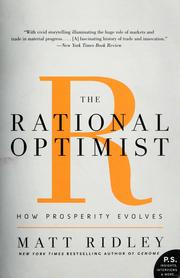
Prosperity grows as trade and specialisation let ideas meet and combine.
Also recommended by: Andrew Wilkinson, Bill Gates, Frank Martin and 9 others
How the division of labour and free markets make a nation rich.
Also recommended by: Naval Ravikant, Patrick Collison and 6 others
How dense cities make people more productive, inventive and green.
“on the central role cities play in our world and why it's so important for us to build them” — Marc Andreessen
Source: @pmarca, companion thread to 'It's Time to Build'
Also recommended by: Mohnish Pabrai, Stewart Brand, Tony Hsieh
Diamond's central question — why did some civilizations come to dominate others over 10,000 years? — is precisely the kind of question that requires long-term thinking to even ask. The answer, rooted in geography and biology rather than culture or intelligence, is a model for how to reason about slow causes and fast effects.
Also recommended by: Charlie Munger, Christopher Bloomstran and 13 others
How shared fictions such as money, nations and gods let humans cooperate at scale.
Also recommended by: Andrew Wilkinson, Bill Gates, Mohnish Pabrai and 37 others



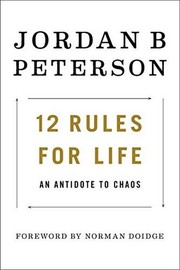
Twelve rules for living, each drawn from clinical practice, biology and myth.
Also recommended by: Nat Eliason, Alex and Books, Ana Fabrega and 6 others
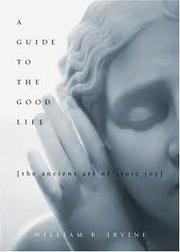
Modern Stoicism; desire management and negative visualisation
Also recommended by: Andrew Wilkinson, Austen Allred and 6 others

Incerto volume 4
Also recommended by: Mohnish Pabrai, Nat Eliason and 24 others
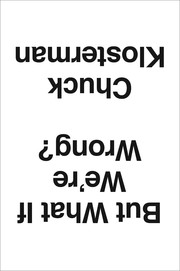
How present certainties will look to the future; outside view applied
“Hard to read and not emerge humbled.” — Marc Andreessen
Source: @pmarca, 'Thread: Books I've recently read and recommend'
Also recommended by: Brad Feld, Bryan Johnson, James Cameron

Montaigne's life and essays, read as answers to the question of how to live.
Also recommended by: Andrew Wilkinson, Patrick Collison and 1 other
Incerto volume 5
Also recommended by: Nat Eliason, Ana Fabrega, Ben Horowitz and 11 others


Freud, Marx and Lévi-Strauss as cases of the Jewish struggle with Gentile civility.
Preference falsification: why people hide their views and how that hides change.
“So this is one of the all time great books. Incredible.” — Marc Andreessen
Source: Lex Fridman Podcast #458 transcript — Marc Andreessen
Two satirical essays on class, status and race in America around 1970.
Innovation as a game played by the state, capital markets and competition.
“He wrote this book, which I really recommend, it's called Doing Capitalism” — Marc Andreessen
Customer development: how startups find customers before building the full product.
“Buy it, read it, keep it under your pillow and absorb it via osmosis.” — Marc Andreessen
Source: Book of the week: Best book for tech entrepreneurs this year, blog.pmarca.com
Also recommended by: Andrew Chen, Brad Feld, Ron Conway and 1 other
Subtitled 'Building a Business When There Are No Easy Answers'
Also recommended by: Andrew Wilkinson, Balaji S. Srinivasan and 33 others
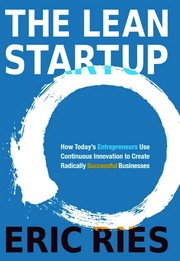
Build, measure, learn: test what customers want with small experiments.
Also recommended by: Nat Eliason, Sheryl Sandberg, Andrew Chen and 16 others
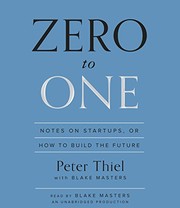
Why startups should build something new and own a small market before growing.
Also recommended by: Balaji S. Srinivasan, Eric Weinstein and 35 others
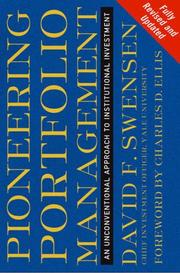
How the Yale endowment invests, and how institutions can build portfolios like it.
“pick up a copy of David Swensen's excellent book Pioneering Portfolio Management, which describes his approach in detail” — Marc Andreessen
Source: The truth about venture capitalists (Part 3), blog.pmarca.com
Also recommended by: Howard Marks, Mohnish Pabrai and 1 other
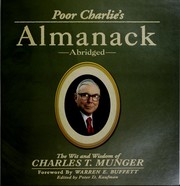
Speeches making the case for a latticework of mental models from many fields.
Also recommended by: Andrew Wilkinson, Charlie Munger and 25 others
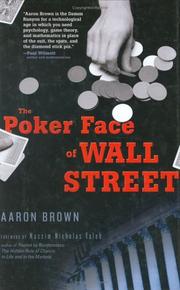
“To quote Aaron Brown—a legendary Morgan Stanley derivatives trader and poker expert—from his extraordinary book” — Marc Andreessen
Source: The Pmarca Guide to Career Planning, Part 1: Opportunity
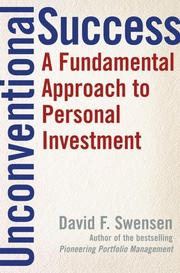
Subtitled A Fundamental Approach to Personal Investment.
“Be sure to also pick up a copy of his book for individual investors— Unconventional Success” — Marc Andreessen
Source: The truth about venture capitalists (Part 3), blog.pmarca.com
Also recommended by: Mohnish Pabrai
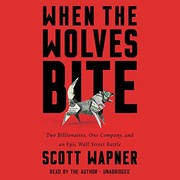
Ackman against Icahn over Herbalife; the MLM model argued in public.
“Wall Street"-esque battle between Bill Ackman and Carl Icahn over unlikely target Herbalife.” — Marc Andreessen
Source: @pmarca, 'Thread: Books I've recently read and recommend'
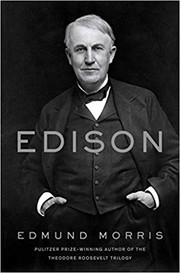
Thomas Edison's life, told in reverse chronological order.
“on perhaps the greatest American builder of all, the builder who brought electricity to us all, Thomas Edison” — Marc Andreessen
J.C.R. Licklider's vision of computers that serve individuals, and how it came true.
Also recommended by: Patrick Collison
Edison as the first manufactured celebrity.
“I've recently been reading Randall Stross's marvelous book about Thomas Edison, The Wizard of Menlo Park” — Marc Andreessen
Source: The Pmarca Guide to Startups, Part 7
Also recommended by: David Friedberg
The secretly funded litigation that destroyed Gawker.
Also recommended by: Brian Koppelman, Jeff Jordan, Joel Connolly and 1 other
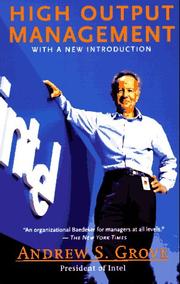
Management as production: a manager's output is the output of the team they lead.
Also recommended by: Nat Eliason, Tim Ferriss, Andrew Chen and 23 others
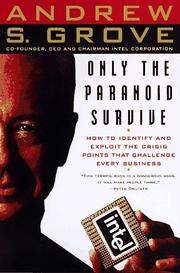
How to spot a strategic inflection point, when a tenfold force changes a business.
Also recommended by: Charlie Munger, Mohnish Pabrai and 10 others
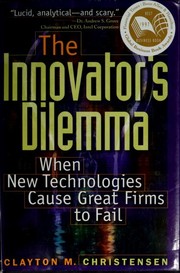
Why well-run firms lose to cheaper, worse products that enter at the market's bottom.
Also recommended by: Jim Collins, Mohnish Pabrai, Aaron Levie and 26 others
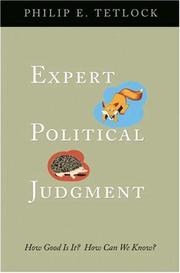
A 20-year test of 28,000 expert forecasts: foxes with many models beat hedgehogs.
“All pundits and commentators should publish their prediction track records, yet don't. What to pay attention to and what to ignore.” — Marc Andreessen
Source: @pmarca, 'Thread: Books I've recently read and recommend'
Also recommended by: Michael Mauboussin, Patrick Collison and 1 other

Rare, unforeseen, high-impact events drive history, explained only after the fact.
“One more quote, this time from Nassim Nicholas Taleb in The Black Swan” — Marc Andreessen
Source: The Pmarca Guide to Career Planning, Part 1: Opportunity
Also recommended by: Howard Marks, Nat Eliason, Patrick Collison and 17 others
Judge decisions by their reasoning, not their outcomes, and think in odds.
Also recommended by: Ev Williams, Ana Fabrega, Jason Fried and 4 others

Meadows wrote this before systems thinking became a popular phrase, and it remains the clearest account of why short-term interventions in complex systems so often backfire. The chapter on leverage points is the conceptual core of what long-term thinking actually requires from decision-makers.
Also recommended by: Patrick O'Shaughnessy, Daniel Burka and 2 others
The case that disorder is often more efficient than imposed order
“This idea comes from a wonderful book called A Perfect Mess” — Marc Andreessen

Alfred Adler's psychology taught through five nights of dialogue.
Also recommended by: Ali Abdaal, Andrew Wilkinson, Tim Ferriss and 10 others
Why mass movements of every kind draw the same frustrated people and use one method.
Also recommended by: Joe Rosenberg, Mohnish Pabrai and 5 others
Kahneman's synthesis of behavioral economics is the cognitive science underpinning every negotiation tactic. Anchoring, loss aversion, framing effects, and the planning fallacy — understanding why these biases operate, not just that they exist, makes you harder to exploit and more honest about your own irrationality.
Also recommended by: Andrew Wilkinson, Charles de Vaulx and 31 others
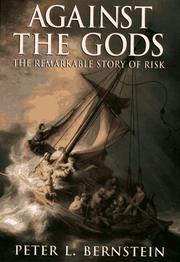
How people learned to measure risk, from early probability to portfolio theory.
“see the classic book Against the Gods: The Remarkable Story of Risk for more on this” — Marc Andreessen
Source: The Pmarca Guide to Career Planning, Part 1: Opportunity
Also recommended by: Charles de Vaulx, Jim Collins, Howard Marks and 6 others
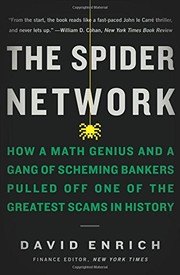
The Libor rigging scandal told through the traders who ran it
“saga of global financial market manipulation, at mind-boggling scale and hiding in plain sight” — Marc Andreessen
Source: @pmarca, 'Thread: Books I've recently read and recommend'
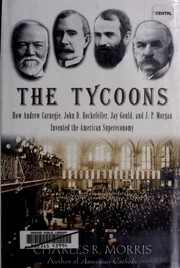
Carnegie, Rockefeller, Gould and Morgan and the economy they built
“on how four great builders of the 19th century built the world we live in today” — Marc Andreessen
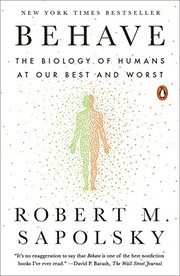
Explains an action by tracing its causes back from neurons to hormones to evolution.
Also recommended by: Andrew Wilkinson, Bill Gates, Bryan Johnson and 4 others
A neurologist on the varieties of luck in scientific discovery
“wrote an outstanding book called Chase, Chance, and Creativity … It's the best book I've read on the role of luck, chance, and serendipity” — Marc Andreessen
Source: Luck and the Entrepreneur: The four kinds of luck, blog.pmarca.com
How ancient DNA has rewritten the story of human prehistory and migration.
Also recommended by: Balaji S. Srinivasan, Michael Mauboussin and 1 other

Also recommended by: Patrick Collison
Also recommended by: Mark Zuckerberg, Patrick Collison and 1 other
Computing as a run of collaborations, from Ada Lovelace and Babbage to Google.
Also recommended by: Mohnish Pabrai, Bill Gates, Chris Fussell and 1 other



Hayek's 1944 warning that central economic planning corrodes political freedom alongside economic efficiency. Written for a British Left audience, it argued that the path to socialism and the path to fascism share structural features. Its critics say it proves too much; its admirers say history vindicated it.
Also recommended by: Li Lu, Peter Thiel
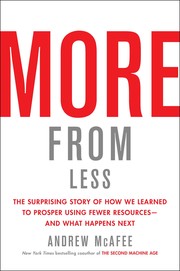
Evidence that rich economies now grow while using fewer physical resources.
“on how modern technological economies can build more outputs with less inputs” — Marc Andreessen
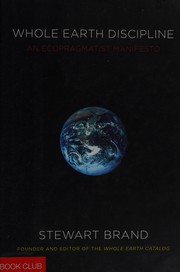
Environmentalist case for nuclear power, dense cities and genetic engineering
“on why even environmentalists should be pro building, pro cities, pro nuclear, and pro genetic engineering” — Marc Andreessen
Source: @pmarca, companion thread to 'It's Time to Build'
Also recommended by: Jack Dorsey, Patrick Collison, Stewart Brand
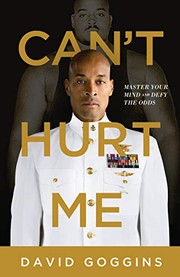
From abused child and 300-pound exterminator to Navy SEAL, and how to get tough.
Also recommended by: Nat Eliason, Alex and Books, Ali Abdaal and 6 others
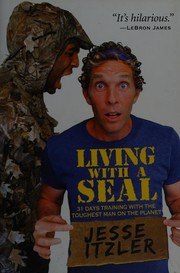
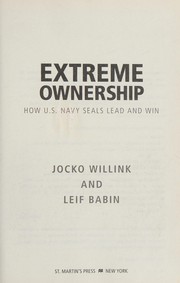
Navy SEAL leadership doctrine adapted to running teams and firms
Also recommended by: Nat Eliason, Alfred Lin, Austin Rief and 8 others
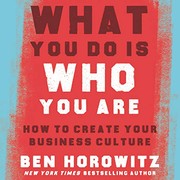
Culture is how people behave when the leader is absent, and must be designed.
Also recommended by: Matt Mullenweg, Andrew Chen, Anu Hariharan and 1 other
Marvel and DC's fifty-year rivalry: stolen ideas, poached staff, spies, price wars.
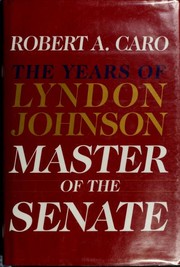
How Lyndon Johnson mastered the Senate's rules and became its majority leader.
Also recommended by: Jim Collins, Patrick Collison

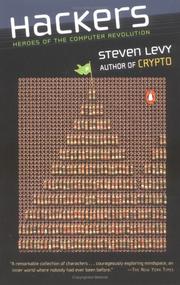
Three generations of hackers, from MIT's AI Lab to the Homebrew club and game makers.
Also recommended by: Austen Allred, Ev Williams, Paul Graham and 2 others
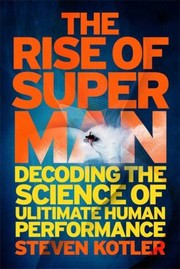
How extreme-sports athletes use flow states to push performance further.
Also recommended by: Nat Eliason, Adam Fisher, Chase Jarvis and 1 other
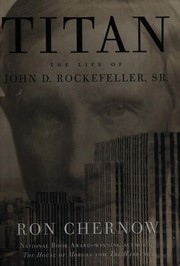
How Rockefeller built Standard Oil, faced its breakup and gave his fortune away.
Also recommended by: Andrew Wilkinson, Charlie Munger and 11 others

| Making a Billion Intelligent Machines | a16z.com | Blog post | 2026 |
| Introducing Erik Torenberg | a16z.com | Blog post | 2025 |
| Flow | a16z.com | Blog post | 2025 |
| The Little Tech Agenda | a16z.com | Blog post | 2024 |
| AI for Startups | a16z.com | Blog post | 2024 |
| The Techno-Optimist Manifesto | Andreessen Horowitz | Article | 2023 |
| It's Time to Build | Andreessen Horowitz | Article | 2020 |
| Why Software Is Eating the World | The Wall Street Journal | Article | 2011 |
| The Psychology of Entrepreneurial Misjudgment: Biases 1-6 | blog.pmarca.com | Blog post | 2008 |
| The Pmarca Guide to Startups, Part 1: Why not to do a startup | blog.pmarca.com | Blog post | 2007 |
| The Pmarca Guide to Startups, Part 4: The only thing that matters | blog.pmarca.com | Blog post | 2007 |
| The Pmarca Guide to Startups, Part 2: When the VCs say “no” | pmarchive.com (archive of Marc Andreessen’s blog blog.pmarca.com, 2007-2009) | Column | |
| The Pmarca Guide to Startups, Part 3: “But I don't know any VCs!” | pmarchive.com (archive of Marc Andreessen’s blog blog.pmarca.com, 2007-2009) | Column | |
| The Pmarca Guide to Startups, Part 5: The Moby Dick theory of big companies | pmarchive.com (archive of Marc Andreessen’s blog blog.pmarca.com, 2007-2009) | Column | |
| The Pmarca Guide to Startups, Part 6: How much funding is too little? Too much? | pmarchive.com (archive of Marc Andreessen’s blog blog.pmarca.com, 2007-2009) | Column | |
| The Pmarca Guide to Startups, Part 7: Why a startup's initial business plan doesn't matter that much | pmarchive.com (archive of Marc Andreessen’s blog blog.pmarca.com, 2007-2009) | Column | |
| The Pmarca Guide to Startups, Part 8: Hiring, managing, promoting, and firing executives | pmarchive.com (archive of Marc Andreessen’s blog blog.pmarca.com, 2007-2009) | Column | |
| The Pmarca Guide to Startups, Part 9: How to hire a professional CEO | pmarchive.com (archive of Marc Andreessen’s blog blog.pmarca.com, 2007-2009) | Column | |
| The truth about venture capitalists, Part 1 | pmarchive.com (archive of Marc Andreessen’s blog blog.pmarca.com, 2007-2009) | Column | |
| The truth about venture capitalists, Part 2 | pmarchive.com (archive of Marc Andreessen’s blog blog.pmarca.com, 2007-2009) | Column | |
| The truth about venture capitalists, Part 3 | pmarchive.com (archive of Marc Andreessen’s blog blog.pmarca.com, 2007-2009) | Column | |
| How to hire the best people you've ever worked with | pmarchive.com (archive of Marc Andreessen’s blog blog.pmarca.com, 2007-2009) | Column | |
| Serial entrepreneurs and today's Silicon Valley | pmarchive.com (archive of Marc Andreessen’s blog blog.pmarca.com, 2007-2009) | Column | |
| Age and the entrepreneur: Some data | pmarchive.com (archive of Marc Andreessen’s blog blog.pmarca.com, 2007-2009) | Column | |
| Luck and the entrepreneur: The four kinds of luck | pmarchive.com (archive of Marc Andreessen’s blog blog.pmarca.com, 2007-2009) | Column | |
| The Pmarca Guide to Personal Productivity | pmarchive.com (archive of Marc Andreessen’s blog blog.pmarca.com, 2007-2009) | Column | |
| Guide to Career Planning, Part 0: Introduction | pmarchive.com (archive of Marc Andreessen’s blog blog.pmarca.com, 2007-2009) | Column | |
| Guide to Career Planning, Part 1: Opportunity | pmarchive.com (archive of Marc Andreessen’s blog blog.pmarca.com, 2007-2009) | Column | |
| Guide to Career Planning, Part 2: Skills and education | pmarchive.com (archive of Marc Andreessen’s blog blog.pmarca.com, 2007-2009) | Column | |
| Guide to Career Planning, Part 3: Where to go and why | pmarchive.com (archive of Marc Andreessen’s blog blog.pmarca.com, 2007-2009) | Column | |
| Guide to Big Companies, Part 1: Turnaround! | pmarchive.com (archive of Marc Andreessen’s blog blog.pmarca.com, 2007-2009) | Column | |
| Guide to Big Companies, Part 2: Retaining great people | pmarchive.com (archive of Marc Andreessen’s blog blog.pmarca.com, 2007-2009) | Column | |
| Why there's no such thing as Web 2.0 | pmarchive.com (archive of Marc Andreessen’s blog blog.pmarca.com, 2007-2009) | Column | |
| Top 10 science fiction novelists of the '00s—so far | pmarchive.com (archive of Marc Andreessen’s blog blog.pmarca.com, 2007-2009) | Column | |
| Why Ning? | pmarchive.com (archive of Marc Andreessen’s blog blog.pmarca.com, 2007-2009) | Column | |
| Book of the week: Best book for tech entrepreneurs this year | pmarchive.com (archive of Marc Andreessen’s blog blog.pmarca.com, 2007-2009) | Column | |
| The three kinds of platforms you meet on the Internet | pmarchive.com (archive of Marc Andreessen’s blog blog.pmarca.com, 2007-2009) | Column | |
| Music of the week: Three views of the blues, through jazz | pmarchive.com (archive of Marc Andreessen’s blog blog.pmarca.com, 2007-2009) | Column | |
| Eleven lessons learned about blogging, so far | pmarchive.com (archive of Marc Andreessen’s blog blog.pmarca.com, 2007-2009) | Column | |
| OK, you're right, it IS a bubble | pmarchive.com (archive of Marc Andreessen’s blog blog.pmarca.com, 2007-2009) | Column | |
| Counterpoint: Ben Horowitz on micromanagement | pmarchive.com (archive of Marc Andreessen’s blog blog.pmarca.com, 2007-2009) | Column | |
| An hour and a half with Barack Obama | pmarchive.com (archive of Marc Andreessen’s blog blog.pmarca.com, 2007-2009) | Column |
| Why Is Tech Billionaire Marc Andreessen So Mad? Paywall | Bloomberg Businessweek | 2026 |
| The Chief Ideologist of the Silicon Valley Elite Has Some Strange Ideas Paywall | The New York Times | 2023 |
| The Mind of Marc Andreessen Paywall | The New Yorker | 2015 |