Updates

  1. Person pages list letters, writing, profiles and links as sortable tables with filters, and show each person's companies as links; Fund letters show each letter's description in its own column.
  2. Experts show a checked job title and a short description of each person; 30 more people have photographs.
  3. Every company, fund, university and publication the experts work for has a page listing the people there.
  4. Fund letters show each letter's thesis and filter by it; 225 person pages list the essays, columns and newsletter issues the person wrote.
  5. Person pages list every essay and newsletter issue a person wrote, and their own books as a table in List view.
  6. Recommends shows the five largest kinds of book and the rest under More; browse pictures load sooner.
  7. Podcasts and talks link the original episode, filter by Audio and video or Press, and list each publisher once.
  8. Pages are wider, Recommends has List and Grid, and a filter clicked again turns off.
  9. Book cards sit in a ruled grid with Open Library and Goodreads links and each book's one-line note.
  10. Funds is now Investors; each investor's styles are buttons that filter the table.
  11. Podcasts and talks on a person's page filter by year and publisher and show as a list or a grid of pictures.
  12. Quotes show only people's own words: 472 summaries written by list sites are gone.
  13. Country pages open from Browse again, and every link on the shelf lands on a page.
  14. Subject and person pages show their sections as tabs, and each book appears once on a person's page.
  15. Book cards show the quote, who said it and the source; grids show five cards to a row.
  16. On a phone, a menu holds the sections, search, Updates, Feedback and dark mode.
  17. Feedback takes a screenshot of the page with no browser prompt, opens a screenshot full size when you click it, and clears itself once sent.
  18. Book cards are centred, search names the topic each book sits in, and any text cut short shows whole on hover.
  19. Search groups its results by kind: people, companies, geographies, subjects, topics, books, funds, fund letters and papers.
  20. The Books table lists who recommended each book by name, and the browser tab names the section you are in.
  21. Feedback can take a screenshot of the page, or one you paste or choose, and opens in the corner beside Updates.
  22. Each rail button reopens its section where you left it, and Browse, Table and People show on every book and subject page.
  23. Filters grey out choices that hold nothing instead of hiding them, and Books › People filters by authors or recommenders.
  24. Feedback takes a subject line and up to three screenshots.
  25. Biographies are grouped by the person they are about: 41 new pages, from Abraham Lincoln to Lee Kuan Yew.
  26. Sport splits into 23 sports, and Religion into one topic per faith.
  27. Book lists show as cards: the cover, one recommendation quote and every recommender by name.
  28. Seventeen subjects that had two or three pages under different names now have one page each.
  29. Every page lists its Experts as authors and recommenders, with a link to them on the Experts tab.
  30. Economics, Financial history, Financial panics and Accounting are subjects of their own, with one page per financial crisis.
  31. Book, person and subject pages open inside the app, so the tabs stay in view.
  32. 996 more book covers, and photographs or logos for 227 more people and companies.
  33. Books › Browse shows every subject as cards, and the rail holds Fund letters, Papers, Experts, Books and Funds.
  34. Every topic over 150 books splits into narrower topics, each with a page of its own.

Send feedback

What is it?
Screenshots, up to 3 (optional)
or paste one with Ctrl+V

We use your email only to reply to you.

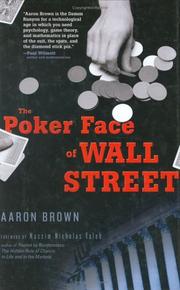
The Poker Face of Wall Street

The Poker Face of Wall Street

Aaron Brown
2006
T3 368 pages · about 6h 8m to read Open Librarygoodreads

Summary

Brown, a risk manager who has worked at Morgan Stanley, Citigroup and AQR and who played poker semi-professionally, argues that poker and financial markets are the same activity studied under different names. Both allocate risk among people with different information, different tolerance for loss and different reads of each other.

The historical sections make a specific claim: that gambling and finance in America grew together rather than separately. Brown traces card play among frontier traders, the role of betting in early commodity and securities markets, the overlap between bucket shops and gambling houses, and the personnel who moved between the two. He argues that the legal distinction between a wager and a financial contract has always been drawn for political reasons rather than economic ones.

The practical sections concern risk-taking behaviour. Brown discusses bankroll management, the difference between edge and variance, why good players fold most hands, why the money in poker comes from opponents' errors rather than from cards, and how these map onto trading. He is direct that most people who think they are investing are gambling badly, and that most people who think they are gambling are taking better-analysed risks than the investors.

The book is idiosyncratic and digressive, mixing memoir, history and technical material without a clear structure, which some readers find frustrating. The poker material predates the online poker boom and the solver era, which changed how the game is played and analysed. The historical claims are interesting but lightly sourced compared with academic financial history.

Key takeaways 7

  1. Poker and trading are the same activity, because both distribute risk among participants with different information and different loss tolerance.
  2. American financial markets and gambling institutions developed together, and the legal separation between them was drawn politically.
  3. Profits in poker come from opponents' mistakes, and the same is true of active trading.
  4. Bankroll management determines survival more than skill does, because a good player who bets too large still goes broke.
  5. Folding most hands is the correct strategy, and the trading equivalent is holding cash most of the time.
  6. Most retail investing involves less analysis of odds than competent gambling does.
  7. Risk takers need to distinguish between edge, which is small and durable, and variance, which is large and temporary.

Who should read it

Traders and risk takers who want an argument about the psychology and structure of betting, and readers interested in the shared history of gambling and finance.

Who recommended it 1 · 1 direct

“To quote Aaron Brown—a legendary Morgan Stanley derivatives trader and poker expert—from his extraordinary book”

Similar books 6

Chosen by shared topics, the entries that hold them, and the people who recommended both.
William Poundstone · 2005

The Kelly criterion for sizing bets, from Bell Labs to casinos and hedge funds.

Recommended by: Mohnish Pabrai
Mohnish Pabrai · 2007

The explicit argument for cloning rather than originating ideas.

“It is, without a doubt, my most recommended book on investing” — Andrew Wilkinson

Source: @awilkinson on X, 22 May 2024

Recommended by: Andrew Wilkinson, Guy Spier and 1 other
Edward O. Thorp · 2017

From beating blackjack with maths to pricing warrants and running a hedge fund.
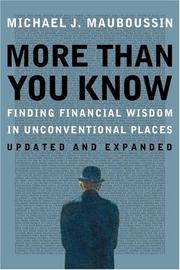
Michael Mauboussin · 2006

Essays on investing philosophy, psychology, competition and science.

Edward O. Thorp, Leonard C. MacLean, William T. Ziemba · 2010

Edited volume of collected papers.

Recommended by: Nassim Nicholas Taleb
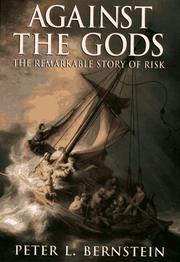
Peter L. Bernstein · 1996

How people learned to measure risk, from early probability to portfolio theory.

“I think some of the books that are a must would be Peter Bernstein's book about risk, Against the Gods: The Remarkable Story of Risk.” — Charles de Vaulx

Source: De Vaulx naming Bernstein's book a must-read on risk

Recommended by: Charles de Vaulx, Jim Collins and 8 others

Where it sits in the reference 2

Mental models
Mental models

Topics

InvestingGames and Puzzles