
More Than You Know: Finding Financial Wisdom in Unconventional Places
Summary
Mauboussin collected essays written for clients at Credit Suisse and Legg Mason into four sections: investment philosophy, psychology of investing, innovation and competitive strategy, and science and complexity theory.
The recurring arguments are the ones he has developed across his career. Process should be judged separately from outcome, and he supplies a two-by-two matrix of good and bad process against good and bad outcome to make the point operational. Expected value reasoning requires attending to the magnitude of an outcome as well as its probability, and he argues most investors are unable to hold a position that is right in expectation but likely to be wrong in any single instance. Markets are complex adaptive systems whose aggregate behaviour cannot be inferred from individual participants. Company returns on capital revert to the mean at rates that can be measured, which means growth assumptions embedded in high valuations are usually inconsistent with the base rates. He also covers the role of luck and skill, the importance of diversity in market participants, the mathematics of power law distributions in business outcomes, and the difference between information and knowledge.
The essay format means the book can be read in any order and that arguments recur. It is more a set of well-argued positions than a system, and readers wanting the developed versions should go to Expectations Investing, Think Twice and The Success Equation. The science and complexity material has aged reasonably; the psychology citations include studies from the pre-replication period. Its strength is compression and the quality of the analogical reasoning across fields.
Key takeaways 7
- Investment process and investment outcome must be evaluated separately, since a good process can produce a bad result and the reverse is more dangerous.
- Expected value requires attending to the size of the payoff as well as its probability, and most investors cannot hold positions that are usually wrong and right in expectation.
- Returns on invested capital revert to the mean at measurable rates, which means the growth implied by high valuations is usually inconsistent with historical base rates.
- Market efficiency depends on diversity among participants, and it breaks down when investors converge on the same model or the same information.
- Business outcomes follow power law distributions, so average-based reasoning misleads systematically about what to expect from a portfolio of ventures.
- Distinguishing skill from luck requires knowing the rate at which results revert to the mean in the activity concerned.
- More information does not improve prediction beyond a modest point, though it reliably increases the forecaster's confidence.
Who should read it
Investors who want compressed essays on process, expected value, mean reversion and complexity from a consistently rigorous practitioner.
About Michael Mauboussin
Head of Consilient Research, Counterpoint Global, Morgan Stanley Investment Management; previously Chief Investment Strategist at Legg Mason and Chief U.S. Investment Strategist at Credit Suisse
His research reports and Expectations Investing are primary sources that other investors, academics and strategists build directly on.
Who recommended it 1 · 1 direct
Similar books 6
Chosen by shared topics, the entries that hold them, and the people who recommended both.

Eight mistakes experienced decision-makers repeat, and a correction for each.
Recommended by: Mohnish Pabrai and 1 other
The ten attributes of successful investors: how to think well, not what to think.

How to separate skill from luck in business, sport and investing.
Recommended by: Mohnish Pabrai, Jessica Livingston and 3 others

“There are many things that never change” — Andrew Wilkinson
Source: Newsletter
Recommended by: Andrew Wilkinson
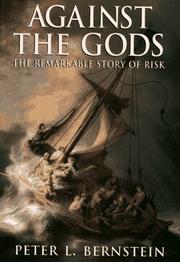
How people learned to measure risk, from early probability to portfolio theory.
“I think some of the books that are a must would be Peter Bernstein's book about risk, Against the Gods: The Remarkable Story of Risk.” — Charles de Vaulx
Source: De Vaulx naming Bernstein's book a must-read on risk
Recommended by: Charles de Vaulx, Jim Collins and 8 others
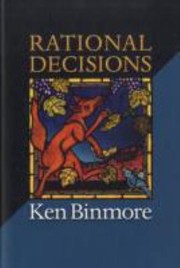
Binmore on when Bayesian decision theory applies and when it does not
Recommended by: Nassim Nicholas Taleb
Where it sits in the reference 3
Topics