
The Success Equation: Untangling Skill and Luck in Business, Sports, and Investing
Summary
Mauboussin gives a framework for separating skill from luck in any activity, on the argument that most analysis fails because it treats all outcomes as informative when only some are. His central device is the luck-skill continuum, with activities ranging from pure luck such as roulette to pure skill such as chess, and his test for locating an activity on it is whether you can lose deliberately.
His analytical method uses the arithmetic of variance. He shows that observed variance in outcomes equals the variance from skill plus the variance from luck, which allows estimation of the luck contribution from historical results. He applies it to major sports leagues and finds that basketball is the most skill-determined and hockey and baseball among the least, and he applies the same reasoning to investment returns.
The paradox of skill is his most useful contribution. As the absolute skill level in a field rises and the variation among participants narrows, luck determines a larger share of the outcome. This explains why investment outperformance has become harder as the profession has professionalised, and why the disappearance of the .400 batting average reflects improved play rather than decline.
He covers reversion to the mean carefully, showing that the rate of reversion depends on where the activity sits on the continuum, and that most analysts apply the wrong expectation. He gives practical guidance on sample sizes required before a track record carries information, on process versus outcome evaluation, and on constructing checklists. The framework requires reasonably long data series and is harder to apply to one-off business decisions. Some of the sports statistics are dated. The paradox of skill and the sample size arithmetic are the sections practitioners cite.
Key takeaways 8
- An activity can be located on a continuum between luck and skill, and the practical test is whether you can lose on purpose.
- Observed variance in outcomes equals skill variance plus luck variance, which allows the luck contribution to be estimated from historical results.
- As absolute skill rises and the spread among participants narrows, luck determines a larger share of outcomes, which is the paradox of skill.
- The rate at which results revert to the mean depends on where the activity sits on the continuum, and applying the wrong rate produces systematic forecasting errors.
- Activities dominated by luck require far longer records before a track record carries any information about ability.
- Where luck dominates, decisions should be evaluated on process rather than on outcome, because good decisions produce bad outcomes regularly.
- Extreme performance in any period is usually a combination of good skill and good luck, so the following period will disappoint even if the skill persists.
- Investment outperformance has become harder as the profession has improved, because the competition is now uniformly skilled rather than mixed.
Who should read it
Investors and executives evaluating track records, including their own, who want a method for estimating how much of a result was luck.
About Michael Mauboussin
Head of Consilient Research, Counterpoint Global, Morgan Stanley Investment Management; previously Chief Investment Strategist at Legg Mason and Chief U.S. Investment Strategist at Credit Suisse
His research reports and Expectations Investing are primary sources that other investors, academics and strategists build directly on.
Who recommended it 5 · 1 direct
Similar books 6
Chosen by shared topics, the entries that hold them, and the people who recommended both.

Eight mistakes experienced decision-makers repeat, and a correction for each.
Recommended by: Mohnish Pabrai and 1 other
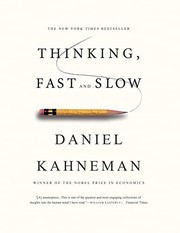
Kahneman's synthesis of behavioral economics is the cognitive science underpinning every negotiation tactic. Anchoring, loss aversion, framing effects, and the planning fallacy — understanding why these biases operate, not just that they exist, makes you harder to exploit and more honest about your own irrationality.
“…books I've recommended, highlighted to death, or forced on friends.” — Andrew Wilkinson
Source: Andrew Wilkinson's Bookshelf, neverenough.com
Recommended by: Andrew Wilkinson, Charles de Vaulx and 32 others

How judging firms by their results corrupts most business research and advice.
“Phil Rosenzweig's must-read book, The Halo Effect, shows this idea is alive and well in the business world.” — Michael Mauboussin
Source: Was Harry Potter Inevitable? Cumulative Advantage, Counterfactuals, and the Halo Effect (Legg Mason)
Recommended by: Michael Mauboussin, Ev Williams and 1 other

Essays on investing philosophy, psychology, competition and science.
Recommended by: Rational Capital Investment Fund
The ten attributes of successful investors: how to think well, not what to think.

Bevelin distilling observation and inference habits from Sherlock Holmes
Recommended by: Mohnish Pabrai, Patrick O'Shaughnessy and 1 other
Where it sits in the reference 5
Topics