Rational Capital Investment Fund
Student-run investment fund at the University of Toronto that manages a portfolio of private capital; trains members through an analyst candidate programme of weekly cases and keeps a virtual library.
31 books they recommend · 32 appearances
More 7
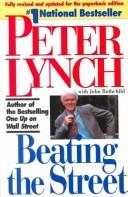
Lynch's stock-by-stock walkthrough of how he picked them.
Source: Value
Also recommended by: Julian Robertson, Mohnish Pabrai and 2 others
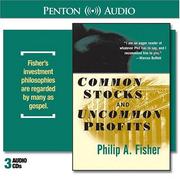
Buy a few outstanding growth companies, research them by scuttlebutt, and hold.
Source: Value
Also recommended by: Arnold Van Den Berg, Bill Stewart and 9 others

The amateur's edge argument from the Magellan record.
Source: Value
Also recommended by: David Rolfe, Francisco Garcia Parames and 8 others
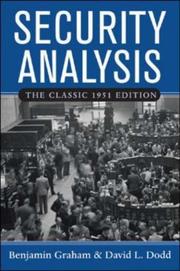
How to read financial statements sceptically and value bonds and stocks.
Source: Value
Also recommended by: Christopher Bloomstran, Howard Marks and 10 others
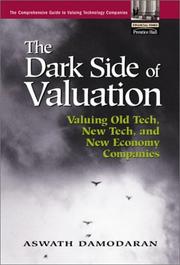
Source: Valuation and accounting
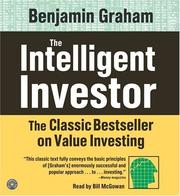
Treat stocks as parts of businesses and buy only with a margin of safety.
Source: Value
Also recommended by: Benjamin Graham, Christopher Bloomstran and 26 others
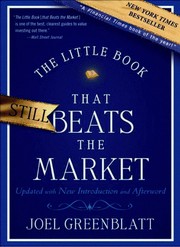
The magic formula: buy cheap stocks with high returns on capital, mechanically.
Source: Value
Also recommended by: Mohnish Pabrai, Mr. Money Mustache
Where small-cap and special-situation ideas actually come from.
Source: Value
Also recommended by: Christopher Bloomstran, Guy Spier and 1 other

Second-level thinking, risk and market cycles, drawn from Oaktree's client memos.
Source: Value
Also recommended by: Matt Mullenweg, Mohnish Pabrai, Nat Eliason and 2 others


The case for focus investing: ten to fifteen stocks held for a long time.
Source: Value
Also recommended by: Charlie Munger, Mohnish Pabrai
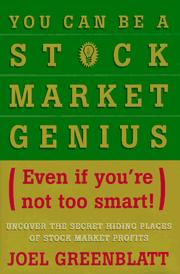
Where to find mispriced stocks: spinoffs, mergers, bankruptcies and restructurings.
Source: Value
Also recommended by: Dan Loeb, Guy Spier, Mohnish Pabrai and 5 others
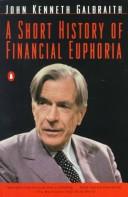
The recurring features of speculative booms, and why short memories bring them back.
Source: History
Also recommended by: Howard Marks, Mohnish Pabrai
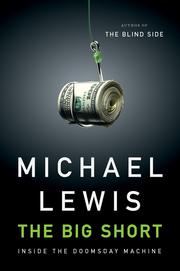
The few investors who saw subprime mortgage bonds would fail, and bet against them.
Source: History
Also recommended by: Mohnish Pabrai, Sheryl Sandberg, Ray Dalio and 2 others
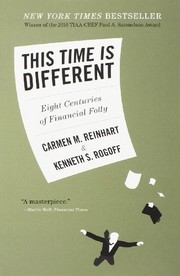
Eight centuries of defaults and banking crises show the same patterns recurring.
Source: History
Also recommended by: Mohnish Pabrai, Bill Gates, Raoul Pal
How a hedge fund's bond bets on borrowed money lost $4.6 billion in four months.
Source: History
Also recommended by: Mohnish Pabrai, Max Levchin, Michael Burry and 4 others
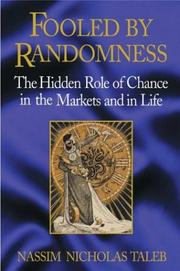
Why people mistake luck for skill, above all in markets.
Source: Behavioural, mental models and statistics
Also recommended by: Barton Biggs, Michael Mauboussin and 10 others
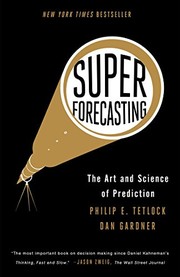
The Good Judgment Project; the practices that measurably improve forecasts.
Source: Behavioural, mental models and statistics
Also recommended by: Patrick Collison, Alexis Ohanian and 7 others
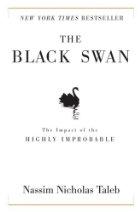
Rare, unforeseen, high-impact events drive history, explained only after the fact.
Source: Behavioural, mental models and statistics
Also recommended by: Howard Marks, Marc Andreessen, Nat Eliason and 17 others
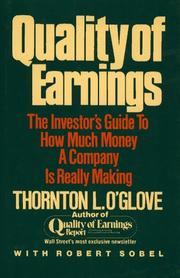
How to test whether reported earnings reflect reality, from tax books to receivables.
Source: Value
Also recommended by: Bill Ackman

Seventy questions to ask before buying any business.
Source: Value
Also recommended by: Mohnish Pabrai
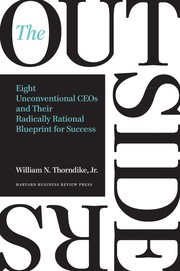
Eight CEOs who beat the market by allocating capital, not by running operations.
Source: Value
Also recommended by: Andrew Wilkinson, Dan Loeb, Francois Rochon and 11 others
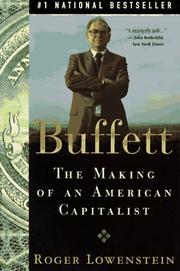
Buffett's life from Omaha and Graham's class to building Berkshire Hathaway.
Source: Biographies
Also recommended by: Andrew Wilkinson, Christopher Bloomstran and 11 others

Buffett's life to 2008, written with full access to his files and his friends.
Source: Biographies
Also recommended by: Andrew Wilkinson, Guy Spier, Mohnish Pabrai and 4 others

Source: Valuation and accounting

Essays on investing philosophy, psychology, competition and science.

Eight mistakes experienced decision-makers repeat, and a correction for each.
Source: Behavioural, mental models and statistics
Also recommended by: Mohnish Pabrai
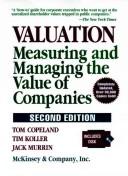
McKinsey's guide to discounted cash flow valuation and managing for value.
Source: Valuation and accounting
Also recommended by: Mohnish Pabrai
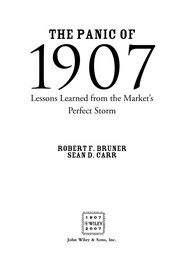
The 1907 panic day by day, from a failed copper corner to J.P. Morgan's rescue.
Source: History
Also recommended by: Mohnish Pabrai
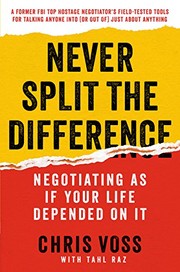
FBI hostage-negotiation tactics: labelling, mirroring and calibrated questions.
Source: Behavioural, mental models and statistics
Also recommended by: Alfred Lin, Nat Eliason and 5 others
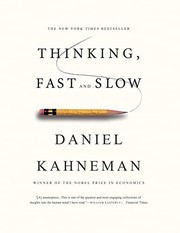
Kahneman's synthesis of behavioral economics is the cognitive science underpinning every negotiation tactic. Anchoring, loss aversion, framing effects, and the planning fallacy — understanding why these biases operate, not just that they exist, makes you harder to exploit and more honest about your own irrationality.
Source: Behavioural, mental models and statistics
Also recommended by: Andrew Wilkinson, Charles de Vaulx and 31 others
 TBruce J. Flatt — Durable Principles for Real Asset InvestingTalks at Google
 TRay Dalio — Principles: Life and WorkTalks at Google
 TBill Nygren — Value Investing Principles and ApproachTalks at Google
 TFrancois Rochon — The Art of InvestingTalks at Google
 TAndrew W. Lo — Adaptive MarketsTalks at Google
 TMohnish Pabrai — Intensive Stock Research Can Be Injurious to Financial HealthTalks at Google
 TAswath Damodaran — The Value of Stories in BusinessTalks at Google
 TJoel Greenblatt — The Little Book That Beats the MarketTalks at Google
 TChuck Akre — The Peregrinations of an English MajorTalks at Google
 TLauren Templeton — Investing the Templeton WayTalks at Google
 TJeremy Miller — Warren Buffett's Ground RulesTalks at Google
 TThornton O'Glove — Quality of EarningsTalks at Google
 TJames Grant — The Forgotten Depression of 1921Talks at Google
 TWilliam Green — The Great Minds of InvestingTalks at Google
 TJason Zweig — The Devil's Financial DictionaryTalks at Google
 TWilliam Thorndike — The OutsidersTalks at Google
 THewitt Heiserman — Ben Graham and the Growth InvestorTalks at Google
 TSanjay Bakshi — The Prejudices of Mr. MarketTalks at Google
 TDonald Yacktman — Viewing Stocks as BondsTalks at Google
 TTom Gayner — The Evolution of a Value InvestorTalks at Google
 THoward Marks — The Most Important Thing: Origins and InspirationsTalks at Google
 TMohnish Pabrai and Guy Spier in ConversationTalks at Google
 TAswath Damodaran — Valuation: Four Lessons to Take AwayTalks at Google
 TPat Dorsey — The Little Book That Builds WealthTalks at Google
 TTobias Carlisle — Deep Value InvestingTalks at Google
 TJohn Heins and Whitney Tilson — The Art of Value InvestingTalks at Google
 TLarry Cunningham — Berkshire Beyond BuffettTalks at Google
 TJohn Mihaljevic — The Manual of IdeasTalks at Google
 TGuy Spier — The Education of a Value InvestorTalks at Google
 TMohnish Pabrai — Dhandho: Heads I Win, Tails I Don't Lose MuchTalks at Google
 TMichael Mauboussin — The Success EquationTalks at Google
 TMebane Faber — Global ValueTalks at Google