
Updates

  1. Person pages list letters, writing, profiles and links as sortable tables with filters, and show each person's companies as links; Fund letters show each letter's description in its own column.
  2. Experts show a checked job title and a short description of each person; 30 more people have photographs.
  3. Every company, fund, university and publication the experts work for has a page listing the people there.
  4. Fund letters show each letter's thesis and filter by it; 225 person pages list the essays, columns and newsletter issues the person wrote.
  5. Person pages list every essay and newsletter issue a person wrote, and their own books as a table in List view.
  6. Recommends shows the five largest kinds of book and the rest under More; browse pictures load sooner.
  7. Podcasts and talks link the original episode, filter by Audio and video or Press, and list each publisher once.
  8. Pages are wider, Recommends has List and Grid, and a filter clicked again turns off.
  9. Book cards sit in a ruled grid with Open Library and Goodreads links and each book's one-line note.
  10. Funds is now Investors; each investor's styles are buttons that filter the table.
  11. Podcasts and talks on a person's page filter by year and publisher and show as a list or a grid of pictures.
  12. Quotes show only people's own words: 472 summaries written by list sites are gone.
  13. Country pages open from Browse again, and every link on the shelf lands on a page.
  14. Subject and person pages show their sections as tabs, and each book appears once on a person's page.
  15. Book cards show the quote, who said it and the source; grids show five cards to a row.
  16. On a phone, a menu holds the sections, search, Updates, Feedback and dark mode.
  17. Feedback takes a screenshot of the page with no browser prompt, opens a screenshot full size when you click it, and clears itself once sent.
  18. Book cards are centred, search names the topic each book sits in, and any text cut short shows whole on hover.
  19. Search groups its results by kind: people, companies, geographies, subjects, topics, books, funds, fund letters and papers.
  20. The Books table lists who recommended each book by name, and the browser tab names the section you are in.
  21. Feedback can take a screenshot of the page, or one you paste or choose, and opens in the corner beside Updates.
  22. Each rail button reopens its section where you left it, and Browse, Table and People show on every book and subject page.
  23. Filters grey out choices that hold nothing instead of hiding them, and Books › People filters by authors or recommenders.
  24. Feedback takes a subject line and up to three screenshots.
  25. Biographies are grouped by the person they are about: 41 new pages, from Abraham Lincoln to Lee Kuan Yew.
  26. Sport splits into 23 sports, and Religion into one topic per faith.
  27. Book lists show as cards: the cover, one recommendation quote and every recommender by name.
  28. Seventeen subjects that had two or three pages under different names now have one page each.
  29. Every page lists its Experts as authors and recommenders, with a link to them on the Experts tab.
  30. Economics, Financial history, Financial panics and Accounting are subjects of their own, with one page per financial crisis.
  31. Book, person and subject pages open inside the app, so the tabs stay in view.
  32. 996 more book covers, and photographs or logos for 227 more people and companies.
  33. Books › Browse shows every subject as cards, and the rail holds Fund letters, Papers, Experts, Books and Funds.
  34. Every topic over 150 books splits into narrower topics, each with a page of its own.

Send feedback

What is it?
Screenshots, up to 3 (optional)
or paste one with Ctrl+V

We use your email only to reply to you.

The Panic of 1907

The Panic of 1907

Robert F. Bruner, Sean D. Carr
2007
T2 268 pages · about 4h 28m to read Open Librarygoodreads

Morgan acting as lender of last resort before there was a Fed.

Summary

Bruner and Carr reconstruct the October 1907 panic day by day, beginning with the failed corner in United Copper, moving through the run on the Knickerbocker Trust Company, and ending with the syndicate J.P. Morgan assembled in his library to stop the contagion. They draw on newspaper accounts, clearinghouse records, Congressional testimony and the correspondence of the principals.

The analytical spine is a checklist of conditions the authors argue precede most financial crises: system complexity, buoyant growth, inadequate safety buffers, adverse leadership, a real economic shock, undue fear and greed, and a failure of collective action. They apply this frame to 1907 and argue the panic was not caused by any single villain but by a system that had grown faster than its shock absorbers, with trust companies operating outside the clearinghouse reserve discipline that protected national banks.

The book is short and readable, and it is the standard popular account of the episode that produced the Federal Reserve Act six years later. Its main use for investors is as a case study in how liquidity crises propagate through institutions that appear healthy on paper, and how private coordination substitutes badly for a lender of last resort. The seven-factor framework is loose enough to fit almost any crisis after the fact, and historians of the period have pushed back on the heroic treatment of Morgan, who profited from several of the rescues he arranged. Readers wanting the monetary-history argument in depth should pair it with Friedman and Schwartz or with Gorton on the trust-company run mechanism.

Key takeaways 7

  1. The 1907 panic began in the trust companies, which faced bank-like runs while holding far lower cash reserves than national banks and standing outside clearinghouse mutual support.
  2. Financial crises follow a recurring pattern in which a growing, complex system with thin buffers meets a real shock and then fails at collective action.
  3. J.P. Morgan's private syndicate performed the functions a central bank would later perform, and did so only because one man could compel cooperation among rivals.
  4. The San Francisco earthquake of 1906 drained gold and capital from New York and left the system with less slack than it appeared to have.
  5. Public confidence, not solvency, determined which institutions survived the panic.
  6. The episode directly produced the Aldrich-Vreeland Act and the National Monetary Commission, and through them the Federal Reserve.
  7. Crisis intervention worked when it was fast, large and visibly credible, and failed when rescuers hesitated over whether a firm deserved saving.

Who should read it

Investors and operators who want a compact case study of how a liquidity crisis moves through institutions and why lender-of-last-resort capacity exists.

Who recommended it 2 · 2 direct

Similar books 6

Chosen by shared topics, the entries that hold them, and the people who recommended both.
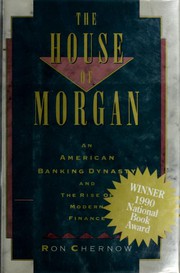
Ron Chernow · 1990

The Morgan banks from 1830s London to J.P. Morgan and Morgan Stanley in the 1980s.

Recommended by: Mohnish Pabrai, Paul Graham
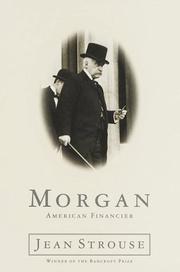
Jean Strouse · 1999

J. Pierpont Morgan's life, drawn from family and business papers others had not used.
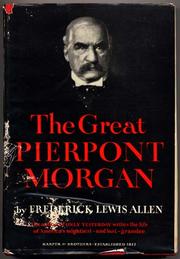
Frederick Lewis Allen · 1949

J. P. Morgan from the Civil War to 1913: railroads, US Steel and rescues.
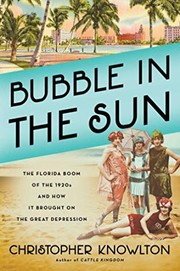
Christopher Knowlton · 2020

The 1920s Florida land boom and its collapse.

Recommended by: Morgan Housel

Michael Cannon · 1966

The Melbourne property mania and bank collapses of the 1890s.
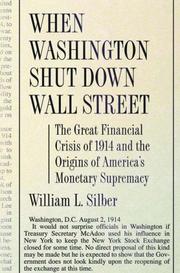
William L. Silber · 2007

The 1914 closure of the exchange, and how the dollar took over.

Where it sits in the reference 3

Companies
Biographies
Financial panics

Topics

Financial HistoryGeneral HistoryFinancial History