
Updates

  1. Person pages list letters, writing, profiles and links as sortable tables with filters, and show each person's companies as links; Fund letters show each letter's description in its own column.
  2. Experts show a checked job title and a short description of each person; 30 more people have photographs.
  3. Every company, fund, university and publication the experts work for has a page listing the people there.
  4. Fund letters show each letter's thesis and filter by it; 225 person pages list the essays, columns and newsletter issues the person wrote.
  5. Person pages list every essay and newsletter issue a person wrote, and their own books as a table in List view.
  6. Recommends shows the five largest kinds of book and the rest under More; browse pictures load sooner.
  7. Podcasts and talks link the original episode, filter by Audio and video or Press, and list each publisher once.
  8. Pages are wider, Recommends has List and Grid, and a filter clicked again turns off.
  9. Book cards sit in a ruled grid with Open Library and Goodreads links and each book's one-line note.
  10. Funds is now Investors; each investor's styles are buttons that filter the table.
  11. Podcasts and talks on a person's page filter by year and publisher and show as a list or a grid of pictures.
  12. Quotes show only people's own words: 472 summaries written by list sites are gone.
  13. Country pages open from Browse again, and every link on the shelf lands on a page.
  14. Subject and person pages show their sections as tabs, and each book appears once on a person's page.
  15. Book cards show the quote, who said it and the source; grids show five cards to a row.
  16. On a phone, a menu holds the sections, search, Updates, Feedback and dark mode.
  17. Feedback takes a screenshot of the page with no browser prompt, opens a screenshot full size when you click it, and clears itself once sent.
  18. Book cards are centred, search names the topic each book sits in, and any text cut short shows whole on hover.
  19. Search groups its results by kind: people, companies, geographies, subjects, topics, books, funds, fund letters and papers.
  20. The Books table lists who recommended each book by name, and the browser tab names the section you are in.
  21. Feedback can take a screenshot of the page, or one you paste or choose, and opens in the corner beside Updates.
  22. Each rail button reopens its section where you left it, and Browse, Table and People show on every book and subject page.
  23. Filters grey out choices that hold nothing instead of hiding them, and Books › People filters by authors or recommenders.
  24. Feedback takes a subject line and up to three screenshots.
  25. Biographies are grouped by the person they are about: 41 new pages, from Abraham Lincoln to Lee Kuan Yew.
  26. Sport splits into 23 sports, and Religion into one topic per faith.
  27. Book lists show as cards: the cover, one recommendation quote and every recommender by name.
  28. Seventeen subjects that had two or three pages under different names now have one page each.
  29. Every page lists its Experts as authors and recommenders, with a link to them on the Experts tab.
  30. Economics, Financial history, Financial panics and Accounting are subjects of their own, with one page per financial crisis.
  31. Book, person and subject pages open inside the app, so the tabs stay in view.
  32. 996 more book covers, and photographs or logos for 227 more people and companies.
  33. Books › Browse shows every subject as cards, and the rail holds Fund letters, Papers, Experts, Books and Funds.
  34. Every topic over 150 books splits into narrower topics, each with a page of its own.

Send feedback

What is it?
Screenshots, up to 3 (optional)
or paste one with Ctrl+V

We use your email only to reply to you.

The Land Boomers

The Land Boomers

Michael Cannon
1966
T3 247 pages · about 4h 7m to read Open Librarygoodreads

The Melbourne property mania and bank collapses of the 1890s.

Summary

Michael Cannon wrote this history of the Melbourne land boom of the 1880s and the collapse that followed in the early 1890s, which produced one of the most severe financial crises in Australian history and a depression that lasted a decade.

The boom was driven by gold-derived wealth, by British capital inflows seeking higher returns, and by a building society and land bank sector that lent aggressively against subdivided suburban land. Cannon documents the specific mechanisms: land subdivided far beyond any plausible demand, valuations supported by transactions between related parties, institutions lending against their own directors' developments, and financial reporting that concealed the position.

The collapse in 1891 and 1892 destroyed most of the land banks and building societies and several trading banks. Cannon's distinctive contribution is his research into the aftermath: he documents how prominent Melbourne figures used secret compositions with creditors, arrangements approved in private hearings, to escape their debts while retaining their assets and their public positions, and he names them. The book was controversial in Australia for this reason. It is narrative history based on archival and newspaper research rather than economic analysis, and it remains the standard account of the episode.

Key takeaways 7

  1. The Melbourne land boom subdivided suburban land far beyond any plausible demand, supported by transactions between related parties.
  2. British capital inflows seeking yield funded the boom, and their withdrawal precipitated the collapse.
  3. Land banks and building societies lent against developments controlled by their own directors.
  4. Financial reporting concealed the institutions' positions until the collapse made them undeniable.
  5. Prominent participants used secret compositions with creditors, approved in private, to escape debts while retaining assets and social position.
  6. The resulting depression lasted a decade, which was far longer than the boom that preceded it.
  7. Cannon's research into the private compositions is the book's distinctive contribution and was contested in Australia.

Who should read it

Readers of financial history interested in property credit cycles and in what happens to the people responsible after a collapse.

Similar books 6

Chosen by shared topics, the entries that hold them, and the people who recommended both.
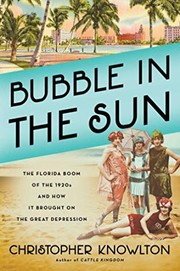
Christopher Knowlton · 2020

The 1920s Florida land boom and its collapse.

Recommended by: Morgan Housel
Robert F. Bruner, Sean D. Carr · 2007

The 1907 panic day by day, from a failed copper corner to J.P. Morgan's rescue.

Recommended by: Mohnish Pabrai and 1 other
William L. Silber · 2007

The 1914 closure of the exchange, and how the dollar took over.
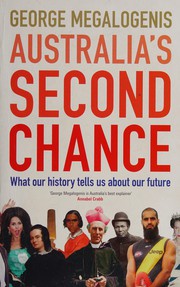
George Megalogenis · 2015

Migration and openness as the source of Australia's long-run growth.
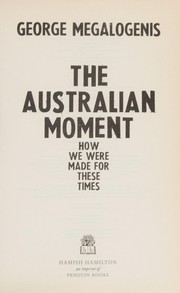
George Megalogenis · 2012

How deregulation from 1983 produced three decades without recession.
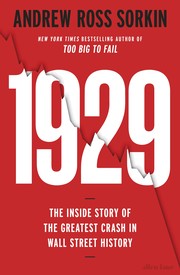
T4 1929
Andrew Ross Sorkin · 2025

The 1929 Wall Street crash: the greed and folly behind America's greatest collapse.

Recommended by: Bill Gates, Howard Marks

Where it sits in the reference 2

Geographies
Financial panics

Topics

Financial HistoryGeneral HistoryFinancial History