
Paul Graham
English-American programmer who created the Arc language and Hacker News; wrote On Lisp, ANSI Common Lisp and Hackers & Painters, and essays Steven Levy called the work of a 'hacker philosopher'.
 Y Combinator
His essay archive is the primary source that the modern startup canon quotes, argues with and reuses; the essays matter more than the books.
4 books of their own · 232 articles · 160 books they recommend
Start here
- On Lisp1993
- ANSI Common Lisp1995
- Hackers & Painters2004
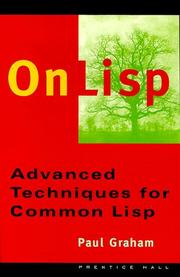
Out of print; Graham distributes it free as a PDF
Recommended by: Paul Graham, Patrick Collison

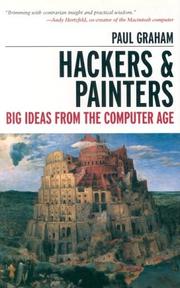
Subtitled 'Big Ideas from the Computer Age'; collects early essays
Recommended by: Brian Armstrong, Ev Williams, Keith Rabois and 3 others
 On Lisp | Out of print; Graham distributes it free as a PDF | 1993 | Paul Graham, Patrick Collison | |
 ANSI Common Lisp | – | 1995 | Paul Graham | |
 Hackers & Painters | Subtitled 'Big Ideas from the Computer Age'; collects early essays | 2004 | T3 | Brian Armstrong, Ev Williams, Keith Rabois and 3 others |
| How To Be an Expert in a Changing World | – | Patrick O'Shaughnessy |
More 25



“Girouard, Life in the English Country House” — Paul Graham

How the stirrup and the plough reorganised medieval society and economy
Also recommended by: Patrick Collison

Argues that the Arab conquests ended Roman Europe and opened the Dark Ages.

Nearly a thousand years of Islamic rule in Spain from 711, and its mark on Europe.

Maps in sequence of peoples in Europe and the Near East, from 50,000 BC to AD 362.
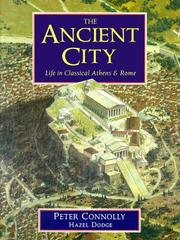
Drawn reconstructions of buildings that open up two ancient cities and their people.
Also recommended by: Balaji S. Srinivasan

The 1578 battle in Morocco that destroyed Portugal's King Sebastian and his army.
Also recommended by: Graham Duncan

How American life changed between 1900 and 1950.
Also recommended by: Morgan Housel
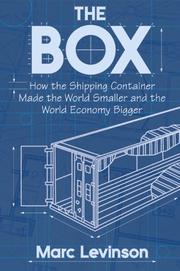
How the shipping container cut freight costs and remade global trade.
Also recommended by: Bill Gates, Mohnish Pabrai, Tobi Lütke


“Runciman, The Fall of Constantinople” — Paul Graham

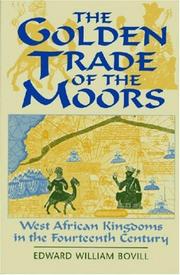
Trans-Saharan gold and salt trade; the medieval West African economy
“Bovill, The Golden Trade of the Moors” — Paul Graham


An interpretation of the New Deal and of the historians who have written on it.


Pre-industrial English society before wage labour and cities
“Laslett, The World We Have Lost” — Paul Graham





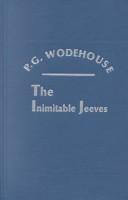
Bertie and Jeeves help, and sometimes hinder, the love-struck Bingo Little.
Also recommended by: Jessica Livingston
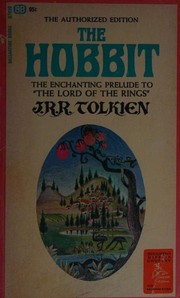
A novel of the quest to destroy a ring of power that corrupts all who use it.
Also recommended by: Reid Hoffman, Alexey Moiseenkov, Elon Musk and 4 others
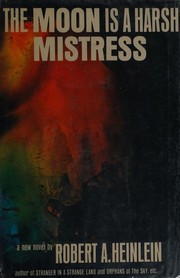
“a novel by Heinlein called The Moon is a Harsh Mistress, which featured an intelligent computer called Mike” — Paul Graham
Source: What I Worked On — paulgraham.com (February 2021)
Also recommended by: Delian Asparouhov, Elon Musk


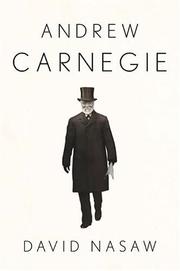
Carnegie's rise from a bobbin boy of thirteen to the richest man in the world.
Also recommended by: Andrew Wilkinson, Abi Tyas Tunggal and 1 other
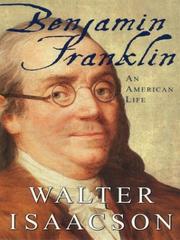
Franklin's life as printer, scientist, diplomat and founder.
Also recommended by: Alfred Lin, Andrew Wilkinson, Mohnish Pabrai and 6 others

The definitive account of John Boyd and the OODA loop. Boyd's contribution was to show that strategy is fundamentally about time and adaptation: the side that observes, orients, decides, and acts faster keeps the opponent reacting rather than acting. His ideas crossed into business, software, and lean manufacturing.
Also recommended by: Morgan Housel, Patrick O'Shaughnessy and 1 other


A boyhood of boarding schools, beatings, expulsion, attempted suicide and prison.

A comic memoir of a boyhood on Corfu with an odd family and the island's wildlife.


A printer's rise in colonial America and his chart for practising thirteen virtues.
Also recommended by: Charlie Munger, Mohnish Pabrai, Nat Eliason and 3 others


Source: Lisp Links: Books — paulgraham.com
Also recommended by: Patrick Collison
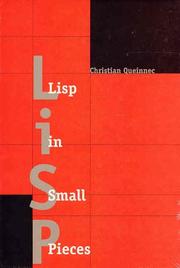

Out of print; Graham distributes it free as a PDF
Source: Lisp Links: Books — paulgraham.com
Also recommended by: Patrick Collison

The theory, techniques and uses of partial evaluation, which specialises programs.

Essays on software design, programming and the businesses around them.
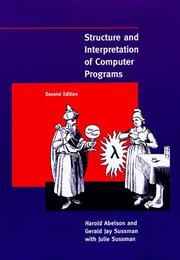
MIT's introductory computer science text, taught through Lisp and Scheme.
Source: Lisp Links: Books — paulgraham.com
Also recommended by: Patrick Collison, Bret Victor, Max Levchin
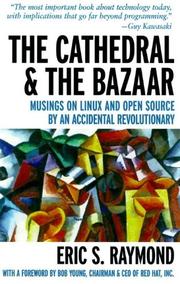
Essays on open-source software and its model of collaborative development.
Also recommended by: Ryan Holiday


Source: Lisp Links: Books — paulgraham.com
Also recommended by: Bret Victor, Susan J. Fowler

The life of Claude Shannon, whose information theory underlies the digital age.
Also recommended by: Bryan Johnson, Jim O'Shaughnessy


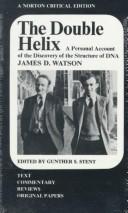
A first-hand account of the race against Linus Pauling to find DNA's structure.
Also recommended by: Patrick Collison, Peter Attia
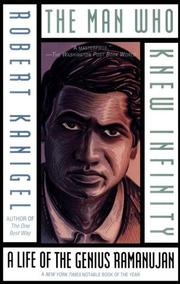
Also recommended by: Patrick Collison, Sophie Bakalar
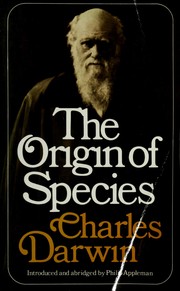
Species change over time as natural selection favours heritable variations.
Also recommended by: Jim Collins, Mohnish Pabrai, Naval Ravikant and 4 others
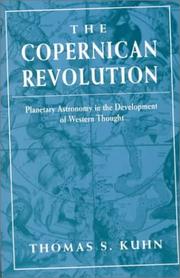
How the Copernican revolution unfolded, as a turning point in scientific thought.
“Kuhn, The Copernican Revolution” — Paul Graham
Source: Rarely-Asked Questions — paulgraham.com
Also recommended by: Patrick Collison

“Bernal, The Extension of Man” — Paul Graham

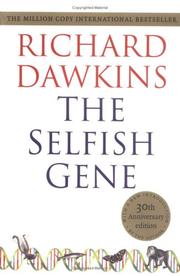
Selection acts on genes; bodies are vehicles that genes build to copy themselves.
Also recommended by: Balaji S. Srinivasan, Charlie Munger and 9 others

Science moves through long stretches of normal work broken by paradigm shifts.
Also recommended by: Nat Eliason, Charlie Munger, Mark Zuckerberg and 4 others


An institutionalist study of American business firms and labour organisations.
How large corporations run by a technostructure of experts plan rather than compete.


Hedge funds from Alfred Winslow Jones in 1949 through Soros, Robertson and beyond.
“It's hard to imagine anyone will ever write a better book on the subject.” — Paul Graham
Source: Paul Graham on X (Apr 8, 2021)
Also recommended by: Mohnish Pabrai, Josh Wolfe, Tim Ferriss

A microeconomic history of American business from 1914 to 1984.
Revolutions in power, transport, communication and organisation that made big firms.
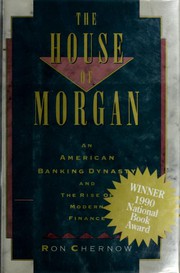
The Morgan banks from 1830s London to J.P. Morgan and Morgan Stanley in the 1980s.
Also recommended by: Mohnish Pabrai

A philosopher defines bullshit by setting it apart from lying and humbug.


A father and son's motorcycle trip framing an inquiry into what Quality means.
Also recommended by: Brad Feld, Mohnish Pabrai, Nick Sleep and 7 others
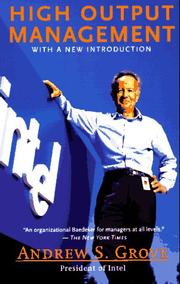
Management as production: a manager's output is the output of the team they lead.
Also recommended by: Nat Eliason, Tim Ferriss, Andrew Chen and 23 others
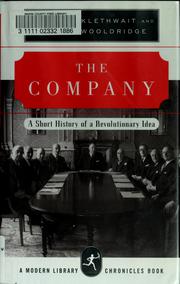
A short history of the joint stock company, from trading charters to multinationals.
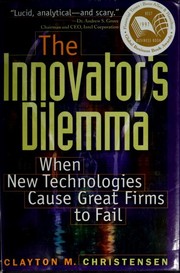
Why well-run firms lose to cheaper, worse products that enter at the market's bottom.
Also recommended by: Jim Collins, Mohnish Pabrai, Aaron Levie and 26 others

How salaried managers replaced markets in coordinating US business, 1840 to 1920.

Inside Y Combinator in the years before Altman ran it.
Also recommended by: Garry Tan

Venture capital from Arthur Rock to SoftBank, and why a few big bets pay for all.
Also recommended by: Andrew Wilkinson, Anthony Pompliano and 3 others


Why startups should build something new and own a small market before growing.
Also recommended by: Balaji S. Srinivasan, Eric Weinstein and 35 others
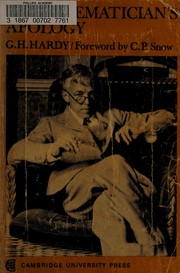
Also recommended by: Patrick Collison


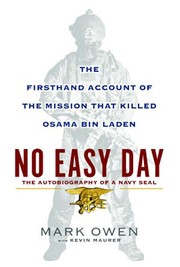

The broad lines of European military history from 378 to 1515.
“Oman, The Art of War in the Middle Ages” — Paul Graham
Source: Rarely-Asked Questions — paulgraham.com
Also recommended by: Sam Altman

Interviews with German generals of the Second World War and their military lessons.
Also recommended by: Patrick Collison
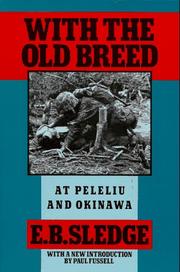
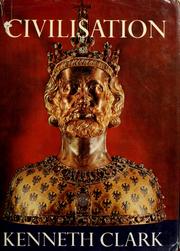
“Here are the most exciting ones I can think of: Clark, Civilisation” — Paul Graham
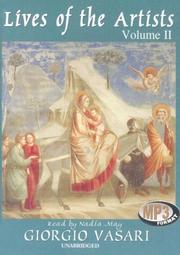
Lives of the painters, sculptors and architects of the Italian Renaissance.
“Vasari, Lives of the Artists” — Paul Graham
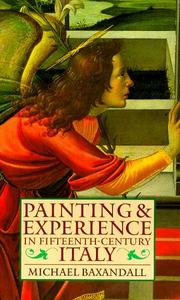
Fifteenth-century Italian painting, and reading social history from its style.
Google's technical and business decisions from Stanford research to 2011.
Also recommended by: Mohnish Pabrai, Charlie Munger, Drew Houston and 1 other
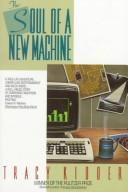
A Data General team races to design a 32-bit minicomputer in about a year.
Also recommended by: Mohnish Pabrai, Patrick Collison, Brad Feld and 2 others

The Ford Motor Company from 1903 to the end of the 20th century.



Also recommended by: Andrew Wilkinson

Also recommended by: Ryan Peterson
Also recommended by: Andrew Wilkinson, Sahil Bloom
Writing advice focused on the fears and habits that stop people writing.
Also recommended by: Balaji S. Srinivasan, Maria Popova and 7 others

Source: Lisp Links: Books — paulgraham.com
Also recommended by: Patrick Collison
King's memoir of craft applies as directly to screenwriting as to fiction. His argument that story comes before plot — that you discover what a story is about by following characters rather than outlining — sits in productive tension with the structural approaches of McKee and Snyder.
Also recommended by: Nat Eliason, Jason Calacanis, Sam Parr


Also recommended by: Ryan Holiday, Alexis Ohanian, Andrew Chen and 5 others

How plague, cholera, malaria and smallpox shaped history.
Also recommended by: Patrick Collison

Techniques for handling people, being liked and winning others to your view.
Also recommended by: Mohnish Pabrai, Alex and Books and 12 others
Lessons from IBM's OS/360: why adding people to a late software project slows it.
Source: Lisp Links: Books — paulgraham.com
Also recommended by: Mohnish Pabrai, Andrew Chen, Jeff Atwood and 2 others

Three generations of hackers, from MIT's AI Lab to the Homebrew club and game makers.
Also recommended by: Austen Allred, Ev Williams, Marc Andreessen and 2 others
A physicist's stories, from fixing radios as a boy to Los Alamos and beyond.
Also recommended by: Brian Armstrong, Matt Mullenweg and 18 others
| Y Combinator, Silicon Valley’s Start-Up Machine Paywall | The New York Times | 2013 |
| Y Combinator Is Boot Camp for Startups Paywall | Wired | 2011 |