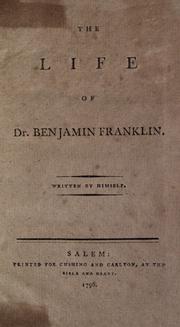
The Autobiography of Benjamin Franklin
Franklin's self-improvement system; the origin of thrift and deferred reward
Summary
Franklin wrote the autobiography in four parts between 1771 and 1790 and never finished it, so it covers his life only to 1757 and omits the Revolution, the French mission and the Constitutional Convention. The first part was written as a letter to his son William, and the tone shifts across the sections.
The narrative covers the Boston apprenticeship under his brother James, the flight to Philadelphia, the printing business, the Junto discussion club, the founding of the subscription library, the fire company, the American Philosophical Society and the academy that became the University of Pennsylvania, Poor Richard's Almanack, and the electricity experiments.
The most discussed section is the project of moral perfection, in which Franklin lists thirteen virtues, works on one per week in rotation, and tracks failures on a chart. He reports that he never achieved the standard but that the attempt made him better than he would otherwise have been, and he notes with characteristic self-awareness that he added humility to the list on a friend's advice and never mastered it.
The business material is instructive. Franklin describes cultivating the appearance of industry deliberately, avoiding public disputation because it makes enemies and rarely persuades, and the practice of proposing ideas as suggestions from others to reduce resistance. The text is eighteenth-century prose and requires adjustment. Franklin is selective about his own conduct and omits a great deal, including his treatment of his family and his early ownership of slaves. It is a construction of a public self as much as a record. Its influence on American self-improvement writing is direct and traceable through to the present.
Key takeaways 8
- Franklin worked on thirteen named virtues one week at a time in rotation, tracking failures on a chart, and reports that the attempt improved him even though he never achieved the standard.
- Cultivating the visible appearance of industry and reliability was a deliberate business practice that produced credit and customers.
- Direct contradiction in conversation makes enemies and rarely persuades, so Franklin adopted the habit of expressing opinions with qualification.
- Proposing an idea as coming from others reduces resistance and increases the chance it is adopted.
- A small group meeting regularly for mutual improvement and civic projects, which Franklin called the Junto, produced most of his institutional achievements.
- Public institutions can be founded by organising subscribers rather than by petitioning authority, which is how the library, the fire company and the university began.
- Franklin retired from active business at forty-two by structuring partnerships that continued to produce income without his labour.
- He refused to patent his inventions, treating them as a return for the benefits he had received from others' inventions.
Who should read it
Readers who want the primary source of American self-improvement and civic entrepreneurship, understanding that it is a constructed public self.
Who recommended it 7 · 3 direct
Similar books 6
Chosen by shared topics, the entries that hold them, and the people who recommended both.
Franklin's life as printer, scientist, diplomat and founder.
“…books I've recommended, highlighted to death, or forced on friends.” — Andrew Wilkinson
Source: Andrew Wilkinson's Bookshelf, neverenough.com
Recommended by: Alfred Lin, Andrew Wilkinson, Mohnish Pabrai and 7 others
The standard mid-century Franklin biography; Munger's model of a working life
Recommended by: Charlie Munger
Franklin's reinvention from imperial gentleman into American businessman
“if you haven't read much about Ben Franklin, that's what I would suggest” — Joel Greenblatt
Source: Masters in Business transcript: Joel Greenblatt (2020)
Recommended by: Joel Greenblatt
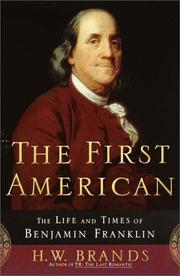
A life of Benjamin Franklin, the foremost American of his day.
Recommended by: Ev Williams

Narrative of the American West's mining and railroad fortunes
Recommended by: Charlie Munger

Joseph P. Kennedy's life in banking, film, the stock market and politics.
Recommended by: Mohnish Pabrai, Morgan Housel
Where it sits in the reference 3
Topics