
Men to Match My Mountains
Narrative of the American West's mining and railroad fortunes
Summary
Irving Stone, a popular biographer, wrote this narrative history of the American West from 1840 to 1900, covering California, Nevada, Utah and Colorado through the individuals who settled and developed them.
The subjects include the overland migration and the Donner party, the Mormon settlement of Utah under Brigham Young, the California gold rush and the men who profited from it, the Comstock Lode silver discovery in Nevada and the fortunes it produced, the Colorado mining booms, the building of the transcontinental railroad and the Big Four who financed it, and the political and commercial development of San Francisco.
The economic content that interests investors is incidental but real: the recurring pattern in which the largest fortunes went to the people supplying the miners rather than to the miners themselves, the enormous capital requirements of deep hardrock mining once surface deposits were exhausted, the speculation in mining shares that developed in San Francisco, and the land grants and government financing that made the railroads possible.
Stone writes popular narrative history and is a storyteller rather than a researcher. The book is from 1956 and its treatment of Native American populations reflects the period in ways that later scholarship has entirely revised. The reference has not verified its specific claims, which are drawn from secondary sources and shaped for narrative effect. It is worth reading for the sweep and the individuals rather than as history.
Key takeaways 7
- The largest fortunes in the mining booms went to those supplying the miners rather than to the miners themselves.
- Deep hardrock mining required capital far beyond what individual prospectors could raise, which converted mining from prospecting into an industrial business.
- Mining share speculation in San Francisco developed into a market whose prices had little connection to the underlying deposits.
- The transcontinental railroad was built on government land grants and financing rather than on any commercial calculation of route profitability.
- Mormon settlement of Utah succeeded through central direction of land allocation, irrigation and settlement placement rather than through individual claim staking.
- Boom towns collapsed as fast as they grew, because the entire economic basis was extraction from a deposit with a finite life.
- The book is popular narrative history from 1956 and its specific claims and its treatment of Native populations should not be relied on.
Who should read it
Readers wanting narrative history of Western American settlement, treated as popular storytelling rather than as verified history.
Who recommended it 1 · 1 direct
Similar books 6
Chosen by shared topics, the entries that hold them, and the people who recommended both.

How American life changed between 1900 and 1950.
Recommended by: Morgan Housel, Paul Graham

Joseph P. Kennedy's life in banking, film, the stock market and politics.
Recommended by: Mohnish Pabrai, Morgan Housel

The standard mid-century Franklin biography; Munger's model of a working life
Recommended by: Charlie Munger

A printer's rise in colonial America and his chart for practising thirteen virtues.
Recommended by: Charlie Munger, Mohnish Pabrai, Nat Eliason and 4 others
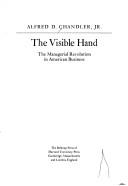
How salaried managers replaced markets in coordinating US business, 1840 to 1920.
Recommended by: Paul Graham

Franklin's life as printer, scientist, diplomat and founder.
“…books I've recommended, highlighted to death, or forced on friends.” — Andrew Wilkinson
Source: Andrew Wilkinson's Bookshelf, neverenough.com
Recommended by: Alfred Lin, Andrew Wilkinson, Mohnish Pabrai and 7 others
Where it sits in the reference 2
Topics