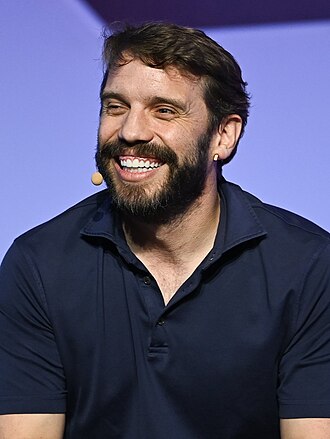
Ryan Peterson
Founded the freight forwarder Flexport in 2013, handed the CEO post to former Amazon executive Dave Clark in 2022 and took it back in September 2023; earlier co-founded ImportGenius with his brother in 2006.
 Flexport
 Founders Fund
 ImportGenius
26 books they recommend · 33 appearances
More 9
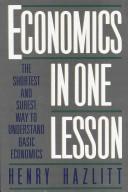
Hazlitt's 1946 distillation of Bastiat's 'broken window' insight: good economic reasoning requires seeing both what is visible and what is made invisible by a policy. A short book that teaches a single analytical habit, and that habit is genuinely useful regardless of your politics.
Also recommended by: Christopher Bloomstran, Changpeng Zhao and 2 others
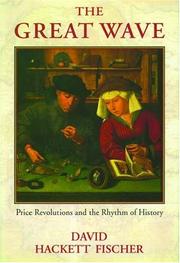
Eight centuries of price revolutions and what ended each one.
Also recommended by: Balaji S. Srinivasan
The economy as a complex evolving system rather than one in equilibrium.
Seven sources of lasting advantage, each a benefit plus a barrier to rivals.
Also recommended by: Alex Lieberman, Brett Adcock, Daniel Ek and 5 others
A plant manager learns that a system's output is set by its bottleneck.
Also recommended by: Mohnish Pabrai, Nat Eliason and 4 others
Operating manual for scaling a company from fifty to thousands
Also recommended by: Balaji S. Srinivasan, Matt Mullenweg and 9 others
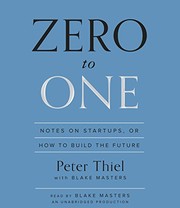
Why startups should build something new and own a small market before growing.
Also recommended by: Balaji S. Srinivasan, Eric Weinstein and 35 others

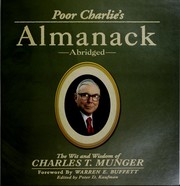
Speeches making the case for a latticework of mental models from many fields.
Also recommended by: Andrew Wilkinson, Charlie Munger and 25 others
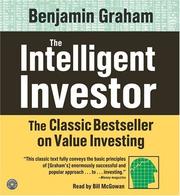
Treat stocks as parts of businesses and buy only with a margin of safety.
Also recommended by: Benjamin Graham, Christopher Bloomstran and 26 others
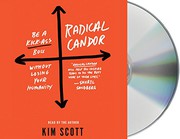
Scott's two-axis framework — care personally, challenge directly — gives a practical vocabulary for the feedback conversations managers routinely avoid. The quadrant model (Radical Candor, Ruinous Empathy, Obnoxious Aggression, Manipulative Insincerity) is one of the most operationally useful tools in management writing.
Also recommended by: Aileen Lee, Brett Adcock, David Cancel and 6 others
An operating manual for founders scaling from a few people to a few hundred.
Also recommended by: Nat Eliason, Alexis Ohanian, Ali Abdaal and 3 others

Incerto volume 4
Also recommended by: Mohnish Pabrai, Nat Eliason and 24 others
Naval Ravikant's ideas on building wealth and being happy, gathered from his talks.
Also recommended by: Balaji S. Srinivasan, Nat Eliason and 8 others
People who think ability grows with effort learn more than those who think it fixed.
Also recommended by: Bill Gates, Mohnish Pabrai, Alex and Books and 12 others
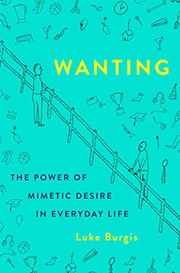
Rene Girard's theory that people imitate each other's desires, applied to business.
Also recommended by: Andrew Wilkinson, Chamath Palihapitiya and 2 others
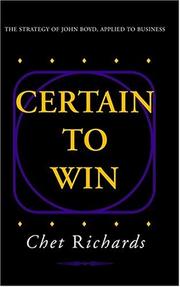
John Boyd's military strategy, including the OODA loop, applied to business.
The original text on strategic positioning. Sun Tzu's core insight — that winning without fighting is the highest form of strategy — runs through everything that followed. Short enough to read in an afternoon, dense enough to argue about for a career.
Also recommended by: Mohnish Pabrai, Evan Spiegel, Fred Wilson and 3 others
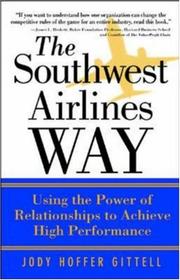
Academic study of relational coordination and turnaround times.
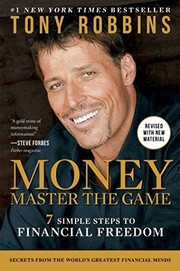
Interviews with 50 investors, from Dalio to Bogle, turned into money advice.
Also recommended by: Andrew Wilkinson, Nat Eliason, Ray Dalio
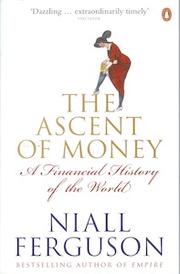
The history of finance by instrument: credit, bonds, stocks, insurance and property.
Also recommended by: Mohnish Pabrai, Max Levchin, Raoul Pal and 1 other

Also recommended by: Patrick O'Shaughnessy, Ryan Holiday