Updates

  1. Person pages list letters, writing, profiles and links as sortable tables with filters, and show each person's companies as links; Fund letters show each letter's description in its own column.
  2. Experts show a checked job title and a short description of each person; 30 more people have photographs.
  3. Every company, fund, university and publication the experts work for has a page listing the people there.
  4. Fund letters show each letter's thesis and filter by it; 225 person pages list the essays, columns and newsletter issues the person wrote.
  5. Person pages list every essay and newsletter issue a person wrote, and their own books as a table in List view.
  6. Recommends shows the five largest kinds of book and the rest under More; browse pictures load sooner.
  7. Podcasts and talks link the original episode, filter by Audio and video or Press, and list each publisher once.
  8. Pages are wider, Recommends has List and Grid, and a filter clicked again turns off.
  9. Book cards sit in a ruled grid with Open Library and Goodreads links and each book's one-line note.
  10. Funds is now Investors; each investor's styles are buttons that filter the table.
  11. Podcasts and talks on a person's page filter by year and publisher and show as a list or a grid of pictures.
  12. Quotes show only people's own words: 472 summaries written by list sites are gone.
  13. Country pages open from Browse again, and every link on the shelf lands on a page.
  14. Subject and person pages show their sections as tabs, and each book appears once on a person's page.
  15. Book cards show the quote, who said it and the source; grids show five cards to a row.
  16. On a phone, a menu holds the sections, search, Updates, Feedback and dark mode.
  17. Feedback takes a screenshot of the page with no browser prompt, opens a screenshot full size when you click it, and clears itself once sent.
  18. Book cards are centred, search names the topic each book sits in, and any text cut short shows whole on hover.
  19. Search groups its results by kind: people, companies, geographies, subjects, topics, books, funds, fund letters and papers.
  20. The Books table lists who recommended each book by name, and the browser tab names the section you are in.
  21. Feedback can take a screenshot of the page, or one you paste or choose, and opens in the corner beside Updates.
  22. Each rail button reopens its section where you left it, and Browse, Table and People show on every book and subject page.
  23. Filters grey out choices that hold nothing instead of hiding them, and Books › People filters by authors or recommenders.
  24. Feedback takes a subject line and up to three screenshots.
  25. Biographies are grouped by the person they are about: 41 new pages, from Abraham Lincoln to Lee Kuan Yew.
  26. Sport splits into 23 sports, and Religion into one topic per faith.
  27. Book lists show as cards: the cover, one recommendation quote and every recommender by name.
  28. Seventeen subjects that had two or three pages under different names now have one page each.
  29. Every page lists its Experts as authors and recommenders, with a link to them on the Experts tab.
  30. Economics, Financial history, Financial panics and Accounting are subjects of their own, with one page per financial crisis.
  31. Book, person and subject pages open inside the app, so the tabs stay in view.
  32. 996 more book covers, and photographs or logos for 227 more people and companies.
  33. Books › Browse shows every subject as cards, and the rail holds Fund letters, Papers, Experts, Books and Funds.
  34. Every topic over 150 books splits into narrower topics, each with a page of its own.

Send feedback

What is it?
Screenshots, up to 3 (optional)
or paste one with Ctrl+V

We use your email only to reply to you.

MONEY Master the Game

MONEY Master the Game

Tony Robbins
2014
T4 688 pages · about 11h 28m to read Open Librarygoodreads

Interviews with large allocators packaged as retail portfolio advice

Summary

Robbins interviewed around fifty investors including Ray Dalio, Jack Bogle, Warren Buffett, Carl Icahn, David Swensen, Paul Tudor Jones and T. Boone Pickens, and assembled a personal finance book around what they told him. It is over six hundred pages.

The core advice is conventional and correct: fees compound against the investor and should be minimised, index funds are the appropriate default for most people, asset allocation matters more than security selection, tax efficiency is a large part of net returns, and automatic saving matters more than investment skill. He documents mutual fund fee structures in detail, including the difference between stated expense ratios and total costs, and the effect of fees on a lifetime of compounding.

The most cited section is Dalio's description of an all weather allocation, which Robbins presents as a simplified portfolio structured to perform across inflationary and deflationary environments and across growth and contraction. Dalio has publicly noted that the version presented is a simplification of what Bridgewater actually runs. The book also covers annuities at considerable length, and Robbins had commercial relationships in that area, which readers should weigh. It includes substantial motivational material and self-promotion, and the tone is relentless.

The length is disproportionate to the content, which would fit in a hundred pages. The interviews are edited and the subjects are giving general advice rather than describing their actual methods. The fee documentation and the interview material are the parts worth extracting, and Bogle's own books state the same investment case more efficiently.

Key takeaways 8

  1. Fees compound against an investor and consume a large share of lifetime returns, and the stated expense ratio understates the total cost.
  2. Index funds are the appropriate default for the large majority of investors, which nearly every interviewee agreed on despite running active strategies themselves.
  3. Asset allocation determines outcomes more than security selection does, and most investors reverse the attention given to each.
  4. Tax efficiency is a substantial component of net returns and is almost entirely ignored in how investment products are marketed.
  5. An allocation designed to perform across inflationary, deflationary, growth and contraction environments differs substantially from a conventional stock and bond split.
  6. Asymmetric risk and reward, meaning limited downside with substantial upside, was the structure most of the interviewed investors described seeking.
  7. Automatic saving at a fixed percentage matters more than any investment decision for most people's outcomes.
  8. The author has commercial relationships in the annuity products discussed at length, which readers should weigh against the recommendations.

Who should read it

Readers who want the interview material and the fee documentation, prepared for a book far longer than its content and with disclosed commercial interests.

Who recommended it 4 · 3 direct

“…books I've recommended, highlighted to death, or forced on friends.”

“it was a great book because what Tony did was to take concepts and make them very clearly conveyed for the average reader”

Similar books 6

Chosen by shared topics, the entries that hold them, and the people who recommended both.
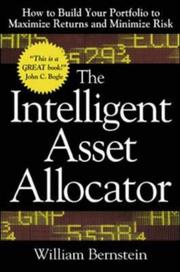
William J. Bernstein · 2000

Modern portfolio theory for individual investors, explained without heavy maths.

Recommended by: The Barefoot Investor
Peter L. Bernstein · 1992

How Markowitz, Sharpe, Fama, Black and Scholes built the theory of modern finance.
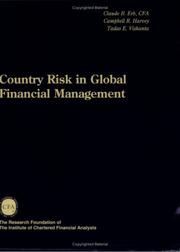
Campbell R. Harvey, Claude B. Erb, Tadas E. Viskanta · 1998

Research Foundation of the CFA Institute monograph.

Lasse Heje Pedersen · 2015

Markets pay skilled active managers; a survey of the strategies they run.

David F. Swensen · 2000

How the Yale endowment invests, and how institutions can build portfolios like it.

“As David Swensen wrote in his excellent book, "Pioneering Portfolio Management” — Howard Marks

Source: Oaktree memo 'Risk'

Recommended by: Howard Marks, Marc Andreessen and 2 others

Where it sits in the reference 2

Portfolio & risk
Portfolio & risk

Topics

Finance and MarketsInvestingPersonal finance and money habitsProductivity and Habits