Updates

  1. Person pages list letters, writing, profiles and links as sortable tables with filters, and show each person's companies as links; Fund letters show each letter's description in its own column.
  2. Experts show a checked job title and a short description of each person; 30 more people have photographs.
  3. Every company, fund, university and publication the experts work for has a page listing the people there.
  4. Fund letters show each letter's thesis and filter by it; 225 person pages list the essays, columns and newsletter issues the person wrote.
  5. Person pages list every essay and newsletter issue a person wrote, and their own books as a table in List view.
  6. Recommends shows the five largest kinds of book and the rest under More; browse pictures load sooner.
  7. Podcasts and talks link the original episode, filter by Audio and video or Press, and list each publisher once.
  8. Pages are wider, Recommends has List and Grid, and a filter clicked again turns off.
  9. Book cards sit in a ruled grid with Open Library and Goodreads links and each book's one-line note.
  10. Funds is now Investors; each investor's styles are buttons that filter the table.
  11. Podcasts and talks on a person's page filter by year and publisher and show as a list or a grid of pictures.
  12. Quotes show only people's own words: 472 summaries written by list sites are gone.
  13. Country pages open from Browse again, and every link on the shelf lands on a page.
  14. Subject and person pages show their sections as tabs, and each book appears once on a person's page.
  15. Book cards show the quote, who said it and the source; grids show five cards to a row.
  16. On a phone, a menu holds the sections, search, Updates, Feedback and dark mode.
  17. Feedback takes a screenshot of the page with no browser prompt, opens a screenshot full size when you click it, and clears itself once sent.
  18. Book cards are centred, search names the topic each book sits in, and any text cut short shows whole on hover.
  19. Search groups its results by kind: people, companies, geographies, subjects, topics, books, funds, fund letters and papers.
  20. The Books table lists who recommended each book by name, and the browser tab names the section you are in.
  21. Feedback can take a screenshot of the page, or one you paste or choose, and opens in the corner beside Updates.
  22. Each rail button reopens its section where you left it, and Browse, Table and People show on every book and subject page.
  23. Filters grey out choices that hold nothing instead of hiding them, and Books › People filters by authors or recommenders.
  24. Feedback takes a subject line and up to three screenshots.
  25. Biographies are grouped by the person they are about: 41 new pages, from Abraham Lincoln to Lee Kuan Yew.
  26. Sport splits into 23 sports, and Religion into one topic per faith.
  27. Book lists show as cards: the cover, one recommendation quote and every recommender by name.
  28. Seventeen subjects that had two or three pages under different names now have one page each.
  29. Every page lists its Experts as authors and recommenders, with a link to them on the Experts tab.
  30. Economics, Financial history, Financial panics and Accounting are subjects of their own, with one page per financial crisis.
  31. Book, person and subject pages open inside the app, so the tabs stay in view.
  32. 996 more book covers, and photographs or logos for 227 more people and companies.
  33. Books › Browse shows every subject as cards, and the rail holds Fund letters, Papers, Experts, Books and Funds.
  34. Every topic over 150 books splits into narrower topics, each with a page of its own.

Send feedback

What is it?
Screenshots, up to 3 (optional)
or paste one with Ctrl+V

We use your email only to reply to you.

The Great CEO Within

The Great CEO Within

Matt Mochary
2019
T4 202 pages · about 3h 22m to read Open Librarygoodreads

Summary

Mochary coaches technology chief executives and wrote a practical operating manual for founders scaling from a handful of people to a few hundred. It is short, organised as a reference rather than as a narrative, and available free online.

The content is procedural. He gives specific formats for board meetings, weekly executive meetings, one-on-ones, and what he calls the top goal practice, in which a person identifies one goal and spends the first hour of each day on it before anything else. He covers hiring processes including scorecards and reference checks, firing procedures with specific language, compensation frameworks, and the mechanics of running a company on objectives and key results.

Distinctive elements include his conflict resolution process, in which two people in dispute are brought together with a facilitator who requires each to state the other's position until the other agrees it is accurate; the practice of writing down all issues and having the team vote on which to discuss rather than working through an agenda; the areas of responsibility document assigning every function to a named person; and his argument that a chief executive should personally handle recruiting, fundraising and setting the vision, and delegate everything else.

The book has no evidence base and is entirely Mochary's coaching practice. It is specific to venture-funded technology companies and assumes that funding model. Some sections are lists without explanation. Its value is that it gives templates a founder can implement the same week, which most management books do not. The conflict resolution process and the areas of responsibility document are the parts most often adopted.

Key takeaways 8

  1. A chief executive should personally own recruiting, fundraising and setting direction, and delegate everything else including operations.
  2. Each person should identify a single top goal and spend the first working hour on it before responding to anything else.
  3. Every function in the company should be assigned to a single named person in a written document, so that nothing is owned by everyone.
  4. Meetings should begin with participants writing down their issues and voting on which to discuss, rather than following a prepared agenda.
  5. Conflict between two people is resolved by requiring each to state the other's position until the other confirms it is accurate.
  6. Firing decisions should be made and executed quickly once the evidence is clear, and the manager should prepare the specific language in advance.
  7. Feedback should be given within twenty-four hours of the event, because delayed feedback cannot change the behaviour that produced it.
  8. Written communication should replace meetings wherever a decision does not require live discussion, which recovers the largest block of executive time.

Who should read it

Founders scaling past thirty people who need implementable templates for meetings, hiring, conflict and responsibility assignment this week.

Who recommended it 7 · 1 direct

Ali Abdaalreported
Ryan Hooverreported

Similar books 6

Chosen by shared topics, the entries that hold them, and the people who recommended both.

Elad Gil · 2018

Operating manual for scaling a company from fifty to thousands

Jim Collins, William C. Lazier · 2020

Expanded edition of the 1992 book

Jim Collins, William C. Lazier · 1992

How leaders turn a founder-driven startup into a company that lasts.

Recommended by: Reed Hastings

Maynard Webb · 2018

Recommended by: Meg Whitman

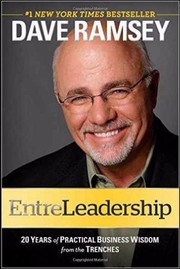
Dave Ramsey · 2011

A step-by-step playbook for growing a small business, from Ramsey's own company.

Recommended by: David Cancel, Nick Huber

Peter Thiel, Blake Masters · 2014

Why startups should build something new and own a small market before growing.

Where it sits in the reference 2

Business themes
Business themes

Topics

LeadershipEntrepreneurship and StartupsScaling and Leading a Startup