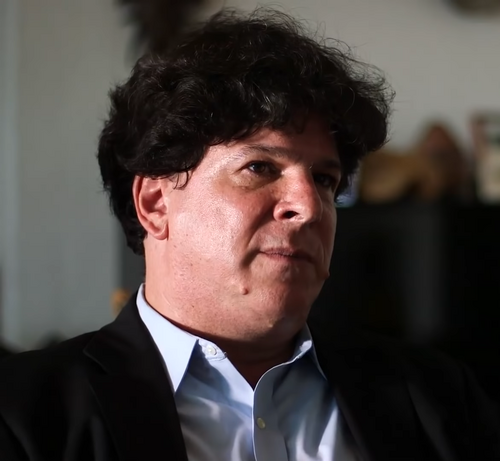
Eric Weinstein
Investor and podcast host who coined the term 'intellectual dark web' and proposed a theory of everything he calls Geometric Unity, which physicists have largely rejected.
 Thiel Capital
97 books they recommend · 37 appearances
More 18



The Standard Model of particle physics for readers with one introductory course.
Argues that string theory is not a theory at all, since it makes no predictions.
Essays, talks and letters from 1934 to 1950 on social, religious and school issues.
Also recommended by: Patrick Collison

How Dyson, Feynman, Schwinger and Tomonaga built quantum electrodynamics.
Results in quantum field theory obtained by topological methods.
The theory and mathematics of quantum mechanics, from uncertainty to particle states.

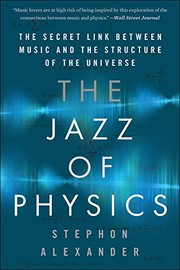

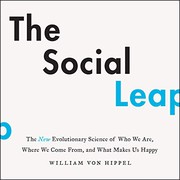
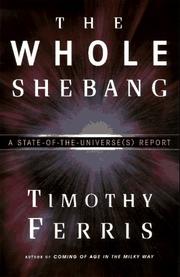
Also recommended by: Patrick Collison
Also recommended by: John Doerr
Also recommended by: Patrick Collison

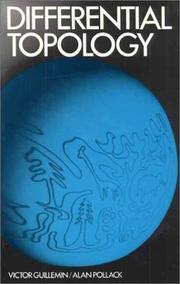


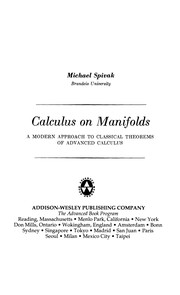
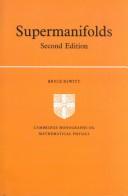
Graduate geometry of surfaces, transformation groups, fields and manifolds.


A thriller about a computer program that runs on after its creator's death.
Also recommended by: Balaji S. Srinivasan, Alexis Ohanian and 1 other

A novel of the young Einstein's dreams of different kinds of time, in 1905.
Also recommended by: Patrick Collison, Ev Williams and 1 other



Also recommended by: Ryan Holiday, Stewart Brand


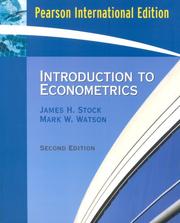
How economics copied the maths of 19th-century physics, and what that cost it.
Also recommended by: Michael Mauboussin
Also recommended by: Mohnish Pabrai, Warren Buffett

A guide to learning more than one language, focused on Europe's languages.
Also recommended by: Tim Ferriss
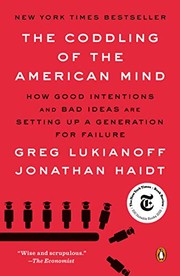
Three false beliefs taught to young Americans, and how they harm their minds.
Also recommended by: Julian Shapiro, Michael Mauboussin and 1 other
Byrne argues that music is not created in a vacuum but is shaped by the spaces it's designed to fill — a cathedral's reverb, a club's noise floor, an iPod earbud. Part memoir, part cultural history, part production theory. The chapter on how CBGB's acoustics shaped Talking Heads's sound alone is worth the cover price.

An A-to-Z perfume guide whose authors praise, joke about and scold each scent.

Twelve rules for living, each drawn from clinical practice, biology and myth.
Also recommended by: Nat Eliason, Alex and Books, Ana Fabrega and 6 others

How people and cultures react to death, and what that reaction does to them.
Also recommended by: Nat Eliason
Mimetic rivalry, where rivals grow alike, and the violence it unleashes in societies.
Also recommended by: Patrick Collison, Peter Thiel
How media in democracies serve state and corporate power while claiming independence.
People who think ability grows with effort learn more than those who think it fixed.
Also recommended by: Bill Gates, Mohnish Pabrai, Alex and Books and 12 others
Why mass movements of every kind draw the same frustrated people and use one method.
Also recommended by: Joe Rosenberg, Mohnish Pabrai and 5 others

The most commercial book on this list, and the most widely used. Snyder's beat sheet is a blunt instrument, but understanding it is necessary — both to apply it and to understand what mainstream studio films are doing structurally, whether you intend to follow the template or subvert it.


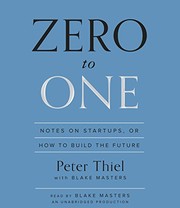
Why startups should build something new and own a small market before growing.
Source: Eric Weinstein on Challenging 'Reality' (The Tim Ferriss Show)
Also recommended by: Balaji S. Srinivasan, Mohnish Pabrai and 35 others
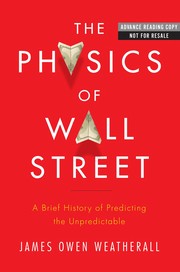
How physicists and mathematicians came to run money; useful context for Simons.

Tim Ferriss's book belongs on a personal-finance list not for its investment advice but for its income argument: the fastest way to reach financial independence may be redesigning how and where you work rather than cutting spending to the bone. The 'new rich' framework is deliberately provocative, and the specific tactics age poorly, but the income-side case remains underweighted in most FIRE writing.
Also recommended by: Andrew Wilkinson, Ev Williams and 19 others
Campbell on the recurring stories cultures tell themselves
Also recommended by: Jim Collins, Nat Eliason, David Perell and 2 others