Updates

  1. Person pages list letters, writing, profiles and links as sortable tables with filters, and show each person's companies as links; Fund letters show each letter's description in its own column.
  2. Experts show a checked job title and a short description of each person; 30 more people have photographs.
  3. Every company, fund, university and publication the experts work for has a page listing the people there.
  4. Fund letters show each letter's thesis and filter by it; 225 person pages list the essays, columns and newsletter issues the person wrote.
  5. Person pages list every essay and newsletter issue a person wrote, and their own books as a table in List view.
  6. Recommends shows the five largest kinds of book and the rest under More; browse pictures load sooner.
  7. Podcasts and talks link the original episode, filter by Audio and video or Press, and list each publisher once.
  8. Pages are wider, Recommends has List and Grid, and a filter clicked again turns off.
  9. Book cards sit in a ruled grid with Open Library and Goodreads links and each book's one-line note.
  10. Funds is now Investors; each investor's styles are buttons that filter the table.
  11. Podcasts and talks on a person's page filter by year and publisher and show as a list or a grid of pictures.
  12. Quotes show only people's own words: 472 summaries written by list sites are gone.
  13. Country pages open from Browse again, and every link on the shelf lands on a page.
  14. Subject and person pages show their sections as tabs, and each book appears once on a person's page.
  15. Book cards show the quote, who said it and the source; grids show five cards to a row.
  16. On a phone, a menu holds the sections, search, Updates, Feedback and dark mode.
  17. Feedback takes a screenshot of the page with no browser prompt, opens a screenshot full size when you click it, and clears itself once sent.
  18. Book cards are centred, search names the topic each book sits in, and any text cut short shows whole on hover.
  19. Search groups its results by kind: people, companies, geographies, subjects, topics, books, funds, fund letters and papers.
  20. The Books table lists who recommended each book by name, and the browser tab names the section you are in.
  21. Feedback can take a screenshot of the page, or one you paste or choose, and opens in the corner beside Updates.
  22. Each rail button reopens its section where you left it, and Browse, Table and People show on every book and subject page.
  23. Filters grey out choices that hold nothing instead of hiding them, and Books › People filters by authors or recommenders.
  24. Feedback takes a subject line and up to three screenshots.
  25. Biographies are grouped by the person they are about: 41 new pages, from Abraham Lincoln to Lee Kuan Yew.
  26. Sport splits into 23 sports, and Religion into one topic per faith.
  27. Book lists show as cards: the cover, one recommendation quote and every recommender by name.
  28. Seventeen subjects that had two or three pages under different names now have one page each.
  29. Every page lists its Experts as authors and recommenders, with a link to them on the Experts tab.
  30. Economics, Financial history, Financial panics and Accounting are subjects of their own, with one page per financial crisis.
  31. Book, person and subject pages open inside the app, so the tabs stay in view.
  32. 996 more book covers, and photographs or logos for 227 more people and companies.
  33. Books › Browse shows every subject as cards, and the rail holds Fund letters, Papers, Experts, Books and Funds.
  34. Every topic over 150 books splits into narrower topics, each with a page of its own.

Send feedback

What is it?
Screenshots, up to 3 (optional)
or paste one with Ctrl+V

We use your email only to reply to you.

The Physics of Wall Street: A Brief History

The Physics of Wall Street: A Brief History of Predicting the Unpredictable

James Owen Weatherall
2013
T3 295 pages · about 4h 55m to read Open Librarygoodreads

How physicists and mathematicians came to run money; useful context for Simons.

Summary

Weatherall, a philosopher of physics, traces the movement of physical and mathematical ideas into finance through a series of biographical chapters. He starts with Louis Bachelier's 1900 thesis modelling prices as random walks, then covers Maury Osborne applying statistical mechanics to log returns, Benoit Mandelbrot arguing that price changes follow fat-tailed distributions rather than normal ones, Ed Thorp moving from blackjack to convertible arbitrage, Fischer Black and the option pricing formula, Doyne Farmer and Norman Packard's Prediction Company, and Didier Sornette's work on log-periodic precursors to crashes.

The argument the book makes is a defence. Weatherall holds that mathematical models did not cause the 2008 crisis, and that the failures came from using models outside their stated assumptions, from institutional incentives, and from ignoring what the modellers themselves said about limits. He points out that Mandelbrot and Black both wrote explicitly about when their models would fail. His constructive proposal is that economics needs the physicist habit of treating a model as an approximation valid in a specified regime, and he ends by calling for a large coordinated research effort.

The history is accurate and readable and the biographical detail is good, particularly on Bachelier's neglect and on Thorp.

The defence of the modellers is contested. Critics including Mandelbrot's own followers and Nassim Taleb argue that the problem is not misuse but that Gaussian-based risk models are structurally wrong for financial data, and that the profession's continued reliance on value at risk demonstrates it. The book also gives little space to the political economy of why banks preferred models that understated risk.

Key takeaways 7

  1. Bachelier described the random walk model of prices in 1900, five years before Einstein's treatment of Brownian motion, and was ignored for half a century.
  2. Price changes have fat tails, so extreme moves occur far more often than a normal distribution predicts.
  3. Mandelbrot published this finding in the early 1960s and the industry adopted Gaussian models anyway.
  4. Ed Thorp used option pricing and delta hedging in practice before Black and Scholes published the formula.
  5. Black and Scholes stated the conditions under which their model fails, and practitioners ignored those conditions.
  6. The 2008 failures came from applying models outside their domain of validity rather than from the mathematics itself.
  7. Economics would improve by adopting the physicist's discipline of specifying the regime in which a model is expected to hold.

Who should read it

Investors and technologists who want the intellectual history of quantitative finance and a clear statement of what the models assume.

Who recommended it 1

Similar books 6

Chosen by shared topics, the entries that hold them, and the people who recommended both.

Turan G. Bali, Robert F. Engle, Scott Murray · 2016

The cross-sectional testing methods behind every factor claim.

Andrew W. Lo, John Y. Campbell, A. Craig MacKinlay · 1997

The statistical tools of empirical finance and the questions they test.
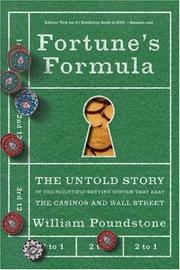
William Poundstone · 2005

The Kelly criterion for sizing bets, from Bell Labs to casinos and hedge funds.

Recommended by: Mohnish Pabrai

Philip Mirowski · 1989

How economics copied the maths of 19th-century physics, and what that cost it.

“there's a wonderful book called More Heat Than Light by a professor named Phil Mirowski, which documents how economists mapped over equations from Newtonian physics” — Michael Mauboussin

Source: The Tim Ferriss Show #659 — official transcript

Recommended by: Michael Mauboussin, Eric Weinstein

Where it sits in the reference 2

Companies
Mental models

Topics

Finance and MarketsMathematics and StatisticsGeneral HistoryFinancial HistoryGames, gambling and quantitative finance