Updates

  1. Person pages list letters, writing, profiles and links as sortable tables with filters, and show each person's companies as links; Fund letters show each letter's description in its own column.
  2. Experts show a checked job title and a short description of each person; 30 more people have photographs.
  3. Every company, fund, university and publication the experts work for has a page listing the people there.
  4. Fund letters show each letter's thesis and filter by it; 225 person pages list the essays, columns and newsletter issues the person wrote.
  5. Person pages list every essay and newsletter issue a person wrote, and their own books as a table in List view.
  6. Recommends shows the five largest kinds of book and the rest under More; browse pictures load sooner.
  7. Podcasts and talks link the original episode, filter by Audio and video or Press, and list each publisher once.
  8. Pages are wider, Recommends has List and Grid, and a filter clicked again turns off.
  9. Book cards sit in a ruled grid with Open Library and Goodreads links and each book's one-line note.
  10. Funds is now Investors; each investor's styles are buttons that filter the table.
  11. Podcasts and talks on a person's page filter by year and publisher and show as a list or a grid of pictures.
  12. Quotes show only people's own words: 472 summaries written by list sites are gone.
  13. Country pages open from Browse again, and every link on the shelf lands on a page.
  14. Subject and person pages show their sections as tabs, and each book appears once on a person's page.
  15. Book cards show the quote, who said it and the source; grids show five cards to a row.
  16. On a phone, a menu holds the sections, search, Updates, Feedback and dark mode.
  17. Feedback takes a screenshot of the page with no browser prompt, opens a screenshot full size when you click it, and clears itself once sent.
  18. Book cards are centred, search names the topic each book sits in, and any text cut short shows whole on hover.
  19. Search groups its results by kind: people, companies, geographies, subjects, topics, books, funds, fund letters and papers.
  20. The Books table lists who recommended each book by name, and the browser tab names the section you are in.
  21. Feedback can take a screenshot of the page, or one you paste or choose, and opens in the corner beside Updates.
  22. Each rail button reopens its section where you left it, and Browse, Table and People show on every book and subject page.
  23. Filters grey out choices that hold nothing instead of hiding them, and Books › People filters by authors or recommenders.
  24. Feedback takes a subject line and up to three screenshots.
  25. Biographies are grouped by the person they are about: 41 new pages, from Abraham Lincoln to Lee Kuan Yew.
  26. Sport splits into 23 sports, and Religion into one topic per faith.
  27. Book lists show as cards: the cover, one recommendation quote and every recommender by name.
  28. Seventeen subjects that had two or three pages under different names now have one page each.
  29. Every page lists its Experts as authors and recommenders, with a link to them on the Experts tab.
  30. Economics, Financial history, Financial panics and Accounting are subjects of their own, with one page per financial crisis.
  31. Book, person and subject pages open inside the app, so the tabs stay in view.
  32. 996 more book covers, and photographs or logos for 227 more people and companies.
  33. Books › Browse shows every subject as cards, and the rail holds Fund letters, Papers, Experts, Books and Funds.
  34. Every topic over 150 books splits into narrower topics, each with a page of its own.

Send feedback

What is it?
Screenshots, up to 3 (optional)
or paste one with Ctrl+V

We use your email only to reply to you.

Adaptive Markets: Financial Evolution at the

Adaptive Markets: Financial Evolution at the Speed of Thought

Andrew W. Lo
2017
T4 504 pages · about 8h 24m to read Open Librarygoodreads

Summary

Lo, an MIT finance professor, proposes the adaptive markets hypothesis as a reconciliation of efficient markets theory with behavioural finance. His claim is that market efficiency is not a fixed property but depends on the environment: the number and variety of participants, the resources available to them, and the profitability of the opportunities present.

The framework treats investors as adaptive rather than rational or irrational. Behaviour that appears irrational is generally a heuristic that was adaptive in a different environment, and the mismatch between the heuristic and the current environment produces the observed anomaly. Markets become efficient when many participants with diverse strategies compete for opportunities, and become inefficient when the participant population changes, when a strategy becomes crowded, or when conditions shift faster than participants can adapt.

He supports this with neuroscience on decision-making under stress, evolutionary biology on how heuristics develop, and empirical work on the time-varying nature of return predictability. He also draws on his own research on hedge fund returns, liquidity and systemic risk, including his analysis of the August 2007 quantitative fund unwinding.

The practical implications he draws are that risk premia vary over time rather than being constant, that strategies decay as they become crowded, and that regulation should be adaptive rather than fixed.

The main criticism is that the hypothesis is difficult to falsify, since almost any market behaviour can be described as adaptation to an environment. Lo acknowledges this. The book is long and includes considerable digression, and the framework is more useful as a way of organising thinking than as a testable theory.

Key takeaways 7

  1. Market efficiency is a variable property of an environment rather than a fixed characteristic, and it changes with the number and diversity of participants.
  2. Behaviour that appears irrational is usually a heuristic that was adaptive in a different environment and is mismatched to the current one.
  3. Risk premia vary over time rather than being constant, which means any strategy calibrated to a historical premium will fail when conditions change.
  4. Investment strategies decay as they become crowded, because the participants exploiting an opportunity are what removes it.
  5. The relationship between risk and return is not stable, so asset allocation based on long-run historical averages is calibrated to a regime that may not recur.
  6. Competition among diverse strategies is what produces efficiency, and convergence of participants onto similar strategies produces fragility.
  7. Financial regulation should adapt as the ecology of participants changes, since fixed rules become mismatched to the behaviour they govern.

Who should read it

Investors who want a framework reconciling efficient markets with observed anomalies and an argument for treating risk premia as time-varying.

About Andrew W. Lo

Charles E. and Susan T. Harris Professor, MIT Sloan School of Management; Director, MIT Laboratory for Financial Engineering; founder of AlphaSimplex Group

The Econometrics of Financial Markets and the variance-ratio work with MacKinlay are primary sources the field builds on, and the Adaptive Markets Hypothesis is a named framework in its own right.

MIT Sloan School of Management, MIT Laboratory for Financial Engineering, AlphaSimplex Group

Similar books 6

Chosen by shared topics, the entries that hold them, and the people who recommended both.
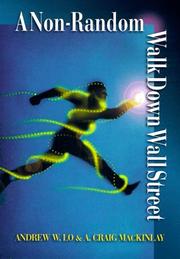
Andrew W. Lo, John Y. Campbell, A. Craig MacKinlay · 1997

The statistical tools of empirical finance and the questions they test.

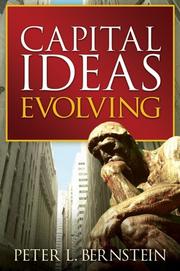
Peter L. Bernstein · 1992

How Markowitz, Sharpe, Fama, Black and Scholes built the theory of modern finance.

Where it sits in the reference 3

Academics
Mental models
Mental models

Topics

Finance and MarketsInvestingScienceComplexity and systems science