Updates

  1. Person pages list letters, writing, profiles and links as sortable tables with filters, and show each person's companies as links; Fund letters show each letter's description in its own column.
  2. Experts show a checked job title and a short description of each person; 30 more people have photographs.
  3. Every company, fund, university and publication the experts work for has a page listing the people there.
  4. Fund letters show each letter's thesis and filter by it; 225 person pages list the essays, columns and newsletter issues the person wrote.
  5. Person pages list every essay and newsletter issue a person wrote, and their own books as a table in List view.
  6. Recommends shows the five largest kinds of book and the rest under More; browse pictures load sooner.
  7. Podcasts and talks link the original episode, filter by Audio and video or Press, and list each publisher once.
  8. Pages are wider, Recommends has List and Grid, and a filter clicked again turns off.
  9. Book cards sit in a ruled grid with Open Library and Goodreads links and each book's one-line note.
  10. Funds is now Investors; each investor's styles are buttons that filter the table.
  11. Podcasts and talks on a person's page filter by year and publisher and show as a list or a grid of pictures.
  12. Quotes show only people's own words: 472 summaries written by list sites are gone.
  13. Country pages open from Browse again, and every link on the shelf lands on a page.
  14. Subject and person pages show their sections as tabs, and each book appears once on a person's page.
  15. Book cards show the quote, who said it and the source; grids show five cards to a row.
  16. On a phone, a menu holds the sections, search, Updates, Feedback and dark mode.
  17. Feedback takes a screenshot of the page with no browser prompt, opens a screenshot full size when you click it, and clears itself once sent.
  18. Book cards are centred, search names the topic each book sits in, and any text cut short shows whole on hover.
  19. Search groups its results by kind: people, companies, geographies, subjects, topics, books, funds, fund letters and papers.
  20. The Books table lists who recommended each book by name, and the browser tab names the section you are in.
  21. Feedback can take a screenshot of the page, or one you paste or choose, and opens in the corner beside Updates.
  22. Each rail button reopens its section where you left it, and Browse, Table and People show on every book and subject page.
  23. Filters grey out choices that hold nothing instead of hiding them, and Books › People filters by authors or recommenders.
  24. Feedback takes a subject line and up to three screenshots.
  25. Biographies are grouped by the person they are about: 41 new pages, from Abraham Lincoln to Lee Kuan Yew.
  26. Sport splits into 23 sports, and Religion into one topic per faith.
  27. Book lists show as cards: the cover, one recommendation quote and every recommender by name.
  28. Seventeen subjects that had two or three pages under different names now have one page each.
  29. Every page lists its Experts as authors and recommenders, with a link to them on the Experts tab.
  30. Economics, Financial history, Financial panics and Accounting are subjects of their own, with one page per financial crisis.
  31. Book, person and subject pages open inside the app, so the tabs stay in view.
  32. 996 more book covers, and photographs or logos for 227 more people and companies.
  33. Books › Browse shows every subject as cards, and the rail holds Fund letters, Papers, Experts, Books and Funds.
  34. Every topic over 150 books splits into narrower topics, each with a page of its own.

Send feedback

What is it?
Screenshots, up to 3 (optional)
or paste one with Ctrl+V

We use your email only to reply to you.

The Econometrics of Financial Markets

The Econometrics of Financial Markets

Andrew W. Lo, John Y. Campbell, A. Craig MacKinlay
1997
T4 632 pages · about 10h 32m to read Open Librarygoodreads

Summary

John Campbell, Andrew Lo and Craig MacKinlay wrote the standard graduate textbook on empirical finance, and it defined how the field is taught and practised.

The content covers the statistical tools and the substantive questions together. Early chapters address the predictability of asset returns, including variance ratio tests, autocorrelation and long-horizon regression, and the evidence on whether returns are forecastable. The book then covers event study methodology, the capital asset pricing model and its tests, multifactor models and the arbitrage pricing theory, and the intertemporal asset pricing models. Later chapters cover the term structure of interest rates, derivative pricing and its empirical testing, non-linear models including the modelling of volatility through ARCH and GARCH, and fixed income.

The authors take an explicit position on market efficiency: they argue that the efficient markets hypothesis in its strict form is not testable, because any test is a joint test of efficiency and of an asset pricing model, and that the productive question is how much predictability exists and whether it is economically exploitable after costs. The book is mathematically demanding and assumes graduate econometrics. It dates from 1997, so it precedes the enormous subsequent literature on factors, on high-frequency data and on machine learning methods, but it remains the reference for the core methodology.

Key takeaways 7

  1. Every test of market efficiency is a joint test of efficiency and of the asset pricing model used, so efficiency cannot be tested alone.
  2. Asset returns show statistically detectable predictability whose economic significance after costs is a separate question.
  3. Event study methodology measures the market's assessment of a specific piece of information and requires careful specification of the event window.
  4. Volatility is predictable even where returns are not, which is the empirical basis for the ARCH and GARCH family of models.
  5. The capital asset pricing model is rejected empirically, and multifactor models describe returns better without explaining why.
  6. Long-horizon return regressions suffer from severe small-sample problems that make their apparent findings unreliable.
  7. Non-linear dynamics in asset prices require methods that linear time series models cannot supply.

Who should read it

Quantitative researchers and practitioners who need the standard methodological reference for empirical asset pricing.

About Andrew W. Lo

Charles E. and Susan T. Harris Professor, MIT Sloan School of Management; Director, MIT Laboratory for Financial Engineering; founder of AlphaSimplex Group

The Econometrics of Financial Markets and the variance-ratio work with MacKinlay are primary sources the field builds on, and the Adaptive Markets Hypothesis is a named framework in its own right.

MIT Sloan School of Management, MIT Laboratory for Financial Engineering, AlphaSimplex Group

Similar books 6

Chosen by shared topics, the entries that hold them, and the people who recommended both.
Turan G. Bali, Robert F. Engle, Scott Murray · 2016

The cross-sectional testing methods behind every factor claim.
James Owen Weatherall · 2013

How physicists and mathematicians came to run money; useful context for Simons.

Recommended by: Eric Weinstein
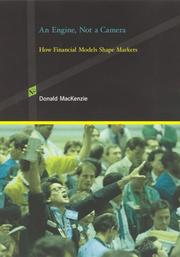
Donald MacKenzie · 2006

“his book An Engine Not a Camera (which I would highly recommend if you are interested in these topics)” — Michael Mauboussin

Source: The Wisdom and Whims of the Collective (Legg Mason Capital Management)

Recommended by: Michael Mauboussin

Where it sits in the reference 2

Academics
Mental models

Topics

Finance and MarketsMathematics and StatisticsGames, gambling and quantitative finance