
Mathematics and Statistics
Pure and applied mathematics, probability, statistics, data analysis and the culture of mathematical thinking. Read by students, quants and anyone who wants numbers to stop lying to them.
Start here
- On Growth and FormD'Arcy Wentworth Thompson, 1917
- Theory of Games and Economic BehaviorJohn von Neumann, Oskar Morgenstern, 1944
- How to Lie with StatisticsDarrell Huff, 1954
- Portfolio SelectionHarry M. Markowitz, 1959
- The Strategy of ConflictThomas C. Schelling, 1960

How mathematics and physical forces shape the forms of living things.
The founding of game theory: expected utility and strategy among interacting players.

How biased samples, chosen averages and cut-off chart axes make numbers mislead.
Recommended by: Bill Gates, Mohnish Pabrai, Morgan Housel and 6 others

An asset's risk depends on how it moves with the rest of the portfolio.
Conflict as bargaining: commitment, credible threats and focal points.
Recommended by: Naval Ravikant
The first proven way to beat blackjack, by counting the cards left in the deck.
How a mind could arise from parts, traced through Godel, Escher and Bach.
Recommended by: Nat Eliason, Naval Ravikant, Demis Hassabis and 3 others
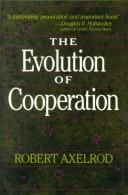
Computer tournaments of the prisoner's dilemma show why tit-for-tat wins.
Recommended by: Patrick Collison, Naval Ravikant
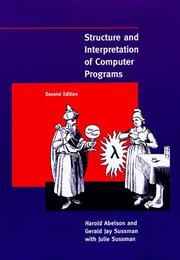
MIT's introductory computer science text, taught through Lisp and Scheme.
Recommended by: Patrick Collison, Paul Graham, Bret Victor and 1 other
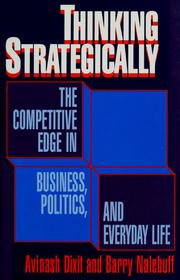
Game theory without maths: look forward, reason back, and make threats credible.
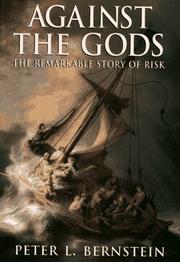
How people learned to measure risk, from early probability to portfolio theory.
“I think some of the books that are a must would be Peter Bernstein's book about risk, Against the Gods: The Remarkable Story of Risk.” — Charles de Vaulx
Source: De Vaulx naming Bernstein's book a must-read on risk
Recommended by: Charles de Vaulx, Jim Collins and 8 others

Stock, bond and bill returns for sixteen countries from 1900 to 2000.
Recommended by: Mohnish Pabrai
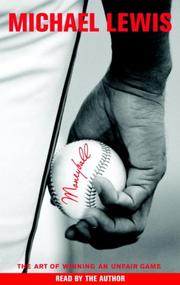
How the Oakland A's won on a small payroll by buying players the market undervalued.
“understanding how to buy undervalued players is very similar to buying undervalued stocks and so that's a really helpful book” — Joel Greenblatt
Source: Masters in Business transcript: Joel Greenblatt (2018)
Recommended by: Joel Greenblatt, Mohnish Pabrai, Ev Williams and 2 others
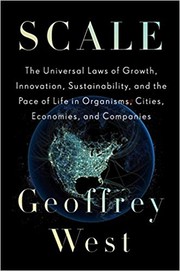
Why organisms, cities and companies follow power laws set by their supply networks.
Recommended by: Nat Eliason, Bill Miller, Marc Benioff and 2 others

How the science of cause and effect moved past 'correlation is not causation'.
Recommended by: Bill Gates, Keith Rabois, Naval Ravikant

Control and communication in animals and machines run on the same principles.

The graduate engineering text on probability and stochastic processes.
Recommended by: Nassim Nicholas Taleb
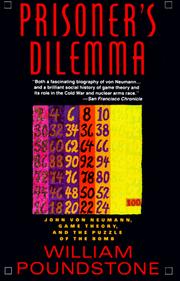
Von Neumann, game theory and the prisoner's dilemma in nuclear strategy.
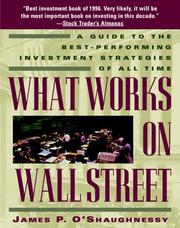
Decades of US stock data testing which selection rules have beaten the market.
“Strongly Recommended. Great data.” — Mohnish Pabrai
Source: Mohnish's Bookshelf — Books on Investing & Capital Allocation, entry 336
Recommended by: Mohnish Pabrai, Patrick O'Shaughnessy
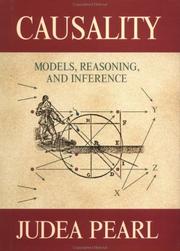
A mathematical theory of causation for statistics, AI, economics and science.
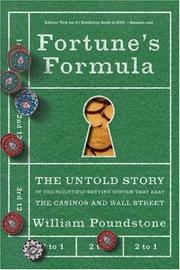
The Kelly criterion for sizing bets, from Bell Labs to casinos and hedge funds.
Recommended by: Mohnish Pabrai
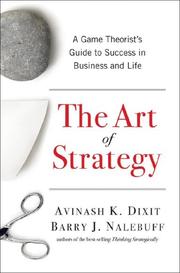
Game theory without maths, with new examples: commitment, signals, bargaining.

How randomness shapes our lives, the history of probability, and why we misread it.
Recommended by: Patrick Collison

A practical guide to causal inference: regression, instruments, differences.
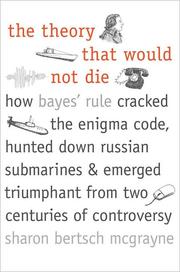
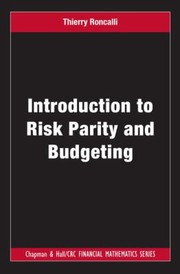
The mathematics of risk parity: risk contributions and risk budgeting.
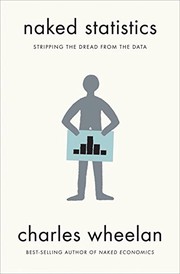
Statistics without the maths, for reading claims: averages, correlation, regression.
Recommended by: Keith Rabois

How calculus works and how it made modern technology possible.
Recommended by: Michael Mauboussin, Naval Ravikant

Power laws, scaling and critical points across physical and social systems
Recommended by: Nassim Nicholas Taleb
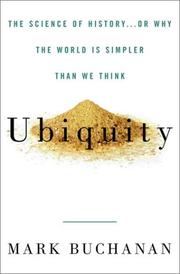

How evidence and probability were reasoned about before formal statistics
Recommended by: Nassim Nicholas Taleb
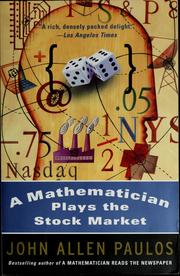
A mathematician's own losses used to explain market probability errors
Recommended by: Mohnish Pabrai
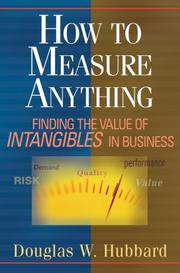
Calibration and the value of information applied to intangibles.
Recommended by: Julia Galef, Nick Ganju

Freedman on regression's assumptions and the causal claims it cannot support
Recommended by: Nassim Nicholas Taleb
Edited volume of collected papers.
Recommended by: Nassim Nicholas Taleb
A risk manager's history of quantitative risk and what value-at-risk is for.

How physicists and mathematicians came to run money; useful context for Simons.
Recommended by: Eric Weinstein

Recommended by: Mohnish Pabrai

The cross-sectional testing methods behind every factor claim.

Network science on how success and reputation compound unequally
Recommended by: Nassim Nicholas Taleb, Vinod Khosla

Technical companion to the Incerto; free preprint on arXiv

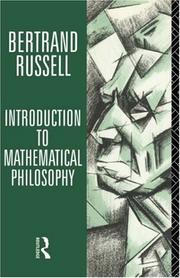
Recommended by: Vlad Zamfir

Recommended by: Patrick Collison, Paul Graham




Recommended by: Daniel Kahneman

How the concept of number evolved from prehistoric times to the twentieth century.
Recommended by: Bryan Johnson


Recommended by: Patrick Collison

Recommended by: Patrick Collison, Eric Weinstein
Recommended by: Patrick Collison, Bret Victor and 1 other
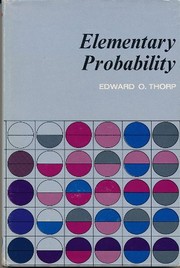

Recommended by: Patrick Collison
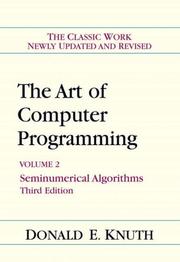
Recommended by: Max Levchin

Recommended by: Patrick Collison

Recommended by: Eric Weinstein

Recommended by: Eric Weinstein

Recommended by: Eric Weinstein
Recommended by: Patrick Collison

Recommended by: Eric Weinstein

Recommended by: Eric Weinstein

Recommended by: Eric Weinstein

Recommended by: Eric Weinstein

Recommended by: Patrick Collison, Bret Victor, Daniel Burka and 1 other


Analytic philosophy and logic presented through humour
Recommended by: Mohnish Pabrai, Nassim Nicholas Taleb
Recommended by: Bret Victor
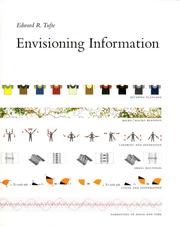
How to show complex information on flat paper or screens, with many examples.
Recommended by: Patrick Collison, Bret Victor, Jeff Atwood and 1 other
Recommended by: Patrick Collison, Paul Graham and 1 other
Optimal-f and the practical arithmetic of fractional betting.

Recommended by: Patrick Collison

Recommended by: Paul Graham, Bret Victor, Susan J. Fowler

Recommended by: Eric Weinstein
Recommended by: Mohnish Pabrai, Chamath Palihapitiya

The technical reference on extreme value theory for insurance and finance
Recommended by: Nassim Nicholas Taleb
The statistical tools of empirical finance and the questions they test.
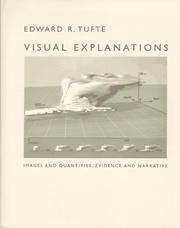
Recommended by: Patrick Collison, Bret Victor, Jeff Atwood

What each econometric technique is for, what it assumes and what goes wrong.
Recommended by: Nassim Nicholas Taleb

Recommended by: Eric Weinstein

Techniques for mathematical modelling, aimed at simple, efficient computer code.
Recommended by: Patrick Collison, Bret Victor
Recommended by: Bret Victor


Recommended by: Sophie Bakalar
Recommended by: Eric Weinstein
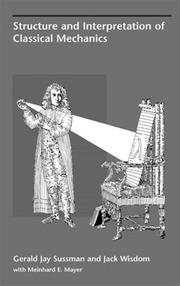
Recommended by: Patrick Collison
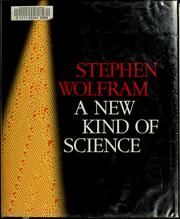
Recommended by: Mohnish Pabrai, Steve Jurvetson

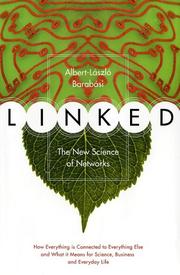
Recommended by: Mohnish Pabrai

Log-periodic power laws as a physicist's model of crash formation
Recommended by: Nassim Nicholas Taleb

Compact mathematical treatment of derivative pricing and its applications
Recommended by: Nassim Nicholas Taleb

Riemann's 1859 hypothesis on prime numbers, unsolved for 150 years.
Recommended by: Mohnish Pabrai


Recommended by: Patrick Collison
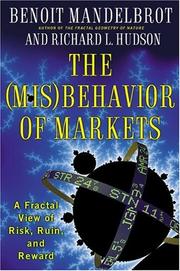
Why standard finance models understate market risk, from fractal geometry's creator.
Recommended by: Mohnish Pabrai, Nassim Nicholas Taleb and 1 other

Recommended by: Patrick Collison


Recommended by: Patrick Collison

Recommended by: Patrick Collison, Bret Victor, Jeff Atwood

Recommended by: Eric Weinstein
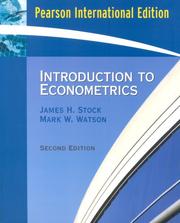
Recommended by: Eric Weinstein

Recommended by: Patrick Collison
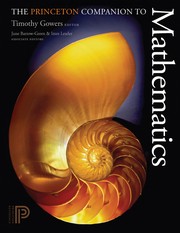
Nearly 200 entries by leading mathematicians on modern maths and its core ideas.
Recommended by: Patrick Collison, Balaji S. Srinivasan

Recommended by: Patrick Collison


Recommended by: Bill Gates
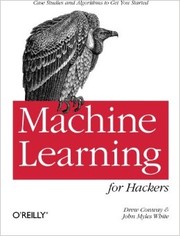
Recommended by: Patrick Collison
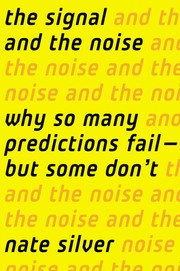
Why some forecasts succeed and most fail, from weather to earthquakes and economics.
Recommended by: Bill Gates, Mohnish Pabrai, Sophie Bakalar

Recommended by: Patrick Collison

Recommended by: Patrick Collison

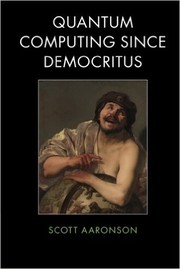
Recommended by: Patrick Collison, Emmett Shear
Results in quantum field theory obtained by topological methods.
Recommended by: Eric Weinstein
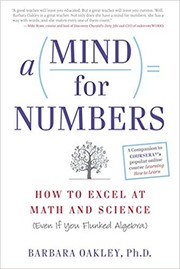
Recommended by: Mohnish Pabrai

Recommended by: Mohnish Pabrai

Recommended by: Bill Gates, Keith Rabois, Nick Ganju


Recommended by: Coleen Baik, Jessica Hische

A condensed course in the fundamentals of mathematics, physics and calculus.
Recommended by: Naval Ravikant
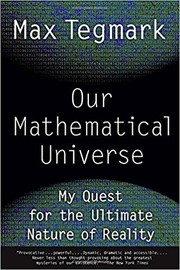
The hypothesis that physical reality is a mathematical structure, through physics.
Recommended by: Mark Cuban

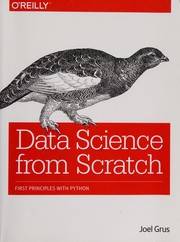
Recommended by: Balaji S. Srinivasan

Expert entries on applied maths: concepts, modelling, simulation and applications.
Recommended by: Patrick Collison, Naval Ravikant


Recommended by: Bret Victor

Recommended by: Keith Rabois, Michael Mauboussin

Recommended by: Eric Weinstein, John Doerr

Recommended by: Eric Weinstein


Graduate geometry of surfaces, transformation groups, fields and manifolds.
Recommended by: Eric Weinstein
Short math and logic puzzles, from the mutilated chessboard to the fork in the road.
Recommended by: Patrick Collison
Euclid's first six books, with diagrams and proofs drawn in bright coloured shapes.
Recommended by: Patrick Collison

A primer on the theory of games of strategy, written for non-specialists.
Recommended by: Naval Ravikant


Recommended by: Patrick O'Shaughnessy
Recommended by: Paul Graham
 Andrew W. Lowrote 2 books here
 Michael Lewiswrote 1 book here
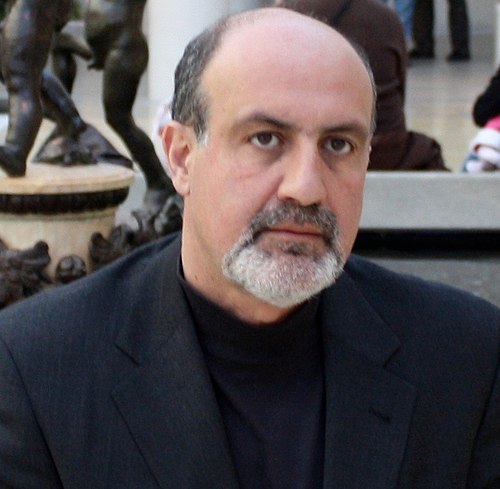 Nassim Nicholas Talebwrote 1 book here
 James P. O'Shaughnessywrote 1 book here
 Patrick Collisonrecommends 53 books here
 Eric Weinsteinrecommends 26 books here
 Mohnish Pabrairecommends 17 books hereNassim Nicholas Talebrecommends 13 books here
 Bret Victorrecommends 13 books here
 Naval Ravikantrecommends 13 books here
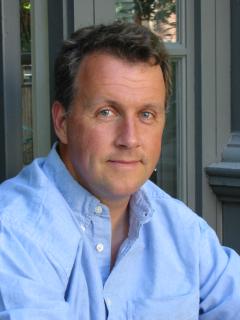 Paul Grahamrecommends 9 books here
 Bill Gatesrecommends 5 books here
 Bryan Johnsonrecommends 4 books here
 Jeff Atwoodrecommends 4 books here
 Keith Raboisrecommends 4 books here
Show all 58
 Balaji S. Srinivasanrecommends 2 books here
 Ev Williamsrecommends 2 books here
 Max Levchinrecommends 2 books here
 Steve Jurvetsonrecommends 2 books here
 Stewart Brandrecommends 2 books here
 Vinod Khoslarecommends 2 books here
 Daniel Kahnemanrecommends 1 book here
 Howard Marksrecommends 1 book here
 Jim Collinsrecommends 1 book here
 Marc Andreessenrecommends 1 book here
 John Doerrrecommends 1 book here
 Kevin Kellyrecommends 1 book here
 Marc Benioffrecommends 1 book here
 Seth Klarmanrecommends 1 book here
 Chamath Palihapitiyarecommends 1 book here
 Daniel Burkarecommends 1 book here
 Demis Hassabisrecommends 1 book here
 Emmett Shearrecommends 1 book here
 Jessica Hischerecommends 1 book here
 Julia Galefrecommends 1 book here
 Kevin Roserecommends 1 book here
 Kevin Systromrecommends 1 book here
 Mark Cubanrecommends 1 book here
 Matt Mullenwegrecommends 1 book here
 Sam Altmanrecommends 1 book here
 Susan J. Fowlerrecommends 1 book here