Updates

  1. Person pages list letters, writing, profiles and links as sortable tables with filters, and show each person's companies as links; Fund letters show each letter's description in its own column.
  2. Experts show a checked job title and a short description of each person; 30 more people have photographs.
  3. Every company, fund, university and publication the experts work for has a page listing the people there.
  4. Fund letters show each letter's thesis and filter by it; 225 person pages list the essays, columns and newsletter issues the person wrote.
  5. Person pages list every essay and newsletter issue a person wrote, and their own books as a table in List view.
  6. Recommends shows the five largest kinds of book and the rest under More; browse pictures load sooner.
  7. Podcasts and talks link the original episode, filter by Audio and video or Press, and list each publisher once.
  8. Pages are wider, Recommends has List and Grid, and a filter clicked again turns off.
  9. Book cards sit in a ruled grid with Open Library and Goodreads links and each book's one-line note.
  10. Funds is now Investors; each investor's styles are buttons that filter the table.
  11. Podcasts and talks on a person's page filter by year and publisher and show as a list or a grid of pictures.
  12. Quotes show only people's own words: 472 summaries written by list sites are gone.
  13. Country pages open from Browse again, and every link on the shelf lands on a page.
  14. Subject and person pages show their sections as tabs, and each book appears once on a person's page.
  15. Book cards show the quote, who said it and the source; grids show five cards to a row.
  16. On a phone, a menu holds the sections, search, Updates, Feedback and dark mode.
  17. Feedback takes a screenshot of the page with no browser prompt, opens a screenshot full size when you click it, and clears itself once sent.
  18. Book cards are centred, search names the topic each book sits in, and any text cut short shows whole on hover.
  19. Search groups its results by kind: people, companies, geographies, subjects, topics, books, funds, fund letters and papers.
  20. The Books table lists who recommended each book by name, and the browser tab names the section you are in.
  21. Feedback can take a screenshot of the page, or one you paste or choose, and opens in the corner beside Updates.
  22. Each rail button reopens its section where you left it, and Browse, Table and People show on every book and subject page.
  23. Filters grey out choices that hold nothing instead of hiding them, and Books › People filters by authors or recommenders.
  24. Feedback takes a subject line and up to three screenshots.
  25. Biographies are grouped by the person they are about: 41 new pages, from Abraham Lincoln to Lee Kuan Yew.
  26. Sport splits into 23 sports, and Religion into one topic per faith.
  27. Book lists show as cards: the cover, one recommendation quote and every recommender by name.
  28. Seventeen subjects that had two or three pages under different names now have one page each.
  29. Every page lists its Experts as authors and recommenders, with a link to them on the Experts tab.
  30. Economics, Financial history, Financial panics and Accounting are subjects of their own, with one page per financial crisis.
  31. Book, person and subject pages open inside the app, so the tabs stay in view.
  32. 996 more book covers, and photographs or logos for 227 more people and companies.
  33. Books › Browse shows every subject as cards, and the rail holds Fund letters, Papers, Experts, Books and Funds.
  34. Every topic over 150 books splits into narrower topics, each with a page of its own.

Send feedback

What is it?
Screenshots, up to 3 (optional)
or paste one with Ctrl+V

We use your email only to reply to you.

The Model Thinker

The Model Thinker

Scott E. Page
2018
T4 448 pages · about 7h 28m to read Open Librarygoodreads

Summary

Page teaches complex systems at Michigan and presents about thirty formal models with their mathematics, their assumptions, what each explains and where each fails. The models include linear regression, normal and power-law distributions, network structure, Markov chains, entropy, random walks, path dependence, cellular automata, game theory in several forms, collective action, mechanism design, signalling, learning models, spatial and hedonic competition, diffusion, and models of contagion and cascades.

The organising argument is that a single model is always wrong and that using many models on the same problem produces better results than refining one. He supports this with the mathematics of ensembles: the diversity prediction theorem shows that a collection's error equals average individual error minus the diversity of the predictions, which means adding a model that is individually worse can improve the collection if it errs differently. He calls this many-model thinking and argues it is what distinguishes people who reason well about complex systems.

The book is a textbook and it requires comfort with mathematics, though Page keeps the treatment accessible and each chapter stands alone. For investors and operators the value is having a formal vocabulary for situations they encounter, particularly the material on power laws, path dependence, network contagion and mechanism design. The limitation is breadth over depth: thirty models in one volume means each gets a sketch, and applying any of them seriously requires further reading. Page is also more confident about the practical value of formal modelling than the record of formal modelling in economics and policy supports.

Key takeaways 7

  1. Using many models on the same problem produces better reasoning than refining a single model, and the mathematics of ensemble error shows why.
  2. A collection's prediction error equals average individual error minus the diversity of the individual predictions, so a model that is individually worse can improve the group.
  3. Distinguishing whether an outcome is normally distributed or power-law distributed changes every decision that follows, and the two are frequently confused.
  4. Path dependence means that early events determine long-run outcomes, and it is a specific mechanism that can be tested rather than a general claim about history.
  5. Network structure determines how contagion spreads, so the same infectiousness produces completely different outcomes on different network topologies.
  6. Models should be judged on what they help a decision-maker understand rather than on whether they predict, since most social models predict badly.
  7. Formalising an argument reveals assumptions the verbal version conceals, which is the main practical reason to build a model at all.

Who should read it

Investors and analysts who want a formal toolkit of models for complex systems and the argument for applying several to the same problem.

Who recommended it 2

Keith Raboisreported

Similar books 6

Chosen by shared topics, the entries that hold them, and the people who recommended both.
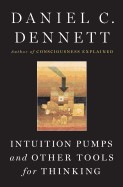
Daniel C. Dennett · 2013

Thought experiments and other tools a philosopher uses to reason carefully.

Nassim Nicholas Taleb · 2007

Rare, unforeseen, high-impact events drive history, explained only after the fact.

“The message of The Black Swan is how important it is to realize that the things everyone rules out can still come to pass.” — Howard Marks

Source: Oaktree memo 'The Limits to Negativism'

Recommended by: Howard Marks, Marc Andreessen, Nat Eliason and 18 others

Douglas W. Hubbard · 2007

Calibration and the value of information applied to intangibles.

Recommended by: Julia Galef, Nick Ganju
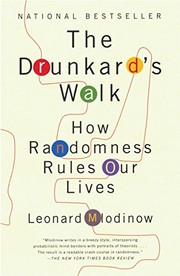
Leonard Mlodinow · 2008

How randomness shapes our lives, the history of probability, and why we misread it.

Recommended by: Patrick Collison

Where it sits in the reference 2

Investment philosophy
Mental models

Topics

Mathematics and StatisticsDecision MakingStatistics, probability and data