
The Great Mental Models
Summary
Parrish, who runs the Farnam Street site, assembles a set of thinking tools drawn from multiple disciplines, following the argument Munger made about needing a latticework of models. This first volume covers general thinking concepts, and subsequent volumes cover physics, chemistry, biology, systems and mathematics.
The models in the first volume include the map is not the territory, meaning that any model is a reduction and its usefulness depends on knowing what it omits; circle of competence, meaning the boundary within which a person's knowledge is reliable and the discipline of knowing where that boundary sits; first principles thinking, meaning decomposing a problem to what is definitely true and reasoning up from there; thought experiments; second-order thinking, meaning asking what happens after the immediate consequence; probabilistic thinking including base rates, expected value and fat tails; inversion, meaning approaching a problem from the opposite direction; and Occam's razor and Hanlon's razor as filters for competing explanations.
Each model is explained with historical examples and with the failure mode that occurs when it is misapplied. The books are physically well produced with illustrations, which is part of their appeal.
The content is compiled rather than original, and readers who have read Munger, Kahneman and Taleb will find little new. The examples are brief and sometimes stretched to fit. The claim that these are the great mental models is arbitrary, since the selection is Parrish's. It works as an organised introduction for someone who has not encountered these ideas scattered across other sources, and as a reference for the definitions.
Key takeaways 8
- Every model is a reduction of reality, so its usefulness depends on knowing what it leaves out and where it stops applying.
- A person should identify the boundary of their competence explicitly, and treat statements outside it as guesses regardless of confidence.
- First principles reasoning requires decomposing a problem to what is definitely true and rebuilding from there, rather than reasoning by analogy to existing solutions.
- Second-order thinking asks what happens after the immediate consequence, and most bad decisions are first-order decisions that ignore what follows.
- Inverting a problem, by asking what would guarantee failure, produces answers that direct reasoning does not.
- Probabilistic thinking requires starting from base rates, since the specific details of a case crowd out the statistical information that should anchor the estimate.
- Occam's razor selects the explanation requiring the fewest assumptions, and Hanlon's razor prefers incompetence to malice as an explanation of behaviour.
- A single discipline's models will force every problem into that discipline's shape, which is why models from several fields are needed.
Who should read it
Readers who want an organised introduction to cross-disciplinary thinking tools without assembling them from the original sources.
About Shane Parrish
Founder of Farnam Street and host of The Knowledge Project podcast; previously an analyst for a Canadian intelligence agency.
The Great Mental Models collects the reasoning tools investors borrow from other disciplines - inversion, second-order effects, margin of safety, the map and the territory, circle of competence - and gives each a worked example rather than a slogan. Clear Thinking covers the practices around those models: noticing that a decision is being made at all, and setting rules before the moment arrives.
Who recommended it 5
Similar books 6
Chosen by shared topics, the entries that hold them, and the people who recommended both.

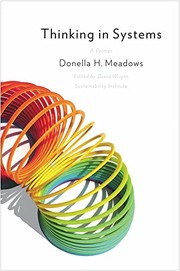
Meadows wrote this before systems thinking became a popular phrase, and it remains the clearest account of why short-term interventions in complex systems so often backfire. The chapter on leverage points is the conceptual core of what long-term thinking actually requires from decision-makers.
Recommended by: Patrick O'Shaughnessy, Daniel Burka and 3 others
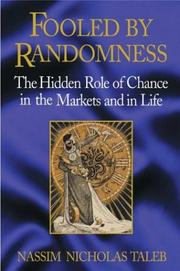
Why people mistake luck for skill, above all in markets.
“Fooled by Randomness is a serious, intellectually sophisticated book, well worth reading carefully. At times, the book is condescending. Nevertheless, there are some great insights.” — Barton Biggs
Source: Biggs on a sophisticated book worth reading carefully
Recommended by: Barton Biggs, Michael Mauboussin and 11 others
Thought experiments and other tools a philosopher uses to reason carefully.
Recommended by: Patrick Collison, Shane Parrish
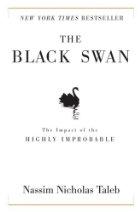
Rare, unforeseen, high-impact events drive history, explained only after the fact.
“The message of The Black Swan is how important it is to realize that the things everyone rules out can still come to pass.” — Howard Marks
Source: Oaktree memo 'The Limits to Negativism'
Recommended by: Howard Marks, Marc Andreessen, Nat Eliason and 18 others

Second-level thinking, risk and market cycles, drawn from Oaktree's client memos.
Recommended by: Matt Mullenweg, Mohnish Pabrai, Nat Eliason and 3 others
Where it sits in the reference 7
Topics