
Clear Thinking
Summary
Parrish, who runs Farnam Street, argues that most decision quality is determined before any decision is consciously made, because ordinary moments are handled by default reactions that people do not notice as choices. His four defaults are the emotion default, reacting to feelings rather than reasons; the ego default, protecting self-image; the social default, conforming to the group; and the inertia default, preferring what already exists.
His countermeasures are strengths that must be built in advance rather than summoned in the moment: self-accountability, self-knowledge, self-control and self-confidence. He then gives operating rules, including creating space between stimulus and response by requiring a delay, setting rules for yourself in advance rather than deciding in the moment, removing yourself from environments that trigger the defaults, and managing the conditions that degrade judgement, meaning hunger, fatigue, emotion and social pressure.
The decision process he sets out covers defining the problem correctly before considering solutions, generating genuinely different options rather than variations on one, setting the criteria before evaluating, using a pre-mortem, and deciding how much time a decision deserves based on whether it is reversible.
The book is short and practical. It is synthesis rather than research, and readers familiar with Kahneman, Munger, Tetlock and the Heaths will find little that is new in substance. Parrish's contribution is compression and the specific framing of defaults as the thing to manage, which is a useful reorganisation of familiar material. There is no empirical work of his own.
Key takeaways 7
- Most decision outcomes are determined by automatic reactions in ordinary moments rather than by deliberate choices at obvious decision points.
- Four defaults govern those reactions: responding to emotion, protecting self-image, conforming to the group, and preferring the existing state.
- Building the capacity to resist defaults must happen before the moment, because judgement cannot be improved while it is being used.
- Setting rules for yourself in advance outperforms deciding in the moment, since a rule does not have to be defended against a current impulse.
- Defining the problem correctly consumes more of the value in a decision than evaluating the options does, and most people skip straight to options.
- The time a decision deserves should be set by whether it is reversible, since reversible decisions should be made fast and wrong rather than slowly and right.
- Managing the conditions that degrade judgement, meaning fatigue, hunger, emotion and social pressure, does more for decision quality than any analytical technique.
Who should read it
Operators who want a compact practical synthesis of decision-making advice organised around managing automatic reactions.
About Shane Parrish
Founder of Farnam Street and host of The Knowledge Project podcast; previously an analyst for a Canadian intelligence agency.
The Great Mental Models collects the reasoning tools investors borrow from other disciplines - inversion, second-order effects, margin of safety, the map and the territory, circle of competence - and gives each a worked example rather than a slogan. Clear Thinking covers the practices around those models: noticing that a decision is being made at all, and setting rules before the moment arrives.
Similar books 6
Chosen by shared topics, the entries that hold them, and the people who recommended both.

Recommended by: Ana Fabrega, Chamath Palihapitiya, Jenny Chu and 2 others

Builds out Munger's latticework idea from primary sources.
“…books I've recommended, highlighted to death, or forced on friends.” — Andrew Wilkinson
Source: Andrew Wilkinson's Bookshelf, neverenough.com
Recommended by: Andrew Wilkinson, Nat Eliason and 8 others
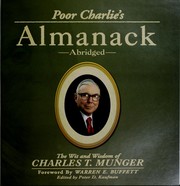
Speeches making the case for a latticework of mental models from many fields.
“…books I've recommended, highlighted to death, or forced on friends.” — Andrew Wilkinson
Source: Andrew Wilkinson's Bookshelf, neverenough.com
Recommended by: Andrew Wilkinson, Charlie Munger and 26 others

A working catalogue of 99 cognitive errors, organized so you can actually use it. Less academic than Kahneman, more encyclopedic than Duke. The format — one bias per short chapter — makes it useful as a pre-mortem checklist before consequential decisions.
Recommended by: Mohnish Pabrai

Second-level thinking, risk and market cycles, drawn from Oaktree's client memos.
Recommended by: Matt Mullenweg, Mohnish Pabrai, Nat Eliason and 3 others

Judge decisions by their reasoning, not their outcomes, and think in odds.
Recommended by: Ev Williams, Ana Fabrega, Jason Fried and 5 others
Where it sits in the reference 5
Topics