
Second-Order Thinking
First-level thinking says good company, buy the stock; second-level asks what the price already assumes and who on the other side disagrees. Returns come not from being right but from being right where consensus is wrong. Every consequence has consequences, so the habit is to keep asking 'and then what?' until the answer stops surprising you.
Start here
- The Most Important ThingHoward Marks, 2011
- The Great Mental Models Volume 1Shane Parrish, 2019
- Thinking in SystemsDonella H. Meadows, 2008
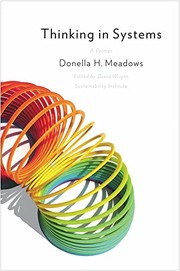
Meadows wrote this before systems thinking became a popular phrase, and it remains the clearest account of why short-term interventions in complex systems so often backfire. The chapter on leverage points is the conceptual core of what long-term thinking actually requires from decision-makers.
Recommended by: Patrick O'Shaughnessy, Daniel Burka and 3 others

Second-level thinking, risk and market cycles, drawn from Oaktree's client memos.
Recommended by: Matt Mullenweg, Mohnish Pabrai, Nat Eliason and 3 others

Cycles can't be timed, but knowing where you stand in one lets you adjust risk.
Recommended by: Nat Eliason, Michael Bloomberg

Recommended by: Ana Fabrega, Chamath Palihapitiya, Jenny Chu and 2 others


 Matt Mullenwegrecommends 2 books here
 Marc Andreessenrecommends 1 book here
 Warren Buffettrecommends 1 book here
 Mohnish Pabrairecommends 1 book here
 Chamath Palihapitiyarecommends 1 book here
 Daniel Burkarecommends 1 book here
 John Maedarecommends 1 book here
 Michael Bloombergrecommends 1 book here
Show all 15

- Second-Order Thinking: What Smart People UseShane Parrish · essay · Asking 'and then what?' before acting.
- Who Is On the Other Side?Michael J. Mauboussin · paper · A framework for locating your actual source of edge.
- Investing in Second-Order EffectsMichael J. Mauboussin · paper · Where the non-obvious beneficiaries of a shift sit.
- Revenge Effects: When Technology Bites BackShane Parrish · essay · Solutions that create the problem they were meant to fix.