
Signal versus Noise
Most of what arrives daily is variation without information, and the volume of data has grown far faster than the amount of signal in it. Treating noise as signal produces overtrading, spurious patterns and confident nonsense. The remedy is to decide in advance what evidence would actually change the position, then ignore the rest.
Start here
- How to Lie with StatisticsDarrell Huff, 1954
- The Signal and the NoiseNate Silver, 2012
- SuperforecastingPhilip E. Tetlock, Dan Gardner, 2015

How biased samples, chosen averages and cut-off chart axes make numbers mislead.
Recommended by: Bill Gates, Mohnish Pabrai, Morgan Housel and 6 others
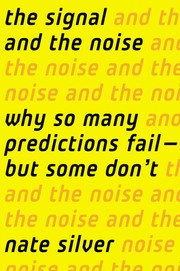
Why some forecasts succeed and most fail, from weather to earthquakes and economics.
Recommended by: Bill Gates, Mohnish Pabrai, Sophie Bakalar
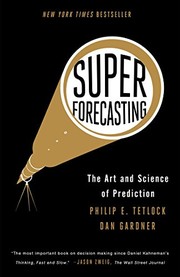
The Good Judgment Project; the practices that measurably improve forecasts.
Recommended by: Patrick Collison and 9 others
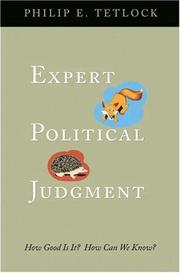
A 20-year test of 28,000 expert forecasts: foxes with many models beat hedgehogs.
“All pundits and commentators should publish their prediction track records, yet don't. What to pay attention to and what to ignore.” — Marc Andreessen
Source: @pmarca, 'Thread: Books I've recently read and recommend'
Recommended by: Marc Andreessen, Michael Mauboussin and 2 others

The life of Claude Shannon, whose information theory underlies the digital age.
Recommended by: Bryan Johnson, Jim O'Shaughnessy and 1 other
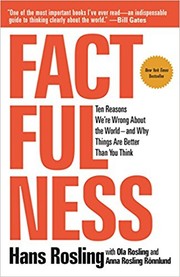
Hans Rosling was a global health professor, not an economist, which gives his data-driven case for human progress particular credibility. He shows, in meticulous detail, that almost every quantitative measure of human welfare has improved dramatically over the past century. He attributes this to global trade and economic development without being a polemicist.
Recommended by: Bill Gates, Alfred Lin, Daniel Petre and 4 others
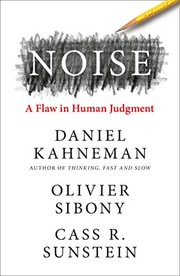
Kahneman died 27 March 2024; this was his last book.


 Bill Gatesrecommends 3 books here
 Patrick Collisonrecommends 3 books here
 Mohnish Pabrairecommends 2 books here
 Howard Marksrecommends 1 book here
 Marc Andreessenrecommends 1 book here
 Paul Grahamrecommends 1 book here
 Alexis Ohanianrecommends 1 book here
 Alfred Linrecommends 1 book here
Show all 28
 Bryan Johnsonrecommends 1 book here
 Jim O'Shaughnessyrecommends 1 book here
 Julia Galefrecommends 1 book here
 Melinda Gatesrecommends 1 book here
 Trevor Ncuberecommends 1 book here
 Vinod Khoslarecommends 1 book here
- Pattern Recognition: Opportunities and LimitsMichael J. Mauboussin · paper · Where patterns are signal and where they are noise.
- Common Probability Errors to AvoidShane Parrish · essay · Small samples, base-rate neglect and the gambler's fallacy.
- The Illusion of KnowledgeHoward Marks · memo · Why macro forecasts feel informative and are not.
- How to Spot Bad ScienceShane Parrish · essay · A checklist for claims that will not replicate.