Raoul Pal
Has written the research letter Global Macro Investor for institutional investors since January 2005; earlier co-managed the GLG Global Macro Fund in London for GLG Partners.
Real VisionGlobal Macro Investor GLG Partners
Short Excerpts from Global Macro Investor
73 articles · 24 books they recommend
More 7

How people learned to measure risk, from early probability to portfolio theory.
Also recommended by: Charles de Vaulx, Jim Collins and 7 others

How Jho Low diverted billions from Malaysia's 1MDB fund into parties and politics.
Also recommended by: Alexis Ohanian, Alfred Lin and 4 others
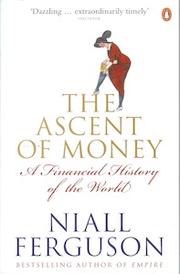
The history of finance by instrument: credit, bonds, stocks, insurance and property.
Also recommended by: Mohnish Pabrai, Max Levchin, Ryan Peterson and 1 other
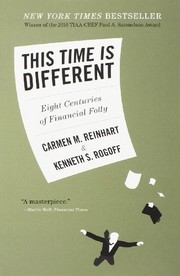
Eight centuries of defaults and banking crises show the same patterns recurring.
Also recommended by: Mohnish Pabrai and 2 others
How a hedge fund's bond bets on borrowed money lost $4.6 billion in four months.
Also recommended by: Mohnish Pabrai and 6 others

Diamond's central question — why did some civilizations come to dominate others over 10,000 years? — is precisely the kind of question that requires long-term thinking to even ask. The answer, rooted in geography and biology rather than culture or intelligence, is a model for how to reason about slow causes and fast effects.
Also recommended by: Charlie Munger, Christopher Bloomstran and 13 others

Harari's concern — that humans may cede decision-making to opaque systems through preference rather than coercion — reframes the alignment problem as a cultural and political challenge, not only a technical one. Less rigorous than Bostrom or Russell, but more widely read, making it a useful lens for understanding public discourse.
Also recommended by: Andrew Wilkinson, Bill Gates, Nat Eliason and 6 others

How shared fictions such as money, nations and gods let humans cooperate at scale.
Also recommended by: Andrew Wilkinson, Bill Gates, Mohnish Pabrai and 37 others
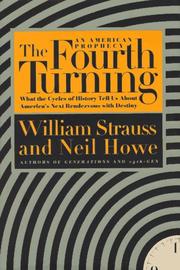
American history as a repeating cycle of four generational turnings, each 20 years.
Also recommended by: Balaji S. Srinivasan, Mohnish Pabrai and 2 others
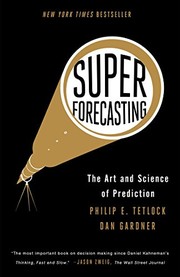
The Good Judgment Project; the practices that measurably improve forecasts.
Also recommended by: Patrick Collison and 8 others
Rare, unforeseen, high-impact events drive history, explained only after the fact.
Also recommended by: Howard Marks, Marc Andreessen, Nat Eliason and 17 others

Also recommended by: Patrick Collison

Incentives and data applied to cheating teachers, sumo wrestlers and other puzzles.
Also recommended by: Mohnish Pabrai, Andrew Lokenauth and 5 others
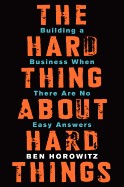
Subtitled 'Building a Business When There Are No Easy Answers'
Also recommended by: Andrew Wilkinson, Balaji S. Srinivasan and 33 others
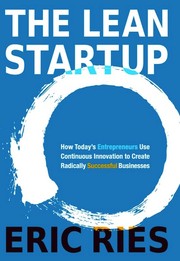
Build, measure, learn: test what customers want with small experiments.
Also recommended by: Nat Eliason, Sheryl Sandberg, Andrew Chen and 16 others

Flow, the state of full absorption in a hard task, and how to find it more often.
Also recommended by: Andrew Wilkinson, Jim Collins and 1 other

Michael Lewis's account of the Kahneman-Tversky collaboration works as intellectual biography and as a second path through the research for readers who find academic writing slow. The friendship and its eventual fracture clarifies how two very different minds produced work that neither could have done alone.
Also recommended by: Andrew Wilkinson, Mohnish Pabrai, Ray Dalio and 5 others

Insider account of Facebook's ads business by a product manager.
Also recommended by: Mohnish Pabrai, Nat Eliason, Alfred Lin and 2 others
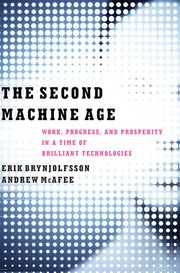
Brynjolfsson and McAfee provide the economic context: AI as a general-purpose technology that decouples productivity from employment. The alignment problem doesn't exist in a vacuum — it plays out in economies where AI is already restructuring labor markets in ways that are hard to reverse.
Also recommended by: Mohnish Pabrai, Patrick Collison and 3 others

The secretly funded litigation that destroyed Gawker.
Also recommended by: Brian Koppelman, Jeff Jordan, Joel Connolly and 1 other


Sound money must hold value over time, and Bitcoin's fixed supply makes it such.
Also recommended by: Balaji S. Srinivasan, Alex Lieberman

The case that ageing is a disease that can be treated, and the theory behind it.
Also recommended by: David Friedberg, Jason Fried and 3 others

Also recommended by: Ryan Holiday, Chase Jarvis
| The Price of Being Human | Short Excerpts from Global Macro Investor | 2026-10-30 |
| One week to go, and a favour | Short Excerpts from Global Macro Investor | 2026-10-27 |
| The Year the World Broke | Short Excerpts from Global Macro Investor | 2026-10-22 |
| The Tools Are Building The Tools | Short Excerpts from Global Macro Investor | 2026-10-08 |
| Everything Will Be a Token | Short Excerpts from Global Macro Investor | 2026-09-24 |
| What if 1929 was our 2008? | Short Excerpts from Global Macro Investor | 2026-09-17 |
| Why The Buildout Can’t Stop | Short Excerpts from Global Macro Investor | 2026-09-10 |
| Why Traditional Portfolios Stopped Working | Short Excerpts from Global Macro Investor | 2026-09-03 |
| DeFi Wasn’t Meant For You | Short Excerpts from Global Macro Investor | 2026-08-26 |
| Intelligence is Growing Legs | Short Excerpts from Global Macro Investor | 2026-08-20 |
| The Singularity is... | Short Excerpts from Global Macro Investor | 2024-05-09 |
| The Singularity is... | Short Excerpts from Global Macro Investor | 2024-05-09 |
| We've Got 6 Years... | Short Excerpts from Global Macro Investor | 2024-05-03 |
| Postcards from the Exponential Age: Day 5 | Short Excerpts from Global Macro Investor | 2024-04-26 |
| Postcards from the Exponential Age: Day 4 | Short Excerpts from Global Macro Investor | 2024-04-25 |
| Postcards from the Exponential Age: Day 3 | Short Excerpts from Global Macro Investor | 2024-04-24 |
| Postcards from the Exponential Age: Day 2 | Short Excerpts from Global Macro Investor | 2024-04-23 |
| Postcards from the Exponential Age: Day 1 | Short Excerpts from Global Macro Investor | 2024-04-22 |
| The GMI Top 5 Weekly Charts That Make You Go Hmmm... | Short Excerpts from Global Macro Investor | 2023-11-26 |
| The GMI Top 5 Weekly Charts That Make You Go Hmmm... | Short Excerpts from Global Macro Investor | 2023-11-19 |
| The GMI Top 5 Weekly Charts That Make You Go Hmmm... | Short Excerpts from Global Macro Investor | 2023-11-12 |
| An Excerpt from the Exponentialist: Electricity and Magic | Short Excerpts from Global Macro Investor | 2023-11-08 |
| The Retirement Myth | Short Excerpts from Global Macro Investor | 2023-10-29 |
| The GMI Top 5 Weekly Charts That Make You Go Hmmm... | Short Excerpts from Global Macro Investor | 2023-10-22 |
| It is Time to Prepare... | Short Excerpts from Global Macro Investor | 2023-10-11 |
| Robots Are Demographics Part 2 | Short Excerpts from Global Macro Investor | 2023-10-08 |
| You're Invited | Short Excerpts from Global Macro Investor | 2023-10-05 |
| Robots Are Demographics | Short Excerpts from Global Macro Investor | 2023-10-01 |
| The GMI Top 5 Weekly Charts That Make You Go Hmmm... | Short Excerpts from Global Macro Investor | 2023-09-24 |
| The GMI Top 5 Weekly Charts That Make You Go Hmmm... | Short Excerpts from Global Macro Investor | 2023-09-17 |
| The GMI Top 5 Weekly Charts That Make You Go Hmmm... | Short Excerpts from Global Macro Investor | 2023-09-10 |
| The GMI Top 5 Weekly Charts That Make You Go Hmmm... | Short Excerpts from Global Macro Investor | 2023-08-27 |
| The GMI Top 5 Weekly Charts That Make You Go Hmmm... | Short Excerpts from Global Macro Investor | 2023-08-20 |
| Crypto: The GMI Top 5 Weekly Charts That Make You Go Hmmm... | Short Excerpts from Global Macro Investor | 2023-08-13 |
| The GMI Top 5 Weekly Charts That Make You Go Hmmm... | Short Excerpts from Global Macro Investor | 2023-08-06 |
| Books for the Beach | Short Excerpts from Global Macro Investor | 2023-07-30 |
| The GMI Top 5 Weekly Charts That Make You Go Hmmm... | Short Excerpts from Global Macro Investor | 2023-07-23 |
| The GMI Top 5 Weekly Charts That Make You Go Hmmm... | Short Excerpts from Global Macro Investor | 2023-07-16 |
| The GMI Top 5 Weekly Charts That Make You Go Hmmm... | Short Excerpts from Global Macro Investor | 2023-07-09 |
| The GMI Top 5 Weekly Charts That Make You Go Hmmm... | Short Excerpts from Global Macro Investor | 2023-06-25 |
| The GMI Top 5 Weekly Charts That Make You Go Hmmm... | Short Excerpts from Global Macro Investor | 2023-06-04 |
| The Super Massive Black Hole that Eats All Other Assets | Short Excerpts from Global Macro Investor | 2023-05-29 |
| The GMI Top 5 Weekly Charts That Make You Go Hmmm... | Short Excerpts from Global Macro Investor | 2023-05-21 |
| Inflation is Yesterday's News: The GMI Top 5 Weekly Charts That Make You Go Hmmm... | Short Excerpts from Global Macro Investor | 2023-05-15 |
| The Business Cycle in Fifteen Charts | Short Excerpts from Global Macro Investor | 2023-04-30 |
| The GMI Top 5 Weekly Charts That Make You Go Hmmm... | Short Excerpts from Global Macro Investor | 2023-04-23 |
| The GMI Top 5 Weekly Charts That Make You Go Hmmm... | Short Excerpts from Global Macro Investor | 2023-04-16 |
| Global Macro Investor: January 2023 Think Piece | Short Excerpts from Global Macro Investor | 2023-04-06 |
| Fed Liquidity: The GMI Top 5 Weekly Charts That Make You Go Hmmm... | Short Excerpts from Global Macro Investor | 2023-03-26 |
| The GMI Top 5 Weekly Charts That Make You Go Hmmm... | Short Excerpts from Global Macro Investor | 2023-03-19 |
| The Shift is Coming: The GMI Top 5 Weekly Charts That Make You Go Hmmm... | Short Excerpts from Global Macro Investor | 2023-03-12 |
| 3 Trends That Are F*cking Up Our Future (And 3 Trends That Can Fix It) | Short Excerpts from Global Macro Investor | 2023-03-07 |
| The Economies of Crypto | Short Excerpts from Global Macro Investor | 2023-03-05 |
| Make or Break: The GMI Top 5 Weekly Charts That Make You Go Hmmm... | Short Excerpts from Global Macro Investor | 2023-02-26 |
| The GMI Top 5 Weekly Charts That Make You Go Hmmm... | Short Excerpts from Global Macro Investor | 2023-02-19 |
| Zoom Out: The GMI Top 5 Weekly Charts That Make You Go Hmmm... | Short Excerpts from Global Macro Investor | 2023-02-12 |
| Non-Consensus Views: The GMI Top 5 Charts That Make You Go Hmmm... | Short Excerpts from Global Macro Investor | 2023-02-05 |
| The Story of Global Macro Investor | Short Excerpts from Global Macro Investor | 2023-01-29 |
| Optimism for 2023: The GMI Top 5 Charts That Make You Go Hmmm... | Short Excerpts from Global Macro Investor | 2022-12-18 |
| When in Doubt, Zoom Out: The GMI Top 5 Charts That Make You Go Hmmm... | Short Excerpts from Global Macro Investor | 2022-12-11 |
| When Liquidity Changes, Everything Changes | Short Excerpts from Global Macro Investor | 2022-12-04 |
| The GMI Top 5: CPI, NFIB, JOLTS Data and the Dollar | Short Excerpts from Global Macro Investor | 2022-11-27 |
| The GMI Top 5 Charts That Make You Go Hmmm... | Short Excerpts from Global Macro Investor | 2022-11-20 |
| The GMI Top 5 Charts That Make You Go Hmmm... | Short Excerpts from Global Macro Investor | 2022-11-13 |
| The GMI Top 5 Charts That Make You Go Hmmm... | Short Excerpts from Global Macro Investor | 2022-11-06 |
| This is How the World Works | Short Excerpts from Global Macro Investor | 2022-10-30 |
| The GMI Top 5 – Housing | Short Excerpts from Global Macro Investor | 2022-10-23 |
| The GMI Top 5 - Inflation | Short Excerpts from Global Macro Investor | 2022-10-16 |
| Terrifying Charts… | Short Excerpts from Global Macro Investor | 2022-09-25 |
| The Glorious Days of Yesteryear & the Gods of Times Past | Short Excerpts from Global Macro Investor | 2022-08-25 |
| As Bad as it Gets… | Short Excerpts from Global Macro Investor | 2022-08-02 |
| Probability of Outcomes: A Look Ahead | Short Excerpts from Global Macro Investor | 2022-06-06 |
| Welcome to Demand Destruction | Short Excerpts from Global Macro Investor | 2022-05-27 |