Updates

  1. Person pages list letters, writing, profiles and links as sortable tables with filters, and show each person's companies as links; Fund letters show each letter's description in its own column.
  2. Experts show a checked job title and a short description of each person; 30 more people have photographs.
  3. Every company, fund, university and publication the experts work for has a page listing the people there.
  4. Fund letters show each letter's thesis and filter by it; 225 person pages list the essays, columns and newsletter issues the person wrote.
  5. Person pages list every essay and newsletter issue a person wrote, and their own books as a table in List view.
  6. Recommends shows the five largest kinds of book and the rest under More; browse pictures load sooner.
  7. Podcasts and talks link the original episode, filter by Audio and video or Press, and list each publisher once.
  8. Pages are wider, Recommends has List and Grid, and a filter clicked again turns off.
  9. Book cards sit in a ruled grid with Open Library and Goodreads links and each book's one-line note.
  10. Funds is now Investors; each investor's styles are buttons that filter the table.
  11. Podcasts and talks on a person's page filter by year and publisher and show as a list or a grid of pictures.
  12. Quotes show only people's own words: 472 summaries written by list sites are gone.
  13. Country pages open from Browse again, and every link on the shelf lands on a page.
  14. Subject and person pages show their sections as tabs, and each book appears once on a person's page.
  15. Book cards show the quote, who said it and the source; grids show five cards to a row.
  16. On a phone, a menu holds the sections, search, Updates, Feedback and dark mode.
  17. Feedback takes a screenshot of the page with no browser prompt, opens a screenshot full size when you click it, and clears itself once sent.
  18. Book cards are centred, search names the topic each book sits in, and any text cut short shows whole on hover.
  19. Search groups its results by kind: people, companies, geographies, subjects, topics, books, funds, fund letters and papers.
  20. The Books table lists who recommended each book by name, and the browser tab names the section you are in.
  21. Feedback can take a screenshot of the page, or one you paste or choose, and opens in the corner beside Updates.
  22. Each rail button reopens its section where you left it, and Browse, Table and People show on every book and subject page.
  23. Filters grey out choices that hold nothing instead of hiding them, and Books › People filters by authors or recommenders.
  24. Feedback takes a subject line and up to three screenshots.
  25. Biographies are grouped by the person they are about: 41 new pages, from Abraham Lincoln to Lee Kuan Yew.
  26. Sport splits into 23 sports, and Religion into one topic per faith.
  27. Book lists show as cards: the cover, one recommendation quote and every recommender by name.
  28. Seventeen subjects that had two or three pages under different names now have one page each.
  29. Every page lists its Experts as authors and recommenders, with a link to them on the Experts tab.
  30. Economics, Financial history, Financial panics and Accounting are subjects of their own, with one page per financial crisis.
  31. Book, person and subject pages open inside the app, so the tabs stay in view.
  32. 996 more book covers, and photographs or logos for 227 more people and companies.
  33. Books › Browse shows every subject as cards, and the rail holds Fund letters, Papers, Experts, Books and Funds.
  34. Every topic over 150 books splits into narrower topics, each with a page of its own.

Send feedback

What is it?
Screenshots, up to 3 (optional)
or paste one with Ctrl+V

We use your email only to reply to you.

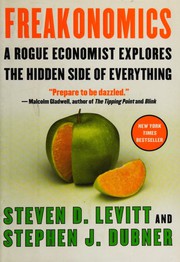
Freakonomics: A Rogue Economist Explores the

Freakonomics: A Rogue Economist Explores the Hidden Side of Everything

Steven D. Levitt, Stephen D. Levitt, Stephen J. Dubner
2005
T4 320 pages · about 5h 20m to read Open Librarygoodreads

Summary

Levitt and Dubner apply economic reasoning to questions outside conventional economics, using incentives and data analysis to test claims that people take for granted. The chapters cover cheating among schoolteachers and sumo wrestlers, the information asymmetry used by estate agents and by the Ku Klux Klan, the economics of crack dealing drawn from Sudhir Venkatesh's gang financial records, the causes of the 1990s crime decline, the effect of parenting on child outcomes, and the significance of names.

The method is the point rather than the topics. Levitt looks for natural experiments and for data that reveals behaviour people do not report. The teacher cheating analysis identified suspicious answer patterns across Chicago classrooms. The sumo analysis found win rates in matches where one wrestler needed a single victory that reversed in later meetings between the same pair. The estate agent analysis compared how long agents kept their own houses on the market against their clients' houses.

The most contested chapter argues that the legalisation of abortion in the United States after 1973 explains a large share of the crime decline in the 1990s, through the reduced birth of unwanted children who would have been at high risk of offending. This produced substantial academic dispute, including a coding error identified by Foote and Goetz in 2005 that weakened the original result, though Levitt and Donohue have continued to defend the finding with updated data.

The book is a set of case studies with no unifying theory, which the authors state. Some chapters have aged poorly and the parenting analysis rests on correlational data. Its lasting value is demonstrating how incentives and data can test claims that everyone assumes.

Key takeaways 8

  1. Incentives explain behaviour across contexts that appear unrelated, and identifying who benefits explains outcomes that moral explanations cannot.
  2. Experts exploit information asymmetry against their own clients, which estate agents demonstrate by keeping their own houses on the market longer for higher prices.
  3. Cheating can be detected in data by finding patterns that honest behaviour would not produce, including answer sequences on tests and win rates in specific matches.
  4. Most street-level drug dealers earn below minimum wage, and the gang financial structure resembles a franchise with a tournament payoff at the top.
  5. Conventional wisdom about causes is frequently wrong, and the crime decline of the 1990s is not explained by the policing and economic factors usually cited.
  6. What parents do matters less to measured child outcomes than what parents are, since most measurable effects track parental characteristics rather than parenting practices.
  7. Names correlate with outcomes because they signal the parents' characteristics rather than because they cause anything.
  8. The abortion and crime finding is the book's most contested claim and has been challenged on coding and specification grounds since publication.

Who should read it

Readers who want a demonstration of how incentives and natural experiments test received explanations, useful as method rather than for its specific conclusions.

Who recommended it 8 · 1 direct

Ev Williamsreported
Raoul Palreported
Ruslan Koganreported
Simon Sinekreported
Steph Smithreported

Similar books 6

Chosen by shared topics, the entries that hold them, and the people who recommended both.
Paul Milgrom, John Roberts · 1992

How firms are organised, using agency, contracts and transaction-cost economics.
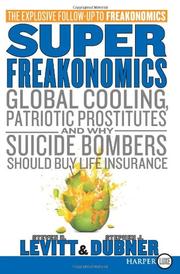
Steven D. Levitt, Stephen J. Dubner · 2009

Sequel applying incentive analysis to climate, crime and altruism

“I recommend this book to anyone who reads nonfiction. It is very well written and full of great insights.” — Bill Gates

Source: Gates Notes review of SuperFreakonomics

Recommended by: Bill Gates, Mohnish Pabrai
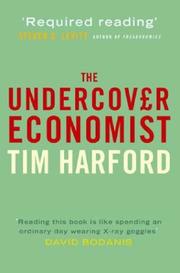
Tim Harford · 2005

Price theory in daily life: coffee near stations, supermarket tiers and used cars.

Jon Elster · 2007

Elster on mechanisms rather than laws in the social sciences

Tom Wainwright · 2016

The drug trade as a business: how cartels handle supply chains, staff and branding.
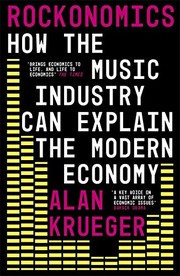
Alan B. Krueger · 2019

The economics of the music industry, where superstar markets show up in pure form.

Where it sits in the reference 4

Mental models
Mental models
Mental models
Economics

Topics

EconomicsSociology and CultureSocial behaviour and collective action