Updates

  1. Person pages list letters, writing, profiles and links as sortable tables with filters, and show each person's companies as links; Fund letters show each letter's description in its own column.
  2. Experts show a checked job title and a short description of each person; 30 more people have photographs.
  3. Every company, fund, university and publication the experts work for has a page listing the people there.
  4. Fund letters show each letter's thesis and filter by it; 225 person pages list the essays, columns and newsletter issues the person wrote.
  5. Person pages list every essay and newsletter issue a person wrote, and their own books as a table in List view.
  6. Recommends shows the five largest kinds of book and the rest under More; browse pictures load sooner.
  7. Podcasts and talks link the original episode, filter by Audio and video or Press, and list each publisher once.
  8. Pages are wider, Recommends has List and Grid, and a filter clicked again turns off.
  9. Book cards sit in a ruled grid with Open Library and Goodreads links and each book's one-line note.
  10. Funds is now Investors; each investor's styles are buttons that filter the table.
  11. Podcasts and talks on a person's page filter by year and publisher and show as a list or a grid of pictures.
  12. Quotes show only people's own words: 472 summaries written by list sites are gone.
  13. Country pages open from Browse again, and every link on the shelf lands on a page.
  14. Subject and person pages show their sections as tabs, and each book appears once on a person's page.
  15. Book cards show the quote, who said it and the source; grids show five cards to a row.
  16. On a phone, a menu holds the sections, search, Updates, Feedback and dark mode.
  17. Feedback takes a screenshot of the page with no browser prompt, opens a screenshot full size when you click it, and clears itself once sent.
  18. Book cards are centred, search names the topic each book sits in, and any text cut short shows whole on hover.
  19. Search groups its results by kind: people, companies, geographies, subjects, topics, books, funds, fund letters and papers.
  20. The Books table lists who recommended each book by name, and the browser tab names the section you are in.
  21. Feedback can take a screenshot of the page, or one you paste or choose, and opens in the corner beside Updates.
  22. Each rail button reopens its section where you left it, and Browse, Table and People show on every book and subject page.
  23. Filters grey out choices that hold nothing instead of hiding them, and Books › People filters by authors or recommenders.
  24. Feedback takes a subject line and up to three screenshots.
  25. Biographies are grouped by the person they are about: 41 new pages, from Abraham Lincoln to Lee Kuan Yew.
  26. Sport splits into 23 sports, and Religion into one topic per faith.
  27. Book lists show as cards: the cover, one recommendation quote and every recommender by name.
  28. Seventeen subjects that had two or three pages under different names now have one page each.
  29. Every page lists its Experts as authors and recommenders, with a link to them on the Experts tab.
  30. Economics, Financial history, Financial panics and Accounting are subjects of their own, with one page per financial crisis.
  31. Book, person and subject pages open inside the app, so the tabs stay in view.
  32. 996 more book covers, and photographs or logos for 227 more people and companies.
  33. Books › Browse shows every subject as cards, and the rail holds Fund letters, Papers, Experts, Books and Funds.
  34. Every topic over 150 books splits into narrower topics, each with a page of its own.

Send feedback

What is it?
Screenshots, up to 3 (optional)
or paste one with Ctrl+V

We use your email only to reply to you.

Economics, Organization and Management

Economics, Organization and Management

Paul Milgrom, John Roberts
1992
T2 no Open Library recordgoodreads

Summary

Milgrom and Roberts wrote the first textbook that assembled contract theory, agency theory, transaction cost economics and mechanism design into a single treatment of how firms are organised. It covers moral hazard, adverse selection, incomplete contracts, ownership and asset specificity, internal labour markets, executive compensation, capital structure and organisational design.

The unifying claim is that organisational arrangements are solutions to information and incentive problems, and that they can be analysed with the same rigour as prices. The authors introduce the efficiency principle, the idea that parties who can bargain will find arrangements that maximise total value, and they develop complementarity: that organisational practices come in packages, so adopting one modern practice without the others often makes performance worse rather than better. Their treatment of the value-maximisation criterion, of influence costs inside firms, and of why ownership matters when contracts are necessarily incomplete became standard teaching material.

The book is written for graduate students and MBAs and uses formal reasoning throughout, though it stays mostly verbal and diagrammatic rather than mathematical. For investors and operators the durable content is the incentive-design material: why performance pay produces distortion whenever effort is multidimensional, why firms integrate vertically when assets are relationship-specific, and why internal politics consume real resources. The empirical examples are from the 1980s and early 1990s, and the book predates the literature on relational contracts, behavioural contract theory and platform organisation. It remains the reference point that later work argues with.

Key takeaways 7

  1. Organisational structures exist to solve information and incentive problems, and can be analysed with the same tools used for markets.
  2. Incentive pay distorts behaviour whenever the job has multiple dimensions and only some of them are measurable, so measurement quality should determine how much pay is variable.
  3. Management practices are complements, which means adopting one element of a system without the others typically reduces performance.
  4. Ownership of an asset matters precisely because contracts cannot specify every future contingency, and the owner holds the residual right to decide.
  5. Vertical integration becomes efficient when the relationship requires investments that have little value outside it.
  6. Influence activities, meaning internal lobbying for resources and position, impose real costs that shape how firms allocate decision rights.
  7. Efficient arrangements will be found by parties who can bargain freely, so persistent inefficiency signals a barrier to bargaining rather than irrationality.

Who should read it

Operators designing compensation, ownership and reporting structures, and investors who want the underlying theory of why firm boundaries and incentive systems take the shapes they do.

Similar books 6

Chosen by shared topics, the entries that hold them, and the people who recommended both.

Patrick Bolton, Mathias Dewatripont · 2005
Steven D. Levitt, Stephen D. Levitt, Stephen J. Dubner · 2005

Incentives and data applied to cheating teachers, sumo wrestlers and other puzzles.

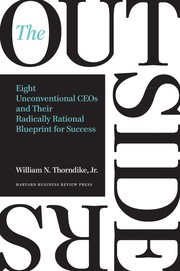
William N. Thorndike Jr. · 2012

Eight CEOs who beat the market by allocating capital, not by running operations.

“…books I've recommended, highlighted to death, or forced on friends.” — Andrew Wilkinson

Source: Andrew Wilkinson's Bookshelf, neverenough.com

Recommended by: Andrew Wilkinson, Dan Loeb, Francois Rochon and 12 others

Tyler Cowen · 2019

A defence of American business on fraud, CEO pay, monopoly and tech, issue by issue.
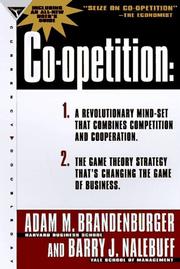
Adam M. Brandenburger, Barry J. Nalebuff · 1996

Game theory applied to business, which is cooperative and competitive at once.

Recommended by: Mohnish Pabrai

Where it sits in the reference 7

Business themes
Mental models
Mental models
Mental models
Mental models
Business themes
Economics

Topics

EconomicsBusiness and Management