Updates

  1. Person pages list letters, writing, profiles and links as sortable tables with filters, and show each person's companies as links; Fund letters show each letter's description in its own column.
  2. Experts show a checked job title and a short description of each person; 30 more people have photographs.
  3. Every company, fund, university and publication the experts work for has a page listing the people there.
  4. Fund letters show each letter's thesis and filter by it; 225 person pages list the essays, columns and newsletter issues the person wrote.
  5. Person pages list every essay and newsletter issue a person wrote, and their own books as a table in List view.
  6. Recommends shows the five largest kinds of book and the rest under More; browse pictures load sooner.
  7. Podcasts and talks link the original episode, filter by Audio and video or Press, and list each publisher once.
  8. Pages are wider, Recommends has List and Grid, and a filter clicked again turns off.
  9. Book cards sit in a ruled grid with Open Library and Goodreads links and each book's one-line note.
  10. Funds is now Investors; each investor's styles are buttons that filter the table.
  11. Podcasts and talks on a person's page filter by year and publisher and show as a list or a grid of pictures.
  12. Quotes show only people's own words: 472 summaries written by list sites are gone.
  13. Country pages open from Browse again, and every link on the shelf lands on a page.
  14. Subject and person pages show their sections as tabs, and each book appears once on a person's page.
  15. Book cards show the quote, who said it and the source; grids show five cards to a row.
  16. On a phone, a menu holds the sections, search, Updates, Feedback and dark mode.
  17. Feedback takes a screenshot of the page with no browser prompt, opens a screenshot full size when you click it, and clears itself once sent.
  18. Book cards are centred, search names the topic each book sits in, and any text cut short shows whole on hover.
  19. Search groups its results by kind: people, companies, geographies, subjects, topics, books, funds, fund letters and papers.
  20. The Books table lists who recommended each book by name, and the browser tab names the section you are in.
  21. Feedback can take a screenshot of the page, or one you paste or choose, and opens in the corner beside Updates.
  22. Each rail button reopens its section where you left it, and Browse, Table and People show on every book and subject page.
  23. Filters grey out choices that hold nothing instead of hiding them, and Books › People filters by authors or recommenders.
  24. Feedback takes a subject line and up to three screenshots.
  25. Biographies are grouped by the person they are about: 41 new pages, from Abraham Lincoln to Lee Kuan Yew.
  26. Sport splits into 23 sports, and Religion into one topic per faith.
  27. Book lists show as cards: the cover, one recommendation quote and every recommender by name.
  28. Seventeen subjects that had two or three pages under different names now have one page each.
  29. Every page lists its Experts as authors and recommenders, with a link to them on the Experts tab.
  30. Economics, Financial history, Financial panics and Accounting are subjects of their own, with one page per financial crisis.
  31. Book, person and subject pages open inside the app, so the tabs stay in view.
  32. 996 more book covers, and photographs or logos for 227 more people and companies.
  33. Books › Browse shows every subject as cards, and the rail holds Fund letters, Papers, Experts, Books and Funds.
  34. Every topic over 150 books splits into narrower topics, each with a page of its own.

Send feedback

What is it?
Screenshots, up to 3 (optional)
or paste one with Ctrl+V

We use your email only to reply to you.

ET

Economic theory, firms and competition

Textbooks and research on microeconomics, econometrics, game theory, contract theory and the firm, and works on antitrust, monopoly, utility regulation and corporate control.

Start here

  1. The Modern Corporation and Private PropertyAdolf A. Berle, Gardiner C. Means, 1932
  2. Theory of Games and Economic BehaviorJohn von Neumann, Oskar Morgenstern, 1944
  3. The Economics of RegulationAlfred E. Kahn, 1970
  4. Antitrust LawRichard A. Posner, 1976
  5. The Economic Institutions of CapitalismOliver E. Williamson, 1985

Adolf A. Berle, Gardiner C. Means · 1932

Ownership of big US firms had split from control, which passed to managers.
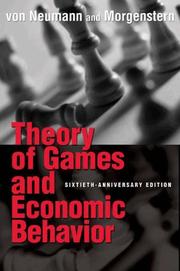
John von Neumann, Oskar Morgenstern · 1944

The founding of game theory: expected utility and strategy among interacting players.
Alfred E. Kahn · 1970

The economics of regulated industries, from pricing at marginal cost to competition.
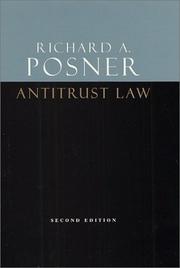
Richard A. Posner · 1976

Antitrust should rest on the economics of efficiency, not on protecting competitors.
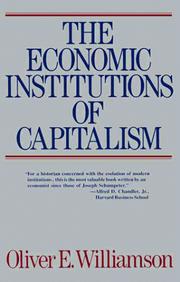
Oliver E. Williamson · 1985

Why firms exist: transaction costs decide when to own rather than contract.
Avinash K. Dixit, Barry J. Nalebuff · 1991

Game theory without maths: look forward, reason back, and make threats credible.
James C. Bonbright · 1961

The economic criteria for setting regulated utility rates.
Robert H. Bork · 1978

Antitrust law should pursue one goal, consumer welfare, and drop the rest.
Paul Milgrom, John Roberts · 1992

How firms are organised, using agency, contracts and transaction-cost economics.
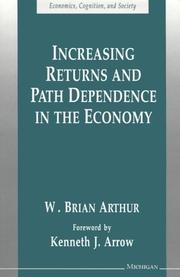
W. Brian Arthur · 1994

Papers showing positive feedback and lock-in govern parts of the economy.
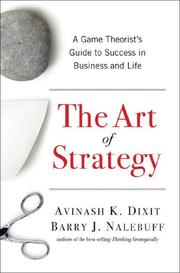
Avinash K. Dixit, Barry J. Nalebuff · 2008

Game theory without maths, with new examples: commitment, signals, bargaining.
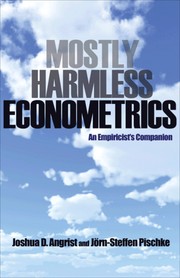
Joshua D. Angrist, Jorn-Steffen Pischke · 2009

A practical guide to causal inference: regression, instruments, differences.
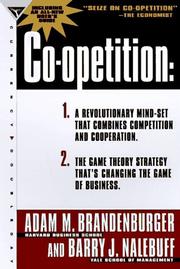
Adam M. Brandenburger, Barry J. Nalebuff · 1996

Game theory applied to business, which is cooperative and competitive at once.

Recommended by: Mohnish Pabrai
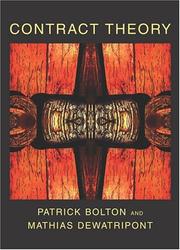
Patrick Bolton, Mathias Dewatripont · 2005
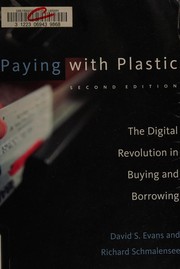
David S. Evans, Richard Schmalensee · 2005

Payments economics: interchange, closed loops and why Amex's model differs.
Tyler Cowen · 2019

A defence of American business on fraud, CEO pay, monopoly and tech, issue by issue.
David Dayen · 2020

Concentration traced sector by sector through its effects on customers.

William Lazonick, Jang-Sup Shin · 2020

The academic case that repurchases hollow out corporate investment.

Rebecca Giblin, Cory Doctorow · 2022

How intermediaries capture creative-work rents; the bear case for creators.
John Kenneth Galbraith · 1967

How large corporations run by a technostructure of experts plan rather than compete.

Recommended by: Paul Graham

Michael E. Porter · 1976

His doctoral work, published by Harvard University Press
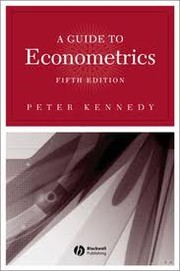
Peter Kennedy · 1998

What each econometric technique is for, what it assumes and what goes wrong.

Recommended by: Nassim Nicholas Taleb
Michael Suk-Young Chwe · 2001

Common knowledge and coordination; why rituals and advertising work

Recommended by: Mark Zuckerberg
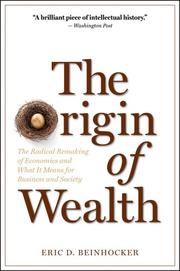
Eric D. Beinhocker · 2006

The economy as a complex evolving system rather than one in equilibrium.

Recommended by: Ryan Peterson

Tim Wu · 2018

How antitrust shrank to a consumer price test, and the case for breaking up giants.

Recommended by: Jeff Jordan
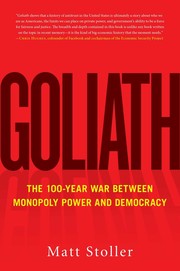
Matt Stoller · 2019

A political history of American monopoly and of the tradition that fought it.

Recommended by: David Heinemeier Hansson
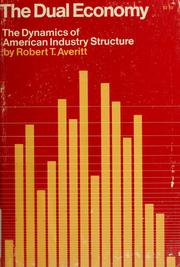
Robert Averitt

An institutionalist study of American business firms and labour organisations.

Recommended by: Paul Graham
More economics