Updates

  1. Person pages list letters, writing, profiles and links as sortable tables with filters, and show each person's companies as links; Fund letters show each letter's description in its own column.
  2. Experts show a checked job title and a short description of each person; 30 more people have photographs.
  3. Every company, fund, university and publication the experts work for has a page listing the people there.
  4. Fund letters show each letter's thesis and filter by it; 225 person pages list the essays, columns and newsletter issues the person wrote.
  5. Person pages list every essay and newsletter issue a person wrote, and their own books as a table in List view.
  6. Recommends shows the five largest kinds of book and the rest under More; browse pictures load sooner.
  7. Podcasts and talks link the original episode, filter by Audio and video or Press, and list each publisher once.
  8. Pages are wider, Recommends has List and Grid, and a filter clicked again turns off.
  9. Book cards sit in a ruled grid with Open Library and Goodreads links and each book's one-line note.
  10. Funds is now Investors; each investor's styles are buttons that filter the table.
  11. Podcasts and talks on a person's page filter by year and publisher and show as a list or a grid of pictures.
  12. Quotes show only people's own words: 472 summaries written by list sites are gone.
  13. Country pages open from Browse again, and every link on the shelf lands on a page.
  14. Subject and person pages show their sections as tabs, and each book appears once on a person's page.
  15. Book cards show the quote, who said it and the source; grids show five cards to a row.
  16. On a phone, a menu holds the sections, search, Updates, Feedback and dark mode.
  17. Feedback takes a screenshot of the page with no browser prompt, opens a screenshot full size when you click it, and clears itself once sent.
  18. Book cards are centred, search names the topic each book sits in, and any text cut short shows whole on hover.
  19. Search groups its results by kind: people, companies, geographies, subjects, topics, books, funds, fund letters and papers.
  20. The Books table lists who recommended each book by name, and the browser tab names the section you are in.
  21. Feedback can take a screenshot of the page, or one you paste or choose, and opens in the corner beside Updates.
  22. Each rail button reopens its section where you left it, and Browse, Table and People show on every book and subject page.
  23. Filters grey out choices that hold nothing instead of hiding them, and Books › People filters by authors or recommenders.
  24. Feedback takes a subject line and up to three screenshots.
  25. Biographies are grouped by the person they are about: 41 new pages, from Abraham Lincoln to Lee Kuan Yew.
  26. Sport splits into 23 sports, and Religion into one topic per faith.
  27. Book lists show as cards: the cover, one recommendation quote and every recommender by name.
  28. Seventeen subjects that had two or three pages under different names now have one page each.
  29. Every page lists its Experts as authors and recommenders, with a link to them on the Experts tab.
  30. Economics, Financial history, Financial panics and Accounting are subjects of their own, with one page per financial crisis.
  31. Book, person and subject pages open inside the app, so the tabs stay in view.
  32. 996 more book covers, and photographs or logos for 227 more people and companies.
  33. Books › Browse shows every subject as cards, and the rail holds Fund letters, Papers, Experts, Books and Funds.
  34. Every topic over 150 books splits into narrower topics, each with a page of its own.

Send feedback

What is it?
Screenshots, up to 3 (optional)
or paste one with Ctrl+V

We use your email only to reply to you.

Chokepoint Capitalism

Chokepoint Capitalism

Rebecca Giblin, Cory Doctorow
2022
T3 308 pages · about 5h 8m to read Open Librarygoodreads

How intermediaries capture creative-work rents; the bear case for creators.

Summary

Giblin, a law academic, and Doctorow, a writer and activist, argue that creative workers earn less than they should because the markets for their work are controlled by intermediaries with monopoly or monopsony power.

Their analytical concept is the chokepoint: a position in a market through which everything must pass, which lets the holder extract value from both sides. They document these across creative industries. In music, streaming platforms and the three major labels; the labels' catalogue ownership makes them unavoidable to platforms, and their contracts with artists were written for a physical format economy. In books, Amazon's share of retail and its Audible monopoly in audiobooks, which requires exclusivity for access to the platform. In news, Google and Meta's control of digital advertising and of distribution. In film and television, the studios and the talent agencies, including the agency package deals that placed agents on the other side of the table from their clients. In live performance, the ticketing and promotion concentration.

Their argument about mechanism is that these positions were built through anti-competitive conduct that antitrust law permitted under the consumer welfare standard, because the harm falls on suppliers rather than on consumer prices.

The second half proposes remedies: transparency requirements, minimum wage and royalty floors, collective bargaining rights for freelance creators, reversion rights allowing creators to reclaim copyrights after a period, interoperability mandates, and structural separation of platforms from the content they carry. They are explicit that individual creator strategies cannot solve a structural problem.

The book argues one position and is written to advocate. The description of specific contractual arrangements is accurate and well sourced. The proposed remedies vary considerably in feasibility, and the authors do not seriously assess the risks in several of them.

Key takeaways 7

  1. Creative workers earn less than the value they create because intermediaries control chokepoints through which all transactions must pass.
  2. Monopsony power over suppliers escapes antitrust scrutiny under a consumer welfare standard focused on prices.
  3. Catalogue ownership makes the major music labels unavoidable to streaming platforms, which fixes the terms artists receive.
  4. Audiobook distribution requires exclusivity for platform access, which prevents authors from selling elsewhere.
  5. Talent agency package deals placed agents on the opposite side of the negotiation from their own clients.
  6. Reversion rights allowing creators to reclaim copyrights after a period would shift bargaining power without new regulation.
  7. Individual creator strategies cannot address a structural concentration problem, which is why the authors propose collective and legal remedies.

Who should read it

Operators and investors in creative industries who need to see where value is captured in these chains and which legal changes would alter it.

Similar books 6

Chosen by shared topics, the entries that hold them, and the people who recommended both.
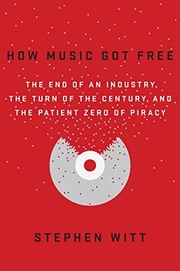
Stephen Witt · 2015

How the mp3, a CD-factory leaker and pirate websites broke the music business.

David Dayen · 2020

Concentration traced sector by sector through its effects on customers.
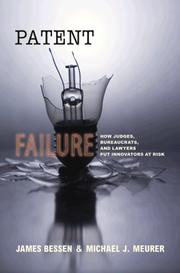
James Bessen, Michael J. Meurer · 2008

Evidence that patents work poorly as property; the IP-as-asset skeptic case.

Where it sits in the reference 2

Assets
Economics

Topics

EconomicsSociology and CultureTechnology and ComputingMedia and technology in societyTech strategy and platform economics