Updates

  1. Person pages list letters, writing, profiles and links as sortable tables with filters, and show each person's companies as links; Fund letters show each letter's description in its own column.
  2. Experts show a checked job title and a short description of each person; 30 more people have photographs.
  3. Every company, fund, university and publication the experts work for has a page listing the people there.
  4. Fund letters show each letter's thesis and filter by it; 225 person pages list the essays, columns and newsletter issues the person wrote.
  5. Person pages list every essay and newsletter issue a person wrote, and their own books as a table in List view.
  6. Recommends shows the five largest kinds of book and the rest under More; browse pictures load sooner.
  7. Podcasts and talks link the original episode, filter by Audio and video or Press, and list each publisher once.
  8. Pages are wider, Recommends has List and Grid, and a filter clicked again turns off.
  9. Book cards sit in a ruled grid with Open Library and Goodreads links and each book's one-line note.
  10. Funds is now Investors; each investor's styles are buttons that filter the table.
  11. Podcasts and talks on a person's page filter by year and publisher and show as a list or a grid of pictures.
  12. Quotes show only people's own words: 472 summaries written by list sites are gone.
  13. Country pages open from Browse again, and every link on the shelf lands on a page.
  14. Subject and person pages show their sections as tabs, and each book appears once on a person's page.
  15. Book cards show the quote, who said it and the source; grids show five cards to a row.
  16. On a phone, a menu holds the sections, search, Updates, Feedback and dark mode.
  17. Feedback takes a screenshot of the page with no browser prompt, opens a screenshot full size when you click it, and clears itself once sent.
  18. Book cards are centred, search names the topic each book sits in, and any text cut short shows whole on hover.
  19. Search groups its results by kind: people, companies, geographies, subjects, topics, books, funds, fund letters and papers.
  20. The Books table lists who recommended each book by name, and the browser tab names the section you are in.
  21. Feedback can take a screenshot of the page, or one you paste or choose, and opens in the corner beside Updates.
  22. Each rail button reopens its section where you left it, and Browse, Table and People show on every book and subject page.
  23. Filters grey out choices that hold nothing instead of hiding them, and Books › People filters by authors or recommenders.
  24. Feedback takes a subject line and up to three screenshots.
  25. Biographies are grouped by the person they are about: 41 new pages, from Abraham Lincoln to Lee Kuan Yew.
  26. Sport splits into 23 sports, and Religion into one topic per faith.
  27. Book lists show as cards: the cover, one recommendation quote and every recommender by name.
  28. Seventeen subjects that had two or three pages under different names now have one page each.
  29. Every page lists its Experts as authors and recommenders, with a link to them on the Experts tab.
  30. Economics, Financial history, Financial panics and Accounting are subjects of their own, with one page per financial crisis.
  31. Book, person and subject pages open inside the app, so the tabs stay in view.
  32. 996 more book covers, and photographs or logos for 227 more people and companies.
  33. Books › Browse shows every subject as cards, and the rail holds Fund letters, Papers, Experts, Books and Funds.
  34. Every topic over 150 books splits into narrower topics, each with a page of its own.

Send feedback

What is it?
Screenshots, up to 3 (optional)
or paste one with Ctrl+V

We use your email only to reply to you.

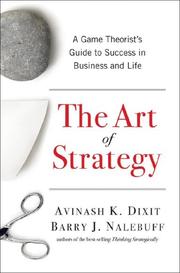
The Art of Strategy

The Art of Strategy

Avinash K. Dixit, Barry J. Nalebuff
2008
T2 512 pages · about 8h 32m to read Open Librarygoodreads

Summary

This is Dixit and Nalebuff's updated and reorganised version of Thinking Strategically, covering the same material with new examples and additional topics. It presents game theory for readers without mathematics.

The content covers backward induction in sequential games, dominant strategies and equilibrium in simultaneous games, the prisoner's dilemma and the mechanisms that sustain cooperation, commitment and credibility with the full catalogue of devices that make a threat or promise believable, mixed strategies and the value of unpredictability, brinkmanship, and information problems including signalling and screening.

The additions relative to the 1991 book include more material on auctions, on incentive design and mechanism design, on voting rules and their manipulation, and on bargaining. The examples are updated with material from business negotiations, sports, television game shows and political contests. The chapter on how to use a game show format to illustrate strategic reasoning is genuinely instructive.

The book works as either a first introduction or as a refresher, and it is more accessible than most formal treatments. Its limitations are the same as its predecessor's: it teaches recognition of strategic structures rather than the ability to model a real situation, and the confidence with which game theoretic reasoning is applied to business and political situations exceeds what its predictive record supports. Readers who have read Thinking Strategically will find substantial overlap and should treat this as a replacement rather than a companion.

Key takeaways 7

  1. Sequential decisions should be solved by reasoning backward from the final outcome to the present choice.
  2. A threat or promise only changes the other party's behaviour if they believe you would carry it out, which makes credibility the entire content of a commitment.
  3. Deliberately removing your own options can strengthen your position, because a party that cannot back down receives the concession.
  4. Unpredictability is optimal in competitive situations where any pattern would be exploited, which is what mixed strategies formalise.
  5. Cooperation in repeated interactions is sustained by the expectation of future encounters, and a known final round destroys it from the end backward.
  6. Signalling works only when the signal is more costly for those who lack the quality being signalled, which is why cheap claims convey nothing.
  7. Auction and voting rules determine outcomes as much as the participants' preferences do, which makes rule design a strategic act in itself.

Who should read it

Operators and negotiators wanting practical strategic reasoning without mathematics, as a replacement for rather than companion to Thinking Strategically.

Similar books 6

Chosen by shared topics, the entries that hold them, and the people who recommended both.
Avinash K. Dixit, Barry J. Nalebuff · 1991

Game theory without maths: look forward, reason back, and make threats credible.
William Poundstone · 1992

Von Neumann, game theory and the prisoner's dilemma in nuclear strategy.
John von Neumann, Oskar Morgenstern · 1944

The founding of game theory: expected utility and strategy among interacting players.
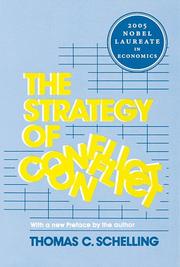
Thomas C. Schelling · 1960

Conflict as bargaining: commitment, credible threats and focal points.

Recommended by: Naval Ravikant

Ken Binmore · 2008

Binmore on when Bayesian decision theory applies and when it does not

Recommended by: Nassim Nicholas Taleb
Robert Axelrod · 1984

Computer tournaments of the prisoner's dilemma show why tit-for-tat wins.

Where it sits in the reference 4

Investment philosophy
Mental models
Mental models
Economics

Topics

Decision MakingEconomicsMathematics and StatisticsGames, gambling and quantitative finance