Updates

  1. Person pages list letters, writing, profiles and links as sortable tables with filters, and show each person's companies as links; Fund letters show each letter's description in its own column.
  2. Experts show a checked job title and a short description of each person; 30 more people have photographs.
  3. Every company, fund, university and publication the experts work for has a page listing the people there.
  4. Fund letters show each letter's thesis and filter by it; 225 person pages list the essays, columns and newsletter issues the person wrote.
  5. Person pages list every essay and newsletter issue a person wrote, and their own books as a table in List view.
  6. Recommends shows the five largest kinds of book and the rest under More; browse pictures load sooner.
  7. Podcasts and talks link the original episode, filter by Audio and video or Press, and list each publisher once.
  8. Pages are wider, Recommends has List and Grid, and a filter clicked again turns off.
  9. Book cards sit in a ruled grid with Open Library and Goodreads links and each book's one-line note.
  10. Funds is now Investors; each investor's styles are buttons that filter the table.
  11. Podcasts and talks on a person's page filter by year and publisher and show as a list or a grid of pictures.
  12. Quotes show only people's own words: 472 summaries written by list sites are gone.
  13. Country pages open from Browse again, and every link on the shelf lands on a page.
  14. Subject and person pages show their sections as tabs, and each book appears once on a person's page.
  15. Book cards show the quote, who said it and the source; grids show five cards to a row.
  16. On a phone, a menu holds the sections, search, Updates, Feedback and dark mode.
  17. Feedback takes a screenshot of the page with no browser prompt, opens a screenshot full size when you click it, and clears itself once sent.
  18. Book cards are centred, search names the topic each book sits in, and any text cut short shows whole on hover.
  19. Search groups its results by kind: people, companies, geographies, subjects, topics, books, funds, fund letters and papers.
  20. The Books table lists who recommended each book by name, and the browser tab names the section you are in.
  21. Feedback can take a screenshot of the page, or one you paste or choose, and opens in the corner beside Updates.
  22. Each rail button reopens its section where you left it, and Browse, Table and People show on every book and subject page.
  23. Filters grey out choices that hold nothing instead of hiding them, and Books › People filters by authors or recommenders.
  24. Feedback takes a subject line and up to three screenshots.
  25. Biographies are grouped by the person they are about: 41 new pages, from Abraham Lincoln to Lee Kuan Yew.
  26. Sport splits into 23 sports, and Religion into one topic per faith.
  27. Book lists show as cards: the cover, one recommendation quote and every recommender by name.
  28. Seventeen subjects that had two or three pages under different names now have one page each.
  29. Every page lists its Experts as authors and recommenders, with a link to them on the Experts tab.
  30. Economics, Financial history, Financial panics and Accounting are subjects of their own, with one page per financial crisis.
  31. Book, person and subject pages open inside the app, so the tabs stay in view.
  32. 996 more book covers, and photographs or logos for 227 more people and companies.
  33. Books › Browse shows every subject as cards, and the rail holds Fund letters, Papers, Experts, Books and Funds.
  34. Every topic over 150 books splits into narrower topics, each with a page of its own.

Send feedback

What is it?
Screenshots, up to 3 (optional)
or paste one with Ctrl+V

We use your email only to reply to you.

Rational Decisions

Rational Decisions

Ken Binmore
2008
T4 200 pages · about 3h 20m to read Open Librarygoodreads

Binmore on when Bayesian decision theory applies and when it does not

Summary

Binmore, a game theorist, examines the foundations of rational decision theory and argues that its standard apparatus is being applied far outside the conditions under which it is valid. His organising distinction, borrowed from Savage, is between a small world, where all states, consequences and probabilities can be specified in advance, and a large world, where they cannot.

His argument is that Bayesian decision theory is correct and unassailable in small worlds and has no justification in large ones. Savage himself said applying his theory to a large world would be utterly ridiculous, and Binmore takes this seriously. He works through the standard justifications for Bayesian priors, including the principle of insufficient reason and various axiomatic derivations, and argues each fails when the state space itself is not known. He also addresses the Ellsberg paradox, ambiguity aversion, and the question of what a probability means when there is no frequency to ground it.

He is critical of both the Bayesian orthodoxy in economics, for extending the theory beyond its warrant, and of some behavioural economics, for treating deviations from a theory that does not apply as evidence of irrationality.

The book is technical and requires mathematics. It offers a diagnosis more than a replacement, since Binmore's positive proposal for large worlds is tentative. For investors the value is precise: it tells you when probability-based reasoning is well founded and when assigning a number is a gesture rather than an analysis, which is the question that most quantitative risk work avoids.

Key takeaways 7

  1. Bayesian decision theory is valid in small worlds where all states and consequences can be specified in advance, and has no justification outside them.
  2. Savage, who constructed the theory, regarded applying it to large worlds as indefensible, and economics has ignored that restriction.
  3. Assigning a subjective probability to an event whose state space is not known is a gesture rather than an analysis.
  4. Ambiguity aversion is a reasonable response to situations where probabilities are not available, not a departure from rationality.
  5. Behavioural economics sometimes treats deviations from a theory that does not apply as evidence of irrationality, which misdiagnoses the problem.
  6. The principle of insufficient reason cannot ground priors, because the answer depends on how the possibilities are described rather than on anything about the world.
  7. Rationality in a large world consists in reasoning carefully about a situation you cannot fully specify rather than in maximising an expected utility you cannot compute.

Who should read it

Analytically minded investors and risk practitioners who need to know when probability-based decision analysis is well founded and when it is not.

Who recommended it 1

Similar books 6

Chosen by shared topics, the entries that hold them, and the people who recommended both.
Avinash K. Dixit, Barry J. Nalebuff · 2008

Game theory without maths, with new examples: commitment, signals, bargaining.
Avinash K. Dixit, Barry J. Nalebuff · 1991

Game theory without maths: look forward, reason back, and make threats credible.
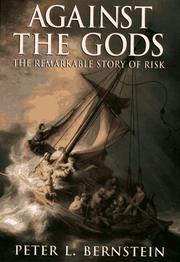
Peter L. Bernstein · 1996

How people learned to measure risk, from early probability to portfolio theory.

“I think some of the books that are a must would be Peter Bernstein's book about risk, Against the Gods: The Remarkable Story of Risk.” — Charles de Vaulx

Source: De Vaulx naming Bernstein's book a must-read on risk

Recommended by: Charles de Vaulx, Jim Collins and 8 others
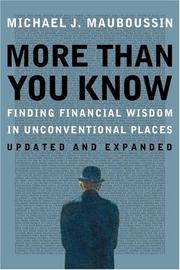
Michael Mauboussin · 2006

Essays on investing philosophy, psychology, competition and science.

William Poundstone · 1992

Von Neumann, game theory and the prisoner's dilemma in nuclear strategy.
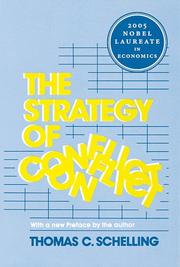
Thomas C. Schelling · 1960

Conflict as bargaining: commitment, credible threats and focal points.

Recommended by: Naval Ravikant

Where it sits in the reference 3

Investment philosophy
Mental models
Mental models

Topics

Decision MakingEconomics