
Jim Collins
American researcher, author, speaker and consultant on business management and how companies sustain growth.
 Stanford Graduate School of Business
Built to Last and Good to Great are the primary research sources the enduring-company literature builds on and argues with.
8 books of their own · 69 articles · 24 books they recommend
Start here
- Beyond EntrepreneurshipWilliam C. Lazier, 1992
- Built to LastJerry I. Porras, 1994
- Good to Great2001
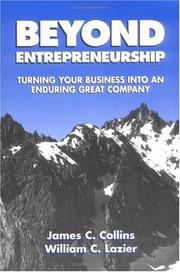
How leaders turn a founder-driven startup into a company that lasts.
Recommended by: Reed Hastings
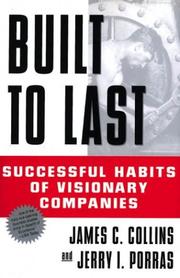
What eighteen long-lived companies did differently from close rivals in their fields.
Recommended by: Mohnish Pabrai, Drew Houston, Ev Williams and 3 others
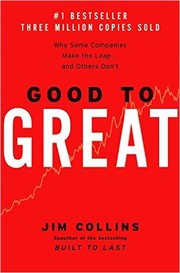
What eleven companies did to turn fifteen ordinary years into fifteen great ones.
Recommended by: Brian Armstrong, Mohnish Pabrai, Nat Eliason and 16 others

Good to Great's principles applied to non-profits and the public sector.
Recommended by: Mohnish Pabrai
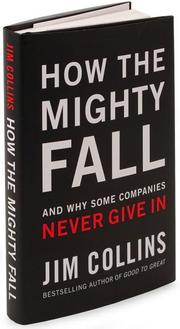
The stages by which great companies decline, and how to spot and reverse them early.
Recommended by: Alfred Lin

What companies that beat their industries tenfold in turbulent times did differently.
Recommended by: Mohnish Pabrai, Tony Hsieh, Alfred Lin
Expanded edition of the 1992 book
 Beyond Entrepreneurship | How leaders turn a founder-driven startup into a company that lasts. | 1992 | T4 | Reed Hastings |
 Built to Last | What eighteen long-lived companies did differently from close rivals in their fields. | 1994 | T1 | Mohnish Pabrai, Drew Houston, Ev Williams and 3 others |
 Good to Great | What eleven companies did to turn fifteen ordinary years into fifteen great ones. | 2001 | T2 | Brian Armstrong, Mohnish Pabrai, Nat Eliason and 16 others |
 Good to Great and the Social Sectors | Good to Great's principles applied to non-profits and the public sector. | 2005 | T4 | Mohnish Pabrai |
 How the Mighty Fall | The stages by which great companies decline, and how to spot and reverse them early. | 2009 | T4 | Alfred Lin |
 Great by Choice | What companies that beat their industries tenfold in turbulent times did differently. | 2011 | T4 | Mohnish Pabrai, Tony Hsieh, Alfred Lin |
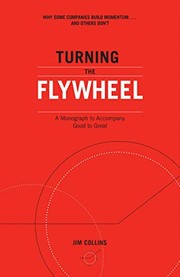
 Turning the Flywheel | Monograph companion to Good to Great | 2019 | T4 | – |
| BE 2.0 (Beyond Entrepreneurship 2.0) | Expanded edition of the 1992 book | 2020 | T4 | – |
More 8
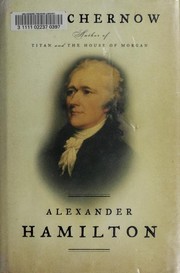
Hamilton's life from the West Indies to the Treasury and his duel with Aaron Burr.
Source: Jim Collins's recommended reading list
Also recommended by: Patrick Collison, Antonio García Martínez and 1 other
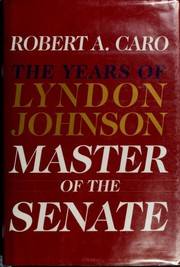
How Lyndon Johnson mastered the Senate's rules and became its majority leader.
Source: Jim Collins's recommended reading list
Also recommended by: Marc Andreessen, Patrick Collison
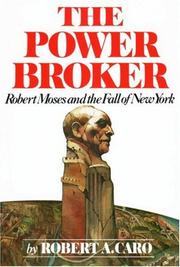
How an unelected official amassed power and used it to rebuild New York.
Source: Jim Collins's recommended reading list
Also recommended by: Balaji S. Srinivasan, Nat Eliason and 7 others

How Rockefeller built Standard Oil, faced its breakup and gave his fortune away.
Source: Jim Collins's recommended reading list
Also recommended by: Andrew Wilkinson, Charlie Munger and 11 others

How Pixar kept a creative company working after success, and the habits it used.
Source: Jim Collins's recommended reading list
Also recommended by: Alexis Ohanian, Allen Gannett, Daniel Burka and 10 others
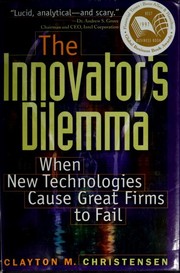
Why well-run firms lose to cheaper, worse products that enter at the market's bottom.
Source: Jim Collins's recommended reading list
Also recommended by: Mohnish Pabrai, Aaron Levie, Andrew Chen and 26 others

Without shelf limits, sales of many niche products add up to rival the hits.
Source: Jim Collins's recommended reading list
Also recommended by: Ev Williams, Jack Ma, Reed Hastings

The 1787 Federal Convention in Philadelphia that wrote the US Constitution.
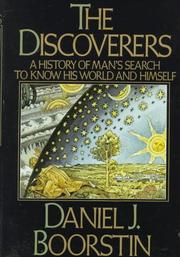
A history of discovery: time and the clock, the earth and seas, nature and society.
Source: Jim Collins's recommended reading list
Also recommended by: Stewart Brand

Source: Jim Collins's recommended reading list
Also recommended by: Mohnish Pabrai, Jamie Dimon

How scientists came to know what they know, from cosmology and geology to biology.
Source: Jim Collins's recommended reading list
Also recommended by: Balaji S. Srinivasan, Mohnish Pabrai and 4 others

How natural selection, not a designer, produces the complexity of living things.
Source: Jim Collins's recommended reading list
Also recommended by: Mohnish Pabrai, Patrick Collison and 1 other
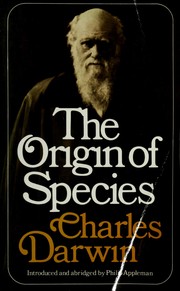
Species change over time as natural selection favours heritable variations.
Source: Jim Collins's recommended reading list
Also recommended by: Mohnish Pabrai, Naval Ravikant, Nick Sleep and 4 others
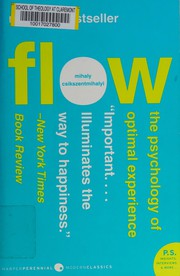
Flow, the state of full absorption in a hard task, and how to find it more often.
Source: Jim Collins's recommended reading list
Also recommended by: Andrew Wilkinson, Mohnish Pabrai, Raoul Pal
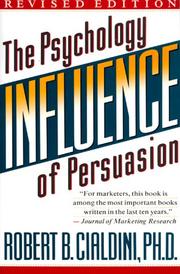
Six principles of compliance, from reciprocity to scarcity, and how sellers use them.
Source: Jim Collins's recommended reading list
Also recommended by: Andrew Wilkinson, Charlie Munger and 28 others

Source: Jim Collins's recommended reading list
Also recommended by: Brian Grazer

The University of Washington's 1936 eight-oar crew and their quest for Olympic gold.
Source: Jim Collins's recommended reading list
Also recommended by: Satya Nadella

Robert Noyce, Fairchild Semiconductor and the founding of Intel.
Source: Jim Collins's recommended reading list
Also recommended by: Mohnish Pabrai, Patrick Collison and 1 other
The 1988 bidding war for RJR Nabisco, the largest leveraged buyout to that date.
Source: Jim Collins's recommended reading list
Also recommended by: Mohnish Pabrai, Chamath Palihapitiya
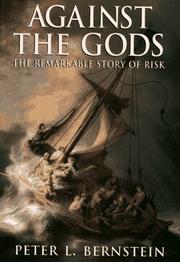
How people learned to measure risk, from early probability to portfolio theory.
Source: Jim Collins's recommended reading list
Also recommended by: Charles de Vaulx, Marc Andreessen and 7 others
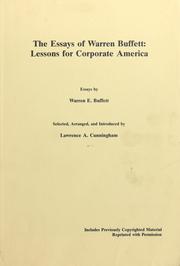
Berkshire's shareholder letters arranged by topic: governance, valuation, mergers.
Source: Jim Collins's recommended reading list
Also recommended by: Christopher Bloomstran, Francois Rochon and 10 others

A naval captain on delegating authority to improve performance
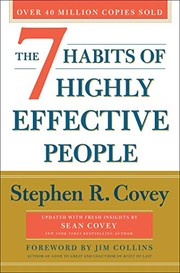
Seven habits, from being proactive to win-win, that build personal effectiveness.
Source: Jim Collins's recommended reading list
Also recommended by: Andrew Wilkinson, Mohnish Pabrai, Ran Segall and 8 others

Campbell on the recurring stories cultures tell themselves
Source: Jim Collins's recommended reading list
Also recommended by: Nat Eliason, David Perell, Eric Weinstein and 2 others
| Jim Collins: How to manage through chaos Paywall | Fortune | 2011 |
| For Jim Collins, No Question Is Too Big Paywall | The New York Times | 2009 |