Updates

  1. Person pages list letters, writing, profiles and links as sortable tables with filters, and show each person's companies as links; Fund letters show each letter's description in its own column.
  2. Experts show a checked job title and a short description of each person; 30 more people have photographs.
  3. Every company, fund, university and publication the experts work for has a page listing the people there.
  4. Fund letters show each letter's thesis and filter by it; 225 person pages list the essays, columns and newsletter issues the person wrote.
  5. Person pages list every essay and newsletter issue a person wrote, and their own books as a table in List view.
  6. Recommends shows the five largest kinds of book and the rest under More; browse pictures load sooner.
  7. Podcasts and talks link the original episode, filter by Audio and video or Press, and list each publisher once.
  8. Pages are wider, Recommends has List and Grid, and a filter clicked again turns off.
  9. Book cards sit in a ruled grid with Open Library and Goodreads links and each book's one-line note.
  10. Funds is now Investors; each investor's styles are buttons that filter the table.
  11. Podcasts and talks on a person's page filter by year and publisher and show as a list or a grid of pictures.
  12. Quotes show only people's own words: 472 summaries written by list sites are gone.
  13. Country pages open from Browse again, and every link on the shelf lands on a page.
  14. Subject and person pages show their sections as tabs, and each book appears once on a person's page.
  15. Book cards show the quote, who said it and the source; grids show five cards to a row.
  16. On a phone, a menu holds the sections, search, Updates, Feedback and dark mode.
  17. Feedback takes a screenshot of the page with no browser prompt, opens a screenshot full size when you click it, and clears itself once sent.
  18. Book cards are centred, search names the topic each book sits in, and any text cut short shows whole on hover.
  19. Search groups its results by kind: people, companies, geographies, subjects, topics, books, funds, fund letters and papers.
  20. The Books table lists who recommended each book by name, and the browser tab names the section you are in.
  21. Feedback can take a screenshot of the page, or one you paste or choose, and opens in the corner beside Updates.
  22. Each rail button reopens its section where you left it, and Browse, Table and People show on every book and subject page.
  23. Filters grey out choices that hold nothing instead of hiding them, and Books › People filters by authors or recommenders.
  24. Feedback takes a subject line and up to three screenshots.
  25. Biographies are grouped by the person they are about: 41 new pages, from Abraham Lincoln to Lee Kuan Yew.
  26. Sport splits into 23 sports, and Religion into one topic per faith.
  27. Book lists show as cards: the cover, one recommendation quote and every recommender by name.
  28. Seventeen subjects that had two or three pages under different names now have one page each.
  29. Every page lists its Experts as authors and recommenders, with a link to them on the Experts tab.
  30. Economics, Financial history, Financial panics and Accounting are subjects of their own, with one page per financial crisis.
  31. Book, person and subject pages open inside the app, so the tabs stay in view.
  32. 996 more book covers, and photographs or logos for 227 more people and companies.
  33. Books › Browse shows every subject as cards, and the rail holds Fund letters, Papers, Experts, Books and Funds.
  34. Every topic over 150 books splits into narrower topics, each with a page of its own.

Send feedback

What is it?
Screenshots, up to 3 (optional)
or paste one with Ctrl+V

We use your email only to reply to you.

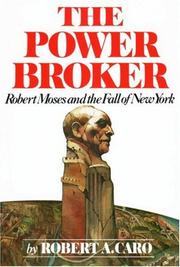
The Power Broker

The Power Broker

Robert A. Caro
1974
T1 1263 pages · about 21h 3m to read Open Librarygoodreads

Robert Moses and the politics of who gets to build and toll public assets.

Summary

Caro spent seven years on this biography of Robert Moses, who held appointed rather than elected positions in New York for forty-four years and built the parkways, bridges, expressways, parks, housing projects and public authorities that shaped the modern city and its suburbs. The book runs over one thousand two hundred pages and Caro conducted more than five hundred interviews.

The central subject is how power is acquired and exercised without election. Moses drafted the legislation creating public authorities and wrote provisions that others did not read, giving those authorities the power to issue bonds. Bondholder contracts then became legally protected obligations that the state could not override, which made Moses effectively immune to elected officials. Toll revenue from the Triborough Bridge Authority funded further construction without legislative appropriation, and the bonds outlasted every governor and mayor.

Caro documents the consequences directly. Moses displaced roughly half a million people for expressway construction, destroyed the Bronx neighbourhood of East Tremont through the Cross Bronx Expressway, refused to include mass transit provision in his highways, and built parks and pools in ways that reflected his views about who should use them. The book is also a study of how an early idealist reformer became what he became. Caro traces the change to the discovery that principle without power accomplishes nothing.

The length is a real obstacle. Some historians argue Caro overstates Moses' personal responsibility relative to broader postwar planning consensus, and the racial motivation attributed to specific decisions, including the bridge heights on the Southern State Parkway, has been questioned. It remains the definitive study of institutional power exercised outside electoral accountability.

Key takeaways 8

  1. Moses acquired durable power by drafting the legislation that created public authorities and inserting provisions nobody else read closely.
  2. Bond covenants gave his authorities legal protections that elected officials could not override, which made him effectively unremovable for decades.
  3. Toll revenue funded further construction without legislative appropriation, so the organisation financed its own expansion outside the budget process.
  4. Starting a project and then requiring additional funds to avoid wasting what was spent is a reliable method for forcing approval of expenditure nobody authorised.
  5. Moses refused to include mass transit in his highway designs, which shaped the region's transportation dependency permanently.
  6. Roughly half a million people were displaced by his projects, and the routing decisions in specific cases could have avoided occupied neighbourhoods.
  7. He began as a reformer and concluded that principle without power achieves nothing, which Caro presents as the decisive change in him.
  8. Physical infrastructure decisions lock in patterns of settlement and movement for a century, long after the person who made them has gone.

Who should read it

Anyone who wants to understand how durable institutional power is constructed outside electoral accountability, prepared for a very long book.

Who recommended it 10 · 4 direct

Similar books 6

Chosen by shared topics, the entries that hold them, and the people who recommended both.

T4 Boss
Mike Royko · 1971

Recommended by: Audrey Gelman

Where it sits in the reference 3

Assets
Assets
Industries

Topics

Biography and MemoirPolitics and GovernmentPolitical Leaders and PolicymakersAmerican politics and presidentsAmerican statesmen and officials