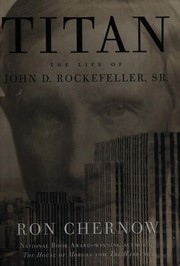
Titan: The Life of John D. Rockefeller, Sr.
The definitive Rockefeller biography and Standard Oil narrative.
Summary
Chernow's biography draws on Rockefeller's own extensive papers, including a long unpublished interview he gave late in life, plus family and company records. It covers the itinerant confidence-man father, the Cleveland bookkeeping start, the formation of Standard Oil in 1870, the South Improvement Company scheme, the consolidation of refining, the trust structure, the 1911 Supreme Court dissolution, and the four decades of philanthropy that followed.
The business material shows how Rockefeller actually built the monopoly. He competed on cost with obsessive attention to refining yields and to by-products, then used that cost position and his volume to extract secret railroad rebates and drawbacks on competitors' shipments. He bought rivals quietly, often offering a choice between Standard Oil stock and cash and warning that refusal meant ruin. He integrated backwards and forwards into pipelines, barrels, tank cars and distribution. By 1880 Standard Oil refined about ninety percent of American oil.
Chernow gives full weight to both the ruthlessness and the piety. Rockefeller tithed from his first wages, taught Sunday school throughout, and directed enormous sums through the General Education Board, the Rockefeller Institute for Medical Research and the Rockefeller Foundation, funding the hookworm and yellow fever campaigns and the reform of American medical education.
The book is nine hundred pages and requires the commitment. Chernow is sympathetic in tone and some historians find him too willing to accept Rockefeller's own framing of his motives. The economic argument about whether Standard Oil's consolidation lowered prices or extracted rents is treated but not settled. Ida Tarbell's contemporary account remains the necessary counterweight.
Key takeaways 8
- Rockefeller built the monopoly first on the lowest refining cost in the industry, which gave him the volume that made the railroad rebates possible.
- Secret rebates and drawbacks on competitors' shipments converted a cost advantage into a weapon that competitors could not survive.
- Consolidation eliminated the boom and bust cycles of an industry with no barriers to entry, which Rockefeller regarded as his moral justification.
- Vertical integration into pipelines, cooperage, tank cars and distribution removed Standard Oil's dependence on any supplier or shipper.
- Rockefeller acquired competitors by offering them stock, and those who accepted became wealthy while those who took cash did not.
- The 1911 dissolution made Rockefeller far richer, because the separated companies were worth more apart than together.
- Systematic philanthropy directed at root causes, including medical research and education reform, produced results that direct charity did not.
- Rockefeller maintained complete self-control and secrecy as deliberate business practices, refusing to respond publicly to attacks for decades.
Who should read it
Operators and investors studying how a cost advantage becomes a durable monopoly, and anyone interested in the origins of large-scale institutional philanthropy.
About Ron Chernow
American biographer and financial historian who writes archival lives of Rockefeller, the Morgans, the Warburgs and Alexander Hamilton.
Titan and The House of Morgan reconstruct from company and family archives how Standard Oil consolidated an industry and how a private bank organised American capital before securities regulation existed. Both carry the detail on trust structures, rebates, syndicates and succession that later histories of American business cite.
Who recommended it 14 · 6 direct
“…books I've recommended, highlighted to death, or forced on friends.”
“Titan: The Life of John D. Rockefeller, Sr. by Ron Chernow. I've recommended this biography before.”
“Very compelling biography on John D. Rockefeller, a must read.”
“In John Rockefeller's biography, "Titan", Ron Chernow describes how Rockefeller equated silence with strength.”
Similar books 6
Chosen by shared topics, the entries that hold them, and the people who recommended both.
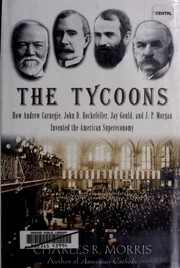
Carnegie, Rockefeller, Gould and Morgan and the economy they built
“on how four great builders of the 19th century built the world we live in today” — Marc Andreessen
Source: @pmarca, companion thread to 'It's Time to Build'
Recommended by: Marc Andreessen

The major revisionist defence written against Tarbell.
Vanderbilt's rise through ferries, steamships and railroads.
Recommended by: Mohnish Pabrai
How Vanderbilt, Gould, Rockefeller, Morgan and others built 19th-century fortunes.
Recommended by: Larry Ellison
The family and trusts that outlived the operating company.
The scholarly life of Carnegie, from Dunfermline and the railroad to steel.
Recommended by: Charlie Munger, Mohnish Pabrai
Where it sits in the reference 5
Topics