Updates

  1. Person pages list letters, writing, profiles and links as sortable tables with filters, and show each person's companies as links; Fund letters show each letter's description in its own column.
  2. Experts show a checked job title and a short description of each person; 30 more people have photographs.
  3. Every company, fund, university and publication the experts work for has a page listing the people there.
  4. Fund letters show each letter's thesis and filter by it; 225 person pages list the essays, columns and newsletter issues the person wrote.
  5. Person pages list every essay and newsletter issue a person wrote, and their own books as a table in List view.
  6. Recommends shows the five largest kinds of book and the rest under More; browse pictures load sooner.
  7. Podcasts and talks link the original episode, filter by Audio and video or Press, and list each publisher once.
  8. Pages are wider, Recommends has List and Grid, and a filter clicked again turns off.
  9. Book cards sit in a ruled grid with Open Library and Goodreads links and each book's one-line note.
  10. Funds is now Investors; each investor's styles are buttons that filter the table.
  11. Podcasts and talks on a person's page filter by year and publisher and show as a list or a grid of pictures.
  12. Quotes show only people's own words: 472 summaries written by list sites are gone.
  13. Country pages open from Browse again, and every link on the shelf lands on a page.
  14. Subject and person pages show their sections as tabs, and each book appears once on a person's page.
  15. Book cards show the quote, who said it and the source; grids show five cards to a row.
  16. On a phone, a menu holds the sections, search, Updates, Feedback and dark mode.
  17. Feedback takes a screenshot of the page with no browser prompt, opens a screenshot full size when you click it, and clears itself once sent.
  18. Book cards are centred, search names the topic each book sits in, and any text cut short shows whole on hover.
  19. Search groups its results by kind: people, companies, geographies, subjects, topics, books, funds, fund letters and papers.
  20. The Books table lists who recommended each book by name, and the browser tab names the section you are in.
  21. Feedback can take a screenshot of the page, or one you paste or choose, and opens in the corner beside Updates.
  22. Each rail button reopens its section where you left it, and Browse, Table and People show on every book and subject page.
  23. Filters grey out choices that hold nothing instead of hiding them, and Books › People filters by authors or recommenders.
  24. Feedback takes a subject line and up to three screenshots.
  25. Biographies are grouped by the person they are about: 41 new pages, from Abraham Lincoln to Lee Kuan Yew.
  26. Sport splits into 23 sports, and Religion into one topic per faith.
  27. Book lists show as cards: the cover, one recommendation quote and every recommender by name.
  28. Seventeen subjects that had two or three pages under different names now have one page each.
  29. Every page lists its Experts as authors and recommenders, with a link to them on the Experts tab.
  30. Economics, Financial history, Financial panics and Accounting are subjects of their own, with one page per financial crisis.
  31. Book, person and subject pages open inside the app, so the tabs stay in view.
  32. 996 more book covers, and photographs or logos for 227 more people and companies.
  33. Books › Browse shows every subject as cards, and the rail holds Fund letters, Papers, Experts, Books and Funds.
  34. Every topic over 150 books splits into narrower topics, each with a page of its own.

Send feedback

What is it?
Screenshots, up to 3 (optional)
or paste one with Ctrl+V

We use your email only to reply to you.

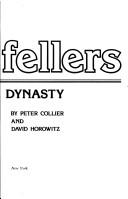
The Rockefellers: An American Dynasty

The Rockefellers: An American Dynasty

Peter Collier, David Horowitz
1976
T3 746 pages · about 12h 26m to read Open Librarygoodreads

The family and trusts that outlived the operating company.

Summary

Peter Collier and David Horowitz wrote this history of four generations of the Rockefeller family, from John D. Rockefeller through his son, the five brothers of the third generation, and the cousins of the fourth.

The book combines business history with family history. It covers the building of Standard Oil, John D. Junior's management of the fortune and his philanthropy, and the careers of the third generation: Nelson as governor of New York and vice president, David at Chase Manhattan, John D. III in philanthropy and population work, Laurance in conservation and venture investing, and Winthrop in Arkansas. The authors cover the institutions the family built, including the Rockefeller Foundation, Rockefeller University, the Museum of Modern Art and Rockefeller Center, and the management of the fortune through the family office.

The fourth generation material is the book's distinctive content. Collier and Horowitz interviewed the cousins extensively, and much of the book concerns their difficulty with the inheritance, their political dissent from the family's positions during the 1960s and 1970s, and the family meetings at which they confronted their fathers. The authors were writing from the political left at the time, and the book's framing of dynastic wealth reflects that, though both later moved to the right. It is narrative rather than analytical and remains the standard family history.

Key takeaways 7

  1. John D. Junior's principal work was converting an accumulated fortune into institutions and repairing the family's public reputation.
  2. The family office managing the fortune functioned as an institution with its own staff, interests and continuity across generations.
  3. Third generation members took positions in government, banking, philanthropy and conservation rather than in a single family business.
  4. Fourth generation members interviewed by the authors described the inheritance principally as a burden and a constraint.
  5. Philanthropic institutions the family created acquired independent lives and eventually diverged from family control.
  6. The authors wrote from the political left and the framing of dynastic wealth reflects that position.
  7. Concentrated family wealth requires deliberate institutional structures to survive generational dispersion, and the family built them explicitly.

Who should read it

Readers interested in how a large fortune is institutionalised across generations and in the position of the heirs who inherit it.

Similar books 6

Chosen by shared topics, the entries that hold them, and the people who recommended both.

John Ensor Harr, Peter J. Johnson · 1988

Three generations of Rockefellers and how the fortune passed down.

Ralph W. Hidy, Muriel E. Hidy · 1955

The authorised scholarly history of Standard Oil of New Jersey.

Ida M. Tarbell · 1904

How Standard Oil used railroad rebates to crush rival refiners, case by case.

Ron Chernow · 1998

How Rockefeller built Standard Oil, faced its breakup and gave his fortune away.

“…books I've recommended, highlighted to death, or forced on friends.” — Andrew Wilkinson

Source: Andrew Wilkinson's Bookshelf, neverenough.com

Recommended by: Andrew Wilkinson, Charlie Munger and 12 others

Steve Weinberg · 2008

Ida Tarbell and John D. Rockefeller, and the collision between the two.

Where it sits in the reference 2

Companies
Biographies

Topics

Biography and MemoirGeneral HistoryTycoons and Business DynastiesEconomic and Business HistoryBusiness dynasties and family firms