Austen Allred
Founded Gauntlet AI, which runs a selective, intensive programme that trains engineers to build with AI; earlier co-founded and led BloomTech, formerly Lambda School, which trained students for software jobs.
29 books they recommend · 63 appearances
More 8
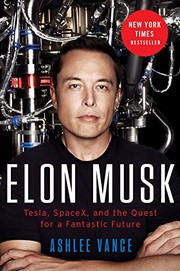
Musk's life from South Africa and PayPal to running SpaceX and Tesla at once.
Also recommended by: Mohnish Pabrai, Anthony Pompliano and 9 others
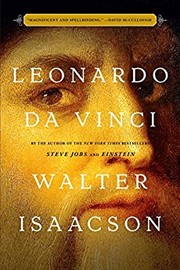
Leonardo's life read through his notebooks, where art and science were one pursuit.
Also recommended by: Bill Gates, Daniel Petre, Elon Musk and 6 others
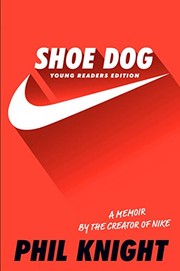
How a running-shoe importer became Nike, surviving one cash crisis after another.
Also recommended by: Andrew Wilkinson, Bill Gates, Mohnish Pabrai and 24 others

Buffett's life to 2008, written with full access to his files and his friends.
Also recommended by: Andrew Wilkinson, Guy Spier, Mohnish Pabrai and 4 others
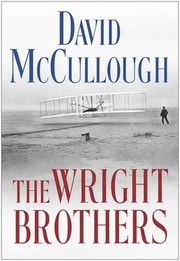
From a Dayton bicycle shop to the first powered flights and the 1908 demonstrations.
Also recommended by: Ali Abdaal, Mohnish Pabrai, Morgan Housel and 2 others
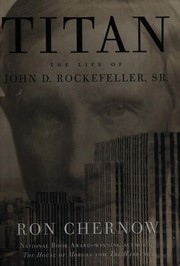
How Rockefeller built Standard Oil, faced its breakup and gave his fortune away.
Also recommended by: Andrew Wilkinson, Charlie Munger and 11 others
A novel setting Anna's ruinous affair against Levin's search for how to live.
Also recommended by: Nat Eliason, Laura R Walker, Sam Altman and 2 others
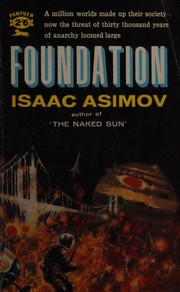
A novel: a mathematician foresees an empire's fall and plans to shorten the dark age.
Also recommended by: Balaji S. Srinivasan, Adam Gazzaley and 10 others
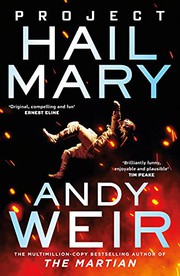
A novel of an amnesiac astronaut sent to stop a microbe that is dimming the sun.
Also recommended by: Bill Gates, Brian Armstrong and 4 others
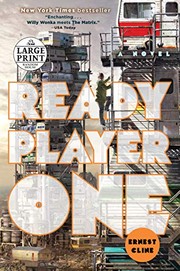
A novel of a teenager hunting 1980s-themed puzzles in a virtual world for a fortune.
Also recommended by: Andrew Wilkinson, Astro Teller and 6 others
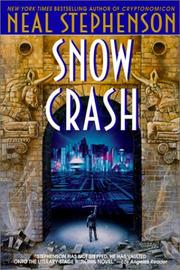
A novel of a hacker in a corporate-run America and its virtual world, the Metaverse.
Also recommended by: Nat Eliason, Naval Ravikant, Alexis Ohanian and 11 others
Modern Stoicism; desire management and negative visualisation
Also recommended by: Andrew Wilkinson, David Heinemeier Hansson and 6 others
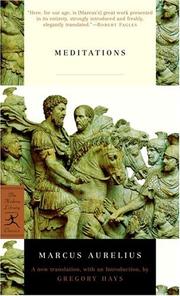
A Roman emperor's private notes reminding himself to live by Stoic principles.
Also recommended by: Mohnish Pabrai, Nat Eliason, Naval Ravikant and 16 others
A father and son's motorcycle trip framing an inquiry into what Quality means.
Also recommended by: Brad Feld, Mohnish Pabrai, Nick Sleep and 7 others
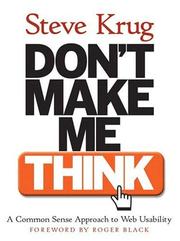
Krug's web usability primer has stayed relevant for over two decades because its core argument — that good interfaces require no instruction — is timeless. The chapters on navigation conventions and usability testing with five users are still the most practical introduction to the discipline.
Also recommended by: Brian Armstrong, Andy Budd, Garry Tan and 5 others
Also recommended by: Jordan Hughes
How Xerox PARC built the first personal computer and laser printer, and lost them.
Also recommended by: Patrick Collison, Sam Altman
Simplicity as Apple's operating principle, from the adman who worked with Jobs.
Also recommended by: Andrew Wilkinson, Keith Rabois
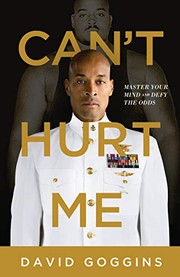
From abused child and 300-pound exterminator to Navy SEAL, and how to get tough.
Also recommended by: Nat Eliason, Alex and Books, Ali Abdaal and 6 others
A method for finding the few activities that matter and dropping the rest.
Also recommended by: Matt Mullenweg, Nat Eliason, Ran Segall and 9 others
Extraordinary results come from narrowing focus to the one thing that matters most.
Also recommended by: David Cancel, Alexis Ohanian and 3 others
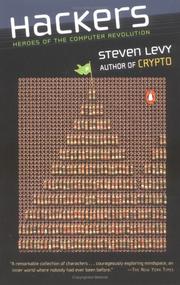
Three generations of hackers, from MIT's AI Lab to the Homebrew club and game makers.
Also recommended by: Ev Williams, Marc Andreessen, Paul Graham and 2 others
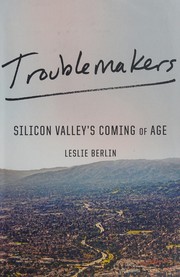
Also recommended by: Aileen Lee, Keith Rabois, Vinod Khosla
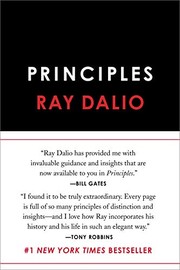
Decision rules from building Bridgewater: radical truth and radical transparency.
Also recommended by: Alfred Lin, Nat Eliason, Andrew Lokenauth and 27 others
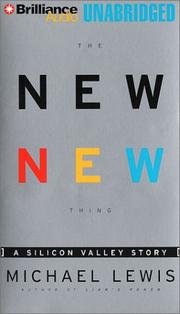
Jim Clark, founder of Silicon Graphics and Netscape, starts a third company in 1999.
Also recommended by: Ryan Holiday, Andrew Chen, Keith Rabois
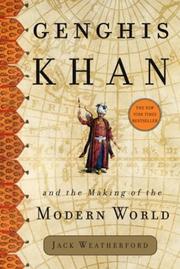
How the Mongol empire's trade and communication helped make the modern world.
Also recommended by: Ben Horowitz, Daymond John, Justin Kan and 1 other
Also recommended by: Keith Rabois, Patrick Collison
Also recommended by: Richard Branson