Updates

  1. Person pages list letters, writing, profiles and links as sortable tables with filters, and show each person's companies as links; Fund letters show each letter's description in its own column.
  2. Experts show a checked job title and a short description of each person; 30 more people have photographs.
  3. Every company, fund, university and publication the experts work for has a page listing the people there.
  4. Fund letters show each letter's thesis and filter by it; 225 person pages list the essays, columns and newsletter issues the person wrote.
  5. Person pages list every essay and newsletter issue a person wrote, and their own books as a table in List view.
  6. Recommends shows the five largest kinds of book and the rest under More; browse pictures load sooner.
  7. Podcasts and talks link the original episode, filter by Audio and video or Press, and list each publisher once.
  8. Pages are wider, Recommends has List and Grid, and a filter clicked again turns off.
  9. Book cards sit in a ruled grid with Open Library and Goodreads links and each book's one-line note.
  10. Funds is now Investors; each investor's styles are buttons that filter the table.
  11. Podcasts and talks on a person's page filter by year and publisher and show as a list or a grid of pictures.
  12. Quotes show only people's own words: 472 summaries written by list sites are gone.
  13. Country pages open from Browse again, and every link on the shelf lands on a page.
  14. Subject and person pages show their sections as tabs, and each book appears once on a person's page.
  15. Book cards show the quote, who said it and the source; grids show five cards to a row.
  16. On a phone, a menu holds the sections, search, Updates, Feedback and dark mode.
  17. Feedback takes a screenshot of the page with no browser prompt, opens a screenshot full size when you click it, and clears itself once sent.
  18. Book cards are centred, search names the topic each book sits in, and any text cut short shows whole on hover.
  19. Search groups its results by kind: people, companies, geographies, subjects, topics, books, funds, fund letters and papers.
  20. The Books table lists who recommended each book by name, and the browser tab names the section you are in.
  21. Feedback can take a screenshot of the page, or one you paste or choose, and opens in the corner beside Updates.
  22. Each rail button reopens its section where you left it, and Browse, Table and People show on every book and subject page.
  23. Filters grey out choices that hold nothing instead of hiding them, and Books › People filters by authors or recommenders.
  24. Feedback takes a subject line and up to three screenshots.
  25. Biographies are grouped by the person they are about: 41 new pages, from Abraham Lincoln to Lee Kuan Yew.
  26. Sport splits into 23 sports, and Religion into one topic per faith.
  27. Book lists show as cards: the cover, one recommendation quote and every recommender by name.
  28. Seventeen subjects that had two or three pages under different names now have one page each.
  29. Every page lists its Experts as authors and recommenders, with a link to them on the Experts tab.
  30. Economics, Financial history, Financial panics and Accounting are subjects of their own, with one page per financial crisis.
  31. Book, person and subject pages open inside the app, so the tabs stay in view.
  32. 996 more book covers, and photographs or logos for 227 more people and companies.
  33. Books › Browse shows every subject as cards, and the rail holds Fund letters, Papers, Experts, Books and Funds.
  34. Every topic over 150 books splits into narrower topics, each with a page of its own.

Send feedback

What is it?
Screenshots, up to 3 (optional)
or paste one with Ctrl+V

We use your email only to reply to you.

Anna Karenina

Anna Karenina

Leo Tolstoy
2025
528 pages · about 8h 48m to read Open Librarygoodreads

Summary

Tolstoy's novel, serialised between 1875 and 1877, follows two parallel narratives. Anna, married to a senior official, begins an affair with Count Vronsky, leaves her husband and son, is excluded from society, and eventually kills herself. Konstantin Levin, a landowner, courts and marries Kitty, works on his estate, struggles with agricultural reform and with the question of how to live, and reaches an uncertain religious resolution.

The structure sets the two against each other. Anna's story runs on passion, social judgment and the impossibility of her position under the double standard applied to men and women. Levin's runs on work, family and the search for meaning, and is largely autobiographical.

The opening line, that happy families are all alike and every unhappy family is unhappy in its own way, has produced what is now called the Anna Karenina principle, which states that success requires avoiding every one of several possible failures while failure requires only one. Diamond used it in Guns, Germs and Steel and it has been applied widely in business and in statistics.

The agricultural chapters contain Tolstoy's arguments about labour, land ownership and the failure of imported Western management methods in Russian conditions, which readers frequently skip and which carry the book's economic thinking. The novel is long and the Levin sections lose many readers. Tolstoy's moral position on Anna is debated, since the narration is sympathetic while the plot is punitive. Translations vary considerably. Its business readership comes mainly through the principle in the first line rather than through the novel itself.

Key takeaways 8

  1. Success requires avoiding every one of several possible failures while failure requires only one, which is the principle drawn from the opening line.
  2. Social rules are applied asymmetrically, and the same conduct that excludes Anna leaves Vronsky's position intact.
  3. Levin's satisfaction comes from work, family and physical labour rather than from any conclusion he reaches by reasoning.
  4. Imported management and agricultural methods failed on Russian estates because they ignored the conditions and incentives of the people doing the work.
  5. Passion pursued against the social structure destroys the position that made the person's life possible, which the novel presents as a mechanism rather than as a judgment.
  6. Institutional and bureaucratic careers, represented by Karenin, produce competence without any capacity to address a personal crisis.
  7. The search for meaning through argument produces nothing, and Levin's resolution arrives through practice rather than through conclusion.
  8. The narration is sympathetic toward Anna while the plot destroys her, which is why the moral position of the novel remains disputed.

Who should read it

Readers who want the novel behind a principle widely cited in business, and a nineteenth-century treatment of work, meaning and social constraint.

Who recommended it 6 · 1 direct

Sam Altmanreported
Tyler Cowenreported

Similar books 6

Chosen by shared topics, the entries that hold them, and the people who recommended both.

Aldous Huxley · 1932

A novel of a future world where people are bred in hatcheries into contented castes.

Ernest Hemingway · 1940

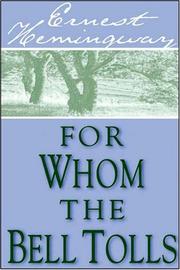
A novel of an American with Spanish guerrillas sent to blow up a bridge.

Where it sits in the reference 0

No entry holds this book yet. It reached the reference because someone recommended it.

Topics

FictionClassic novels and stories