
Hackers
Summary
Levy traces three generations of programmers: the MIT Tech Model Railroad Club and Artificial Intelligence Lab people of the late 1950s and 1960s who worked on the TX-0 and PDP-1; the Californian hardware hackers of the 1970s around the Homebrew Computer Club, including Steve Wozniak and the Altair community; and the game programmers of the early 1980s, particularly at Sierra On-Line and Broderbund.
The book's lasting contribution is the articulation of the hacker ethic: access to computers should be unlimited and total, all information should be free, authority should be mistrusted and decentralisation promoted, hackers should be judged by their hacking rather than by credentials, you can create art and beauty on a computer, and computers can change your life for the better. Levy did not invent these principles but he was the first to write them down as a coherent set, and they became the stated values of a large part of the software industry.
The narrative arc is the collision between that ethic and commerce. Levy shows the MIT lab culture dissolving as its people left for companies, the Homebrew ethic of sharing designs running into Bill Gates' letter about software piracy, and the game industry converting programmers into employees producing to a schedule. Levy interviewed the participants directly and the book is a primary source for that period. It is from 1984, so everything after the personal computer is absent, and later editions add only an afterword. The treatment is admiring and the near-total absence of women from the account reflects both the period and Levy's framing of it.
Key takeaways 7
- The hacker ethic holds that information should be free, authority should be mistrusted, and people should be judged on what they build rather than on credentials.
- Hands-on access to a machine, without administrators or scheduling bureaucracy in between, was the condition that produced the MIT hacker culture.
- The early software culture treated code as something to be shared and improved by others, and the assertion of software ownership was experienced as a direct attack on that.
- Personal computing was created by hobbyists who wanted machines of their own, not by the computer industry, which saw no market for them.
- Steve Wozniak's designs achieved their cost advantage through reducing chip count, which was an aesthetic value in the hacker culture before it was a commercial one.
- The commercialisation of software converted hackers into employees and replaced peer recognition with salary and schedule as the governing incentive.
- Open sharing of designs and code accelerated the development of personal computing more than any single company's work did.
Who should read it
Founders and technologists who want the primary account of where software culture's stated values came from and how they met commerce.
About Steven Levy
American technology journalist and editor at large at Wired who wrote histories of hacker culture, Apple, Google and Facebook.
Hackers documented the MIT and Homebrew programming culture of the 1950s through the 1980s and named the ethic that later shaped open source and startup engineering. In the Plex and Facebook report from inside those companies on how their products, ranking systems and business models were actually built.
Who recommended it 6
Similar books 6
Chosen by shared topics, the entries that hold them, and the people who recommended both.
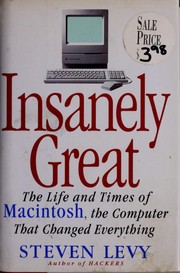
How the Macintosh was made and launched in 1984.
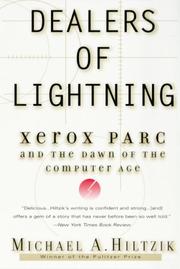
How Xerox PARC built the first personal computer and laser printer, and lost them.
Recommended by: Austen Allred, Patrick Collison, Sam Altman

Recommended by: Marc Andreessen, Mark Zuckerberg and 2 others
A Data General team races to design a 32-bit minicomputer in about a year.
“Must-read for anyone in a product development or a startup environment.” — Mohnish Pabrai
Source: Mohnish's Bookshelf — Books on Sales & Marketing, entry 73
Recommended by: Mohnish Pabrai, Patrick Collison, Brad Feld and 3 others
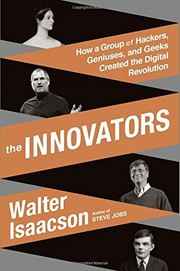
Computing as a run of collaborations, from Ada Lovelace and Babbage to Google.
Recommended by: Mohnish Pabrai, Bill Gates, Chris Fussell and 2 others

Recommended by: Aileen Lee, Austen Allred, Keith Rabois and 1 other
Where it sits in the reference 2
Topics