Updates

  1. Person pages list letters, writing, profiles and links as sortable tables with filters, and show each person's companies as links; Fund letters show each letter's description in its own column.
  2. Experts show a checked job title and a short description of each person; 30 more people have photographs.
  3. Every company, fund, university and publication the experts work for has a page listing the people there.
  4. Fund letters show each letter's thesis and filter by it; 225 person pages list the essays, columns and newsletter issues the person wrote.
  5. Person pages list every essay and newsletter issue a person wrote, and their own books as a table in List view.
  6. Recommends shows the five largest kinds of book and the rest under More; browse pictures load sooner.
  7. Podcasts and talks link the original episode, filter by Audio and video or Press, and list each publisher once.
  8. Pages are wider, Recommends has List and Grid, and a filter clicked again turns off.
  9. Book cards sit in a ruled grid with Open Library and Goodreads links and each book's one-line note.
  10. Funds is now Investors; each investor's styles are buttons that filter the table.
  11. Podcasts and talks on a person's page filter by year and publisher and show as a list or a grid of pictures.
  12. Quotes show only people's own words: 472 summaries written by list sites are gone.
  13. Country pages open from Browse again, and every link on the shelf lands on a page.
  14. Subject and person pages show their sections as tabs, and each book appears once on a person's page.
  15. Book cards show the quote, who said it and the source; grids show five cards to a row.
  16. On a phone, a menu holds the sections, search, Updates, Feedback and dark mode.
  17. Feedback takes a screenshot of the page with no browser prompt, opens a screenshot full size when you click it, and clears itself once sent.
  18. Book cards are centred, search names the topic each book sits in, and any text cut short shows whole on hover.
  19. Search groups its results by kind: people, companies, geographies, subjects, topics, books, funds, fund letters and papers.
  20. The Books table lists who recommended each book by name, and the browser tab names the section you are in.
  21. Feedback can take a screenshot of the page, or one you paste or choose, and opens in the corner beside Updates.
  22. Each rail button reopens its section where you left it, and Browse, Table and People show on every book and subject page.
  23. Filters grey out choices that hold nothing instead of hiding them, and Books › People filters by authors or recommenders.
  24. Feedback takes a subject line and up to three screenshots.
  25. Biographies are grouped by the person they are about: 41 new pages, from Abraham Lincoln to Lee Kuan Yew.
  26. Sport splits into 23 sports, and Religion into one topic per faith.
  27. Book lists show as cards: the cover, one recommendation quote and every recommender by name.
  28. Seventeen subjects that had two or three pages under different names now have one page each.
  29. Every page lists its Experts as authors and recommenders, with a link to them on the Experts tab.
  30. Economics, Financial history, Financial panics and Accounting are subjects of their own, with one page per financial crisis.
  31. Book, person and subject pages open inside the app, so the tabs stay in view.
  32. 996 more book covers, and photographs or logos for 227 more people and companies.
  33. Books › Browse shows every subject as cards, and the rail holds Fund letters, Papers, Experts, Books and Funds.
  34. Every topic over 150 books splits into narrower topics, each with a page of its own.

Send feedback

What is it?
Screenshots, up to 3 (optional)
or paste one with Ctrl+V

We use your email only to reply to you.

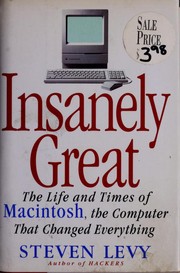
Insanely Great

Insanely Great

Steven Levy
1994
T2 306 pages · about 5h 6m to read Open Librarygoodreads

The making of the Macintosh, written close to the events.

Summary

Steven Levy wrote this account of the Macintosh a decade after its 1984 launch, drawing on interviews with the development team and on his own reporting for Rolling Stone and Popular Computing at the time. He traces the graphical interface from Douglas Engelbart's work at SRI in the 1960s through Xerox PARC's Alto to the Lisa and then the Macintosh.

Levy's argument is that the Macintosh mattered because it made a set of interface ideas cheap enough to reach ordinary users, and that this required specific engineering decisions and specific personalities. He covers Jef Raskin's original conception of an appliance computer and his displacement by Steve Jobs, the bitmapped display, the mouse, the decision to include no expansion slots, the 128 kilobyte memory constraint that crippled the first machine, and the culture of the development team. He is direct about the failures, including the machine's commercial disappointment in 1984 and 1985 and the internal conflict that followed.

The book stops in the early 1990s, when Apple was declining and the Macintosh's interface ideas had been absorbed by Windows. Levy's assessment of Apple's prospects has been overtaken, and the book contains none of the story that made Apple the most valuable company in the world. Its value is the detailed record of a specific product development and of the argument, then unresolved, about whether interface quality could be a durable competitive advantage.

Key takeaways 7

  1. The graphical interface originated at Engelbart's laboratory and at Xerox PARC, and Apple's contribution was making it affordable rather than inventing it.
  2. Jobs's insistence on a closed machine without expansion slots reflected a product philosophy that customers initially rejected.
  3. The original Macintosh shipped with too little memory to run the software its interface required, which nearly killed it.
  4. Levy argues that interface design is an engineering discipline with correct and incorrect answers, not a matter of taste.
  5. The Macintosh development team's isolation from the rest of Apple produced both the product's coherence and the organisation's later dysfunction.
  6. Desktop publishing, driven by the LaserWriter and PageMaker, saved the Macintosh by supplying a use case the interface uniquely enabled.
  7. Apple failed to convert its interface lead into a durable position because it declined to license the software separately from the hardware.

Who should read it

Founders and product leaders who want a detailed record of how a category-defining product was designed, mismanaged and rescued by an unplanned application.

About Steven Levy

American technology journalist and editor at large at Wired who wrote histories of hacker culture, Apple, Google and Facebook.

Hackers documented the MIT and Homebrew programming culture of the 1950s through the 1980s and named the ethic that later shaped open source and startup engineering. In the Plex and Facebook report from inside those companies on how their products, ranking systems and business models were actually built.

Wired

Similar books 6

Chosen by shared topics, the entries that hold them, and the people who recommended both.
Steven Levy · 1984

Three generations of hackers, from MIT's AI Lab to the Homebrew club and game makers.

Michael A. Hiltzik · 1999

How Xerox PARC built the first personal computer and laser printer, and lost them.

Tripp Mickle · 2022

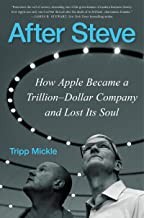
Apple after Steve Jobs, told through Tim Cook's operations and Jony Ive's design.
Ken Kocienda · 2018

Insider account by the engineer who built the iPhone keyboard.

Steven Levy · 2020

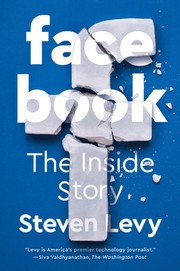
Facebook from its founding to 2019, from hundreds of interviews including Zuckerberg.

Where it sits in the reference 2

Journalists
Companies

Topics

Company HistoriesTechnology and ComputingGeneral HistoryScience, Technology and MedicineHistory of computing and semiconductors