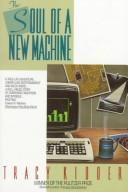
The Soul of a New Machine
Pulitzer-winning account of building a minicomputer against the clock
Summary
Kidder embedded with a Data General engineering team in 1978 and 1979 as they designed a thirty-two bit minicomputer, the Eagle, in about a year with a small team, few resources and no official sanction at the start. The book won the Pulitzer Prize and remains the standard account of what engineering work actually involves.
The organisational situation drives the narrative. Data General had committed its resources to a different project in North Carolina, and Tom West's team in Massachusetts built a competing machine in parallel, initially concealed. West recruited young engineers straight from university, gave them problems beyond their experience, and used what the team called signing up, meaning a voluntary commitment to unlimited hours in exchange for the responsibility.
Kidder describes the technical work accurately enough to be followed by a non-specialist, covering microcode, the debugging process, the logic analyser and the physical assembly. He also describes the psychological structure: the pinball metaphor in which winning means being allowed to play again, the deliberate withholding of information by West to preserve the team's sense of ownership, and the exhaustion and departures that followed the project's completion.
The book is a period document. Minicomputers no longer exist, and the specific technology is obsolete. The organisational pattern it describes, in which a small unofficial team outbuilds a resourced official one, recurs constantly. The treatment of motivation, in which the reward for shipping is the chance to do it again, describes something that most management literature does not capture. There are almost no women in the account, which reflects the industry at that time.
Key takeaways 8
- A small team working without official sanction built a competing product faster than the resourced official project inside the same company.
- Recruiting inexperienced engineers and giving them responsibility beyond their experience produced work that experienced engineers would have declined to attempt.
- The motivation was the work itself and the chance to do it again, rather than compensation, and the team's term for the reward was being allowed to play the next game.
- West deliberately withheld information from his team to preserve their sense that the problems were theirs to solve.
- Signing up, meaning a voluntary commitment to unlimited hours in exchange for real responsibility, was the recruitment mechanism and was understood as such by both sides.
- The project consumed the people who built it, and most of the team left the company shortly afterwards.
- Debugging consumed more of the schedule than design, and the ability to locate faults determined whether the machine would ship.
- Internal competition between two teams in the same company produced the winning product, at the cost of duplicated effort and organisational conflict.
Who should read it
Anyone managing engineering teams who wants an honest account of what motivates technical work and what an intense project costs the people in it.
Who recommended it 6 · 2 direct
“Must-read for anyone in a product development or a startup environment.”
Similar books 6
Chosen by shared topics, the entries that hold them, and the people who recommended both.
Computing as a run of collaborations, from Ada Lovelace and Babbage to Google.
Recommended by: Mohnish Pabrai, Bill Gates, Chris Fussell and 2 others

Three generations of hackers, from MIT's AI Lab to the Homebrew club and game makers.
Recommended by: Austen Allred, Ev Williams, Marc Andreessen and 3 others

How the stirrup and the plough reorganised medieval society and economy
Recommended by: Patrick Collison, Paul Graham

MIT's introductory computer science text, taught through Lisp and Scheme.
Recommended by: Patrick Collison, Paul Graham, Bret Victor and 1 other
Why well-run firms lose to cheaper, worse products that enter at the market's bottom.
“Awesome book. May move soon to my Top Ten List. If anything will keep CEOs awake at night, reading this book certainly will.” — Mohnish Pabrai
Source: Mohnish's Bookshelf — Books on Sales & Marketing, entry 66
Recommended by: Jim Collins, Mohnish Pabrai, Aaron Levie and 27 others
Lessons from IBM's OS/360: why adding people to a late software project slows it.
Recommended by: Mohnish Pabrai, Paul Graham, Andrew Chen and 3 others
Where it sits in the reference 3
Topics