
Innovation and Disruption
Why competent incumbents lose to worse products, and how new technologies actually diffuse.
Start here
- The Innovator's DilemmaClayton M. Christensen, 1997
- The Innovator's SolutionClayton M. Christensen, Michael E. Raynor, 2003
- Diffusion of InnovationsEverett M. Rogers, 1962

An academic study of how new ideas spread.
Recommended by: Patrick O'Shaughnessy
A Data General team races to design a 32-bit minicomputer in about a year.
“Must-read for anyone in a product development or a startup environment.” — Mohnish Pabrai
Source: Mohnish's Bookshelf — Books on Sales & Marketing, entry 73
Recommended by: Mohnish Pabrai, Patrick Collison, Brad Feld and 3 others
Innovation as a learnable discipline, with seven sources of opportunity to search.
Recommended by: Patrick Collison, Matt Mullenweg and 1 other
Why well-run firms lose to cheaper, worse products that enter at the market's bottom.
“Awesome book. May move soon to my Top Ten List. If anything will keep CEOs awake at night, reading this book certainly will.” — Mohnish Pabrai
Source: Mohnish's Bookshelf — Books on Sales & Marketing, entry 66
Recommended by: Jim Collins, Mohnish Pabrai, Aaron Levie and 27 others
A history of discovery: time and the clock, the earth and seas, nature and society.
Recommended by: Jim Collins, Stewart Brand
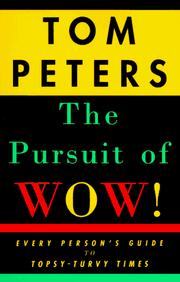
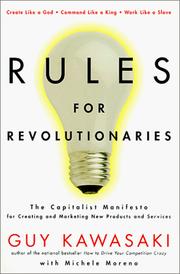
210 short pieces of business advice for a fast-changing early-1990s economy.
Recommended by: Mohnish Pabrai

Cost-cutting can't produce growth; a company must stand out to win.
Recommended by: Mohnish Pabrai

A manifesto to rebuild firms for an age of automated white-collar work and design.
Recommended by: David Cancel
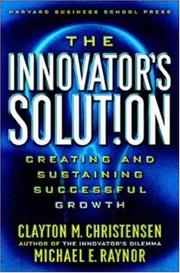
How a company can build new businesses through low-end and new-market disruption.
Recommended by: Jeff Bezos, Keith Rabois
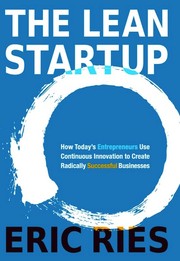
Build, measure, learn: test what customers want with small experiments.
Recommended by: Nat Eliason, Sheryl Sandberg, Andrew Chen and 17 others
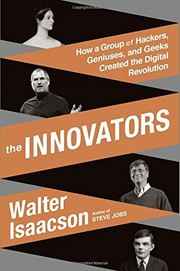
Computing as a run of collaborations, from Ada Lovelace and Babbage to Google.
Recommended by: Mohnish Pabrai, Bill Gates, Chris Fussell and 2 others
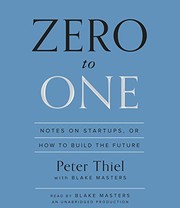
Why startups should build something new and own a small market before growing.
Recommended by: Balaji S. Srinivasan, Eric Weinstein and 36 others
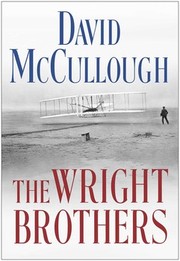
From a Dayton bicycle shop to the first powered flights and the 1908 demonstrations.
Recommended by: Ali Abdaal, Mohnish Pabrai, Morgan Housel and 3 others

How people champion new ideas, and how leaders can encourage originality.
Recommended by: Mohnish Pabrai, Tony Hsieh, Alfred Lin and 7 others

How the stirrup and the plough reorganised medieval society and economy
Recommended by: Patrick Collison, Paul Graham

Run a tech company for shareholder value by funding its core advantage.
“Moore's forthcoming book, Living on the Fault Line... is terrific and highly recommended.” — Michael Mauboussin
Source: Network to Net Worth: Exploring Network Dynamics (CS First Boston)
Recommended by: Michael Mauboussin

Business-model innovation as a discipline, with a profit-formula framework.

Innovation is gradual, collective and bottom-up, not the work of lone inventors.
“It's a must-read for entrepreneurs and government officials who want to either be innovative themselves or foster innovation.” — Naval Ravikant
Source: Nav.al — 'Matt Ridley: How Innovation Works, Part 2'
Recommended by: Naval Ravikant, Balaji S. Srinivasan

Organized as short research-backed chapters on how people see, remember, decide, and feel, this is the most accessible bridge between cognitive science and design practice. The sections on peripheral vision, progressive disclosure, and intrinsic motivation are particularly applicable to interface work.
Recommended by: Jan Losert, Johnnie Gomez, Nir Eyal

Goal-directed design and personas: fitting software to how users think it works.

How designers persuade engineers, managers and executives that a design is right.

Design treated as narrative: story arc, empathy, surprise and sequence.

Krug's web usability primer has stayed relevant for over two decades because its core argument — that good interfaces require no instruction — is timeless. The chapters on navigation conventions and usability testing with five users are still the most practical introduction to the discipline.
Recommended by: Brian Armstrong, Andy Budd, Austen Allred and 6 others

A four-step model for habit-forming products: trigger, action, reward, investment.
Recommended by: Nat Eliason, Alexis Ohanian, Andrew Chen and 6 others

Psychology findings such as Fitts's and Hick's laws applied to interface design.

Where most design books stay in the abstract, this one opens with specific visual decisions: spacing scales, type hierarchies, color palette construction, shadow systems. Written by developers who taught themselves visual design, it's unusually practical and works equally well for product designers who want stronger visual intuition.
Recommended by: Charlie Marie Prangley, Jordan Hughes
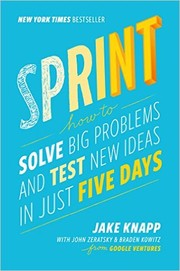
The Google Ventures five-day workshop format distilled into a repeatable method for answering critical design questions through rapid prototyping and targeted user testing. Less a design book than a process book — most valuable for teams that struggle to move from ideas to validated decisions quickly.
Recommended by: Andy Budd, Jessica Hische, Marty Cagan and 1 other
The book that introduced affordances, signifiers, and feedback loops to a generation of designers. Norman's analysis of why doors, phones, and stoves confuse people is the clearest argument that bad design is a systems failure, not user error. Everything else on this list builds on this vocabulary.
Recommended by: Ran Segall, Andrew Chen, Garry Tan and 9 others
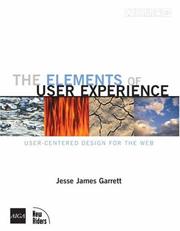
Five planes of design, from strategy to surface, for breaking down design problems.

A visual encyclopedia of 125 design principles from multiple disciplines — architecture, industrial design, psychology, communication. Not a cover-to-cover read but an essential reference for finding the principle name for something you already know intuitively, which matters when presenting to non-designers.
Recommended by: Ran Segall

How to use prize competitions, crowdfunding and communities to go big.
Recommended by: Nat Eliason, James Altucher, Tom Bilyeu
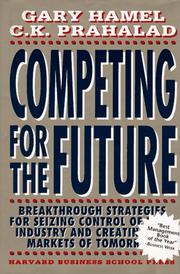
How firms lead future industries by seeing tomorrow's chances and building skills.
Recommended by: Mohnish Pabrai

Recommended by: Mohnish Pabrai

Recommended by: Mohnish Pabrai

Strategy as constant reshaping of advantage in fast, unpredictable markets.
Recommended by: Mohnish Pabrai

Why long-lived companies underperform the market, and how to transform them.
Recommended by: Mohnish Pabrai

Recommended by: Mohnish Pabrai
Recommended by: Mohnish Pabrai
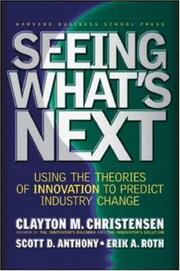
Disruption theory used to forecast how industries will change.
Recommended by: Ev Williams

Recommended by: Ev Williams, Keith Rabois

Why imitating others' innovations matters as much as innovating.
Recommended by: Mohnish Pabrai

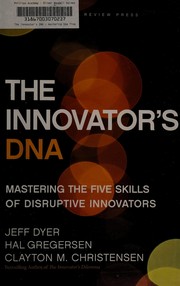

How to anticipate change and create your own opportunities in business.
Recommended by: Tom Bilyeu

Why organisations kill breakthrough projects, and how structure can protect them.
Recommended by: Arianna Huffington, Bill Gates and 8 others


 Clayton Christensenwrote 4 books here
 Peter F. Druckerwrote 1 book here
 Peter Thielwrote 1 book here
 Adam Grantwrote 1 book here
 Matt Ridleywrote 1 book here
 Walter Isaacsonwrote 1 book here
 Guy Kawasakiwrote 1 book here
 Nir Eyalwrote 1 book here
Show all 13

 Mohnish Pabrairecommends 17 books hereNir Eyalrecommends 6 books here
 Keith Raboisrecommends 5 books here
 Marc Andreessenrecommends 4 books here
 Paul Grahamrecommends 4 books here
 Patrick Collisonrecommends 4 books here
 Ben Horowitzrecommends 3 books here
 Brad Feldrecommends 3 books here
Show all 112
 Brett Adcockrecommends 3 books here
 Chris Dixonrecommends 3 books here
 Ev Williamsrecommends 3 books here
 Jeff Bezosrecommends 3 books here
 Kathryn Minshewrecommends 3 books here
 Tom Bilyeurecommends 3 books here
 Jim Collinsrecommends 2 books here
 Reid Hoffmanrecommends 2 books here
 Alfred Linrecommends 2 books here
 Arianna Huffingtonrecommends 2 books here
 Balaji S. Srinivasanrecommends 2 books here
 Bill Gatesrecommends 2 books here
 Brian Armstrongrecommends 2 books here
 Garry Tanrecommends 2 books here
 James Altucherrecommends 2 books here
 Jeff Atwoodrecommends 2 books here
 Mark Cubanrecommends 2 books here
 Matt Mullenwegrecommends 2 books here
 Max Levchinrecommends 2 books here
 Satya Nadellarecommends 2 books here
 Andrew S. Groverecommends 1 book here
 Daniel Kahnemanrecommends 1 book here
 Nassim Nicholas Talebrecommends 1 book herePeter Thielrecommends 1 book here
 Ray Daliorecommends 1 book here
 Kevin Kellyrecommends 1 book here
 Marc Benioffrecommends 1 book hereGuy Kawasakirecommends 1 book here
 Aaron Levierecommends 1 book here
 Alexis Ohanianrecommends 1 book here
 Bill Gurleyrecommends 1 book here
 Bob Igerrecommends 1 book here
 Casey Neistatrecommends 1 book here
 Caterina Fakerecommends 1 book here
 Changpeng Zhaorecommends 1 book here
 Drew Houstonrecommends 1 book here
 Dustin Moskovitzrecommends 1 book here
 Elon Muskrecommends 1 book here
 Eric Weinsteinrecommends 1 book here
 Fred Wilsonrecommends 1 book here
 Jason Calacanisrecommends 1 book here
 Jensen Huangrecommends 1 book here
 Jessica Hischerecommends 1 book here
 Julie Zhuorecommends 1 book here
 Kevin Systromrecommends 1 book here
 Luis von Ahnrecommends 1 book here
 Marissa Mayerrecommends 1 book here
 Michael Bloombergrecommends 1 book here
 Naval Ravikantrecommends 1 book here
 Richard Bransonrecommends 1 book here
 Ryan Petersonrecommends 1 book here
 Sam Altmanrecommends 1 book here
 Sheryl Sandbergrecommends 1 book here
 Steve Jobsrecommends 1 book here
 Stewart Brandrecommends 1 book here
 Susan Cainrecommends 1 book here
 Tim Ferrissrecommends 1 book here
 Tim O’Reillyrecommends 1 book here
 Tony Hsiehrecommends 1 book here
 Vinod Khoslarecommends 1 book here
 Whitney Wolfe Herdrecommends 1 book here