| My Retirement | Tom Peters | 2023-03-31 |
| Waterman Memorial | Tom Peters | 2022-05-02 |
| Bob and Tom’s Excellent Adventure: 1977-2022 | Tom Peters | 2022-01-04 |
| Val Willis’ Extreme Humanism Meaning | Tom Peters | 2021-06-02 |
| The Moral Responsibility of Enterprise: Credo 2021 | Tom Peters | 2021-05-28 |
| Phim Her’s Extreme Humanism Meaning | Tom Peters | 2021-05-26 |
| THE “YOU LIKE, I LIKE” FIFTY-TWO | Tom Peters | 2021-05-21 |
| Cindy Gallop on Extreme Humanism | Tom Peters | 2021-05-19 |
| Course 2: People (REALLY) First—OUT NOW | Tom Peters | 2021-05-17 |
| Karen Mangia’s Extreme Humanism Meaning | Tom Peters | 2021-05-12 |
| Billy Dexter, Extreme Humanism Meaning | Tom Peters | 2021-05-05 |
| Linda Holliday, Extreme Humanism Meaning | Tom Peters | 2021-04-28 |
| Robert Kessler on Extreme Humanism | Tom Peters | 2021-04-21 |
| Linda Hill, Extreme Humanism Meaning | Tom Peters | 2021-04-14 |
| Seth Godin, Extreme Humanism Video | Tom Peters | 2021-04-07 |
| Excellence Now Interviews | Tom Peters | 2021-04-02 |
| McKinsey Final Thoughts | Tom Peters | 2021-02-17 |
| February Media Sightings | Tom Peters | 2021-02-15 |
| Tom’s Free Preview Course | Tom Peters | 2021-01-25 |
| “Maximimizing Shareholder Value 1970-??? The Morally Bankrupt, Incomparably Destructive [Not Legally Required] Economic Idea That Decapitated Modern Business and Is Spurring Social Instability” | Tom Peters | 2020-07-06 |
| DESIGN POWER | Tom Peters | 2020-01-13 |
| Goals 2020+ | Tom Peters | 2019-12-30 |
| The Excellence DividendApril 2018-May 2019 | Tom Peters | 2019-05-21 |
| TEP/The Everything Paper+ | Tom Peters | 2019-04-08 |
| EVERYTHING!(Again.) | Tom Peters | 2019-03-01 |
| “Sorta Manifesto”? | Tom Peters | 2019-02-04 |
| ExtremeHumanizationRadicalHumanizationHumanizationOffensiveExtremeEmployeeEngagementRadicalEmployeeEngagement | Tom Peters | 2019-01-23 |
| #1 | Tom Peters | 2019-01-04 |
| DEE2019/Deep Employee Engagement | Tom Peters | 2018-12-27 |
| The Excellence Dividend: Fundamentals 2018+ | Tom Peters | 2018-11-29 |
| PEOPLE [REALLY] FIRST PowerPoint Plus | Tom Peters | 2018-10-15 |
| THE EIGHTEEN “NUMBER ONES”52 YEARS. ONE PAGE/ONE SLIDE. | Tom Peters | 2018-09-26 |
| Google Surprise | Tom Peters | 2018-09-04 |
| 14 Number Ones | Tom Peters | 2018-08-23 |
| The Excellence Dividend Postscripts | Tom Peters | 2018-08-13 |
| The Excellence DividendEight Observations | Tom Peters | 2018-08-09 |
| The Speed Trap: When Taking Your Time (Really) Matters | Tom Peters | 2018-07-31 |
| Summarizing the Summary | Tom Peters | 2018-05-10 |
| Another Addition to the Excellence Dividend Tools | Tom Peters | 2018-05-07 |
| The Excellence DividendIn PowerPoint/Annotated | Tom Peters | 2018-04-23 |
| Columbus/Enhanced | Tom Peters | 2018-04-16 |
| Excerpt from The Excellence Dividend | Tom Peters | 2018-01-29 |
| The Excellence Dividend: The Nub | Tom Peters | 2018-01-22 |
| Enough. | Tom Peters | 2017-04-27 |
| Hanging Out With My Beloved SMEs | Tom Peters | 2017-04-19 |
| LEADERSHIP/MANAGEMENT/”PEOPLE FIRST” BOOK LIST | Tom Peters | 2017-04-13 |
| BE THE BEST/”COMMODITY” IS A STATE OF MIND | Tom Peters | 2016-12-28 |
| The State of Play | Tom Peters | 2016-10-24 |
| BASICS | Tom Peters | 2016-03-18 |
| PODIUM BANGERS | Tom Peters | 2016-03-12 |
| “Best Slides”/PDF Doc | Tom Peters | 2016-02-23 |
| THE WORKS 1966-2015: Overriding Logic | Tom Peters | 2015-11-30 |
| 32 Customer Entanglement Strategies | Tom Peters | 2015-11-13 |
| Six Sustaining—and Very Dangerous—Myths | Tom Peters | 2015-11-02 |
| “Innovation Is Strategy”:Imperative #1 for the Crazy World of 2015/2015+ | Tom Peters | 2015-10-23 |
| The Leadership 43“Some Stuff” | Tom Peters | 2015-09-22 |
| In Defense of PowerPointA BookNot a “Book” | Tom Peters | 2015-07-15 |
| 50K | Tom Peters | 2015-07-07 |
| The 15-Second “Pep talk”(And more) | Tom Peters | 2015-06-17 |
| Management: The Arrangement and Animation of Human Affairs in Pursuit of Desired Outcomes | Tom Peters | 2015-03-23 |
| The (REAL) Story on Management | Tom Peters | 2015-03-17 |
| Tweetstream:Leadership, Cognitive Biases, Etc. | Tom Peters | 2015-03-09 |
| Profit Through Putting People First(“Good Guys”) Business Book Club | Tom Peters | 2015-03-04 |
| Getting Things (That Matter) Done | Tom Peters | 2015-02-26 |
| Resurrection(And Irritation)(And Bewilderment)(And Fervent Belief)(And Prayer) | Tom Peters | 2015-02-23 |
| Muffed Answer Leads to Rethink | Tom Peters | 2015-02-20 |
| An Effective “Brand You” | Tom Peters | 2015-01-08 |
| Tweetstreams | Tom Peters | 2014-12-22 |
| Surprise, Transformation & Excellence through “Spontaneous Discovery”:A Personal Saga | Tom Peters | 2014-12-12 |
| A TEN-POINT “NO OPTION” MANIFESTO: RE-IMAGINE. EXCELLENCE. INNOVATE. NOW. OR PERISH. | Tom Peters | 2014-12-09 |
| 12 Whirlwind Days in Japan | Tom Peters | 2014-11-17 |
| RESPECT++ IN 140 CHARACTERS | Tom Peters | 2014-10-30 |
| The Project Leadership EXCELLENCE 42Revision, 27 October 2014 | Tom Peters | 2014-10-27 |
| EXCELLENCE Potpourri:A Collection of (Important) Papers | Tom Peters | 2014-10-21 |
| Bully for Me!I’m The Cleverest Person in the Room! | Tom Peters | 2014-10-07 |
| Brand You: 1997 Remembered | Tom Peters | 2014-10-06 |
| Update! | Tom Peters | 2014-09-24 |
| A New Annotated “Master” Presentation | Tom Peters | 2014-09-19 |
| Training = Investment #1 | Tom Peters | 2014-09-03 |
| A Few Quotes … | Tom Peters | 2014-08-29 |
| Some StuffTweets18 July 2014 | Tom Peters | 2014-07-21 |
| Surprising Oldie Stats | Tom Peters | 2014-06-24 |
| The Moral Bedrock Of Management | Tom Peters | 2014-06-20 |
| Disruption! Disruption!Dis-Rup-Tion!New! New! New!Phew! Phew! Phew!Hold Onto Your Hat!Katy Bar the Door! | Tom Peters | 2014-06-05 |
| Herein a 737-page “Freebie”:EXCELLENCE. NO EXCUSES.74 Ways to Launch Your Journey. Now. (And Then There’s Also “MOAP”) | Tom Peters | 2014-05-30 |
| Gartner Supply Chain Executive Conference | Tom Peters | 2014-05-21 |
| 9 to 4,096 | Tom Peters | 2014-04-17 |
| Excellence.NO EXCUSES. | Tom Peters | 2014-04-14 |
| BIG Data.NOT. | Tom Peters | 2014-04-08 |
| Allies,NOT Enemies | Tom Peters | 2014-02-11 |
| Action!#1: 1982#1: 2014 | Tom Peters | 2014-02-05 |
| Some (MORE) (Very) (Important) Stuff | Tom Peters | 2014-01-28 |
| Forbes.com | Tom Peters | 2014-01-27 |
| Whew! | Tom Peters | 2014-01-14 |
| Some (More) (Really) (REALLY) (Important) Stuff | Tom Peters | 2014-01-09 |
| Re-Re-Revision | Tom Peters | 2014-01-07 |
| Benchmarking,Problems Therewith | Tom Peters | 2014-01-06 |
| 2014: Getting Started | Tom Peters | 2014-01-03 |
| Radical Personal Development | Tom Peters | 2014-01-02 |
| Topics Of Current Interest | Tom Peters | 2013-12-31 |
| The Christmas “Thank You” Chronicles:Tom’s Tweetstream | Tom Peters | 2013-12-23 |
| Growing Like Topsy:“Some (Important) Stuff” | Tom Peters | 2013-12-17 |
| The "S-Train"/Twitter | Tom Peters | 2013-12-09 |
| Friday Rituals/Twitter | Tom Peters | 2013-12-06 |
| Good Work/Twitter | Tom Peters | 2013-12-05 |
| Twitter/1203.135 Suggested Top-of-the-Morning Rituals | Tom Peters | 2013-12-04 |
| "Management" and the Affordable Healthcare Act | Tom Peters | 2013-11-25 |
| Change/Change Agents | Tom Peters | 2013-11-21 |
| World Business ForumMilano | Tom Peters | 2013-11-05 |
| MOAP Jr. Circa 2013(Mother Of All Presentations) | Tom Peters | 2013-11-04 |
| THINKING OUT LOUD:How Successful NetworksNurture Good Ideas | Tom Peters | 2013-10-25 |
| By the NUMBERS | Tom Peters | 2013-10-15 |
| Deming & Me | Tom Peters | 2013-10-09 |
| Quiet! | Tom Peters | 2013-08-12 |
| TEDxManchester VTCreativity | Tom Peters | 2013-07-01 |
| Models!? | Tom Peters | 2013-06-27 |
| From Outraged to Open-minded | Tom Peters | 2013-06-20 |
| Time to Revamp Leadership Training?!Start With a Quick Self-Assessment Test | Tom Peters | 2013-05-30 |
| "1/47" | Tom Peters | 2013-05-13 |
| Piggy Sue! | Tom Peters | 2013-05-08 |
| Algorithms Rule!? | Tom Peters | 2013-04-19 |
| Coming to BelieveManifesto X 3 | Tom Peters | 2013-04-12 |
| The "Thank You" Tweets | Tom Peters | 2013-04-02 |
| Winner’s 7Winner’s Daily Dozen | Tom Peters | 2013-03-24 |
| Manifesto/Polemic:Best Teacher Corps Wins! | Tom Peters | 2013-03-14 |
| If It's Good Enough for Bob | Tom Peters | 2013-02-20 |
| What I've Come To Believe | Tom Peters | 2013-01-07 |
| In Brief … | Tom Peters | 2013-01-03 |
| What I've Come/Am Coming to Believe | Tom Peters | 2013-01-01 |
| Reading List 2012 | Tom Peters | 2012-12-02 |
| Thoughts: Leadership | Tom Peters | 2012-11-15 |
| Top Twenty | Tom Peters | 2012-11-08 |
| Thought blocks | Tom Peters | 2012-10-01 |
| Profound Labor Day Thought! | Tom Peters | 2012-09-03 |
| Acknowledgement! | Tom Peters | 2012-08-02 |
| ExcellenceThe Search Continues35 YearsONE Page8-Point Type | Tom Peters | 2012-07-12 |
| "Re-framing Capitalism" | Tom Peters | 2012-06-20 |
| Transforming "Departments" into Value-added Superstar PSFs/Professional Service Firms | Tom Peters | 2012-06-11 |
| HCA Addendum | Tom Peters | 2012-04-03 |
| Sydney, AHRI, 27 March 2012 | Tom Peters | 2012-03-29 |
| Lists! | Tom Peters | 2012-03-01 |
| Bias for Action | Tom Peters | 2012-02-17 |
| Advice, For What It’s Worth … | Tom Peters | 2012-01-25 |
| “This Is It”MOAPExcellence. Now. | Tom Peters | 2012-01-01 |
| Re-issue! | Tom Peters | 2011-12-30 |
| Forbes on Social Entrepreneurs | Tom Peters | 2011-12-09 |
| Zounds!Startling Boomer+ Stats! | Tom Peters | 2011-11-28 |
| And You Ordinarily Fit Where … | Tom Peters | 2011-11-17 |
| Updates! | Tom Peters | 2011-11-14 |
| A Request | Tom Peters | 2011-11-11 |
| A Spinning Head | Tom Peters | 2011-11-10 |
| 5 Days to Compose45 Years to Prepare | Tom Peters | 2011-11-03 |
| Green Is Green!Not! | Tom Peters | 2011-10-24 |
| Skill/Goal #1:“Adaptive” Organizations | Tom Peters | 2011-10-11 |
| A First! Please! | Tom Peters | 2011-09-13 |
| Financial Times EXPANDEDFirst Things Before First Things | Tom Peters | 2011-08-30 |
| Gospel! | Tom Peters | 2011-08-10 |
| ISOE In <140 Characters | Tom Peters | 2011-07-18 |
| So When the F___ Is This Going to Stop Being News? | Tom Peters | 2011-07-11 |
| I Do NOT "Have It In" for Mass General Hospital! (Or at Least, Not Much) | Tom Peters | 2011-07-06 |
| Twitter Takes | Tom Peters | 2011-06-17 |
| Meetings Am Me! | Tom Peters | 2011-06-14 |
| The EXCELLENCE 25: Master the Basics | Tom Peters | 2011-05-02 |
| FYI… | Tom Peters | 2011-04-27 |
| Beyond Your “To Do” List. Waaaay Beyond Your “To Do” List. | Tom Peters | 2011-04-20 |
| Solo Speech After-party | Tom Peters | 2011-03-29 |
| FYI | Tom Peters | 2011-01-27 |
| The Seven-step Path to Sustaining Success | Tom Peters | 2011-01-27 |
| The Wisdom of David Ogilvy | Tom Peters | 2011-01-18 |
| Getting It Wrong | Tom Peters | 2011-01-18 |
| Martin Luther King, Jr. | Tom Peters | 2011-01-18 |
| Bests | Tom Peters | 2010-12-30 |
| Order Should Not Be Taken For Granted … | Tom Peters | 2010-12-01 |
| The "11H Theory of Everything" | Tom Peters | 2010-11-16 |
| Complaining with Style! | Tom Peters | 2010-11-05 |
| Mickey Drexler/J.Crew | Tom Peters | 2010-10-28 |
| What Matters? | Tom Peters | 2010-10-06 |
| X2: REALLY First Things Before First Things | Tom Peters | 2010-09-21 |
| A Collection of Summary Presentations | Tom Peters | 2010-09-16 |
| The Retail Edge | Tom Peters | 2010-09-13 |
| What Can Happen If You Open a Half-hour Early! | Tom Peters | 2010-09-13 |
| PowerPoint "Stuff" | Tom Peters | 2010-08-20 |
| 90 Years Ago Today! | Tom Peters | 2010-08-18 |
| And She Called on Robin …And the Heavens Parted | Tom Peters | 2010-08-16 |
| Five Or Less Words To The Wise | Tom Peters | 2010-08-12 |
| A Book Worthy of Your Time & Attention | Tom Peters | 2010-07-28 |
| Happy Birthday U.S.A. And 3 Throaty Cheers! | Tom Peters | 2010-07-02 |
| To My Delight … | Tom Peters | 2010-06-28 |
| The Practice of Excellence.Limits Thereto.Or not? | Tom Peters | 2010-06-28 |
| The Military.Life.Politics. | Tom Peters | 2010-06-25 |
| Helping.The Manager’s Job 1. | Tom Peters | 2010-06-25 |
| The Manager's Job | Tom Peters | 2010-06-25 |
| Service. A Beautiful Word.Skip the Modifiers. | Tom Peters | 2010-06-24 |
| More. | Tom Peters | 2010-06-24 |
| "I Know This Guy Joe …" | Tom Peters | 2010-06-23 |
| The Letter Laws | Tom Peters | 2010-06-23 |
| Read it!Absorb it!Ponder it!Take Advantage of It! | Tom Peters | 2010-06-23 |
| More Blame!(This Time, I’m Really Pissed Off.) | Tom Peters | 2010-06-21 |
| The Tragedy of the Fools.(Economists, That Is.)(As Usual.) | Tom Peters | 2010-06-21 |
| Changes Afoot! | Tom Peters | 2010-06-14 |
| Books That Matter 2010(To Me) | Tom Peters | 2010-06-09 |
| George Eliot | Tom Peters | 2010-06-04 |
| Tweets+ | Tom Peters | 2010-06-04 |
| No Surprise! | Tom Peters | 2010-06-04 |
| Half (Quarter) Baked | Tom Peters | 2010-06-04 |
| The Tough Task of …Epigraph Selection | Tom Peters | 2010-06-03 |
| Steal This! | Tom Peters | 2010-06-03 |
| Service. Leader’s Role #1 (And #2 & #3 & …) | Tom Peters | 2010-06-03 |
| An Amateur’s View of Social MediaCirca May 2010Disorganized Musings | Tom Peters | 2010-05-28 |
| Memorial Day 2010 | Tom Peters | 2010-05-28 |
| It’s All About the Relationships!Duh! | Tom Peters | 2010-05-25 |
| Self-knowledge Reigns!Every Interaction Unique!Their Eyes, Not Yours! | Tom Peters | 2010-05-25 |
| The One-third Rule:And You? | Tom Peters | 2010-05-21 |
| R.O.I.R. | Tom Peters | 2010-05-21 |
| 21st Century Must Read:Matt Ridley’s Latest & Greatest | Tom Peters | 2010-05-20 |
| The 90% (Bullshit) Factor | Tom Peters | 2010-05-18 |
| When the Yoghurt Hits the Fan … | Tom Peters | 2010-05-18 |
| Woe Betide | Tom Peters | 2010-05-18 |
| The Job Hunting Paradox | Tom Peters | 2010-05-17 |
| Leo’s Lesson.(And Ken Kesey’s.) | Tom Peters | 2010-05-17 |
| Servant LeadershipFrom The Little BIG Things | Tom Peters | 2010-05-17 |
| Jim Warren’s Message! And You? | Tom Peters | 2010-05-11 |
| The Awesome Act of Attention | Tom Peters | 2010-05-11 |
| The Engineer Runs Amok!Again! | Tom Peters | 2010-05-06 |
| Why I Spent Last Summer Inside Writing a Book | Tom Peters | 2010-05-06 |
| Cable POWER! | Tom Peters | 2010-05-06 |
| Almost Biblical Significance! | Tom Peters | 2010-05-06 |
| Our Credo/A Work in Progress | Tom Peters | 2010-05-05 |
| DOSOMETHING!NOW! | Tom Peters | 2010-05-04 |
| The KRP Factor | Tom Peters | 2010-05-04 |
| Carly! | Tom Peters | 2010-05-04 |
| Antidote to iPad Frenzy | Tom Peters | 2010-04-19 |
| I'm Not Making This Up! | Tom Peters | 2010-04-16 |
| XtremeAgony! | Tom Peters | 2010-04-16 |
| No Message | Tom Peters | 2010-04-05 |
| Superb! | Tom Peters | 2010-04-02 |
| Never Look Back!Never Look Back? | Tom Peters | 2010-04-02 |
| Quote of the Week/The Emotional Gender | Tom Peters | 2010-03-31 |
| BOLD | Tom Peters | 2010-03-30 |
| 1Q10 | Tom Peters | 2010-03-29 |
| My Socialist Day | Tom Peters | 2010-03-26 |
| The Grameen Lesson? | Tom Peters | 2010-03-25 |
| Life’s Work!Help! | Tom Peters | 2010-03-24 |
| Little BIG ThingsWays to Pursue Excellence #165: Boss as “Helper.” | Tom Peters | 2010-03-24 |
| Little BIG ThingsWays to Pursue Excellence #166: Employee as “Client.” | Tom Peters | 2010-03-24 |
| Little BIG ThingsWays to Pursue Excellence #167: Become a Student of “Helping.” Become a “Professional” Helper. | Tom Peters | 2010-03-24 |
| It's All About the Friendships! | Tom Peters | 2010-03-23 |
| Priscilla!(Priscilla-ism!) | Tom Peters | 2010-03-22 |
| Little BIG ThingsWays to Pursue Excellence #164: Priscilla-ism. | Tom Peters | 2010-03-22 |
| A Peerless Strategic Opportunity:The First-line Manager20/1LM20 | Tom Peters | 2010-02-24 |
| "Guru" This! | Tom Peters | 2010-02-17 |
| Scary! | Tom Peters | 2010-02-01 |
| The Fortune Guy Is the One With the Problem | Tom Peters | 2010-01-28 |
| Solitary Confinement! | Tom Peters | 2010-01-22 |
| Mea Culpa | Tom Peters | 2010-01-20 |
| Hmmm! | Tom Peters | 2010-01-05 |
| Wrapped Up on January 3 | Tom Peters | 2010-01-05 |
| We Did It! | Tom Peters | 2010-01-05 |
| N'yet | Tom Peters | 2010-01-05 |
| Yikes! | Tom Peters | 2010-01-04 |
| New Year's 2010 | Tom Peters | 2009-12-31 |
| A.W.O.L. | Tom Peters | 2009-12-30 |
| Overkill?(What Can I Say?) | Tom Peters | 2009-12-30 |
| FYI(Brand You) | Tom Peters | 2009-12-30 |
| Business Book(s) of the Year | Tom Peters | 2009-12-22 |
| Dear God! | Tom Peters | 2009-12-17 |
| False Dichotomy!(If Anything, Backwards!) | Tom Peters | 2009-12-17 |
| GE Model 2010?The World Model 2010? | Tom Peters | 2009-12-15 |
| Toughness Does Not Preclude Decency | Tom Peters | 2009-12-15 |
| Success In Five Words.Success in Nineteen Words. | Tom Peters | 2009-12-15 |
| Appreciation!“Tool” No.1 | Tom Peters | 2009-12-10 |
| Beware!Scalawags at “Work”! | Tom Peters | 2009-12-09 |
| Lazy?About Time?Learning Curve! | Tom Peters | 2009-12-08 |
| Health Care:Must Read | Tom Peters | 2009-12-07 |
| One More Time. Economics = Psychology. | Tom Peters | 2009-11-27 |
| Hmmmm … | Tom Peters | 2009-11-27 |
| Some Unadulterated Good News for Americans!Market Share That Matters! | Tom Peters | 2009-11-26 |
| Thanksgiving 2009 | Tom Peters | 2009-11-26 |
| The "Eight Courtesies" | Tom Peters | 2009-11-25 |
| The Mess Will Save Us.Eventually. | Tom Peters | 2009-11-24 |
| How Dare You! | Tom Peters | 2009-11-23 |
| My Heart (and Body) Are in San Francisco, God's Gift to City-hood! | Tom Peters | 2009-11-19 |
| New "Mini-MASTER" | Tom Peters | 2009-11-05 |
| Psychology By Any Other Name | Tom Peters | 2009-10-29 |
| Luanda | Tom Peters | 2009-10-29 |
| California Dream | Tom Peters | 2009-10-26 |
| Five Boo-boos | Tom Peters | 2009-10-20 |
| A.W.O.L. | Tom Peters | 2009-10-20 |
| Sorry. Redux. | Tom Peters | 2009-10-15 |
| Sir, May I Clean Your Glasses? | Tom Peters | 2009-10-15 |
| The Final Question on the Exam Is a Ladle-dropper! | Tom Peters | 2009-10-15 |
| Maybe … | Tom Peters | 2009-10-15 |
| My Kinda Guy! | Tom Peters | 2009-10-05 |
| The Little BIG Things | Tom Peters | 2009-10-01 |
| Must Be a Mis-quote | Tom Peters | 2009-09-15 |
| Julie, Julia, and Me. (And, I hope, You.) Exuberance Shakes, Bakes and Moves Mountains! (Act Accordingly.) | Tom Peters | 2009-09-14 |
| Story Power! (Manufacturing Stories.)(Sometimes from Whole Cloth.) | Tom Peters | 2009-09-10 |
| “Soft”? Never! Try: Money in the Bank!Try: Civility! | Tom Peters | 2009-09-10 |
| Beyond Excellence:The “Berserk Standard” | Tom Peters | 2009-09-08 |
| Mental Gymnastics, Urgency of | Tom Peters | 2009-09-08 |
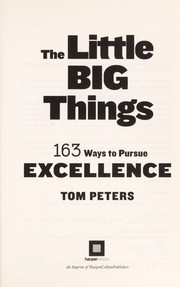


 The Little Big Things
 Re-Imagine!
 The Circle of Innovation: You Can't Shrink You Way to Greatness
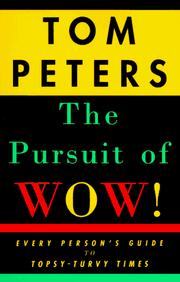
 The Pursuit of Wow! Every Person's Guide to Topsy-Turvy Times