Updates

  1. Person pages list letters, writing, profiles and links as sortable tables with filters, and show each person's companies as links; Fund letters show each letter's description in its own column.
  2. Experts show a checked job title and a short description of each person; 30 more people have photographs.
  3. Every company, fund, university and publication the experts work for has a page listing the people there.
  4. Fund letters show each letter's thesis and filter by it; 225 person pages list the essays, columns and newsletter issues the person wrote.
  5. Person pages list every essay and newsletter issue a person wrote, and their own books as a table in List view.
  6. Recommends shows the five largest kinds of book and the rest under More; browse pictures load sooner.
  7. Podcasts and talks link the original episode, filter by Audio and video or Press, and list each publisher once.
  8. Pages are wider, Recommends has List and Grid, and a filter clicked again turns off.
  9. Book cards sit in a ruled grid with Open Library and Goodreads links and each book's one-line note.
  10. Funds is now Investors; each investor's styles are buttons that filter the table.
  11. Podcasts and talks on a person's page filter by year and publisher and show as a list or a grid of pictures.
  12. Quotes show only people's own words: 472 summaries written by list sites are gone.
  13. Country pages open from Browse again, and every link on the shelf lands on a page.
  14. Subject and person pages show their sections as tabs, and each book appears once on a person's page.
  15. Book cards show the quote, who said it and the source; grids show five cards to a row.
  16. On a phone, a menu holds the sections, search, Updates, Feedback and dark mode.
  17. Feedback takes a screenshot of the page with no browser prompt, opens a screenshot full size when you click it, and clears itself once sent.
  18. Book cards are centred, search names the topic each book sits in, and any text cut short shows whole on hover.
  19. Search groups its results by kind: people, companies, geographies, subjects, topics, books, funds, fund letters and papers.
  20. The Books table lists who recommended each book by name, and the browser tab names the section you are in.
  21. Feedback can take a screenshot of the page, or one you paste or choose, and opens in the corner beside Updates.
  22. Each rail button reopens its section where you left it, and Browse, Table and People show on every book and subject page.
  23. Filters grey out choices that hold nothing instead of hiding them, and Books › People filters by authors or recommenders.
  24. Feedback takes a subject line and up to three screenshots.
  25. Biographies are grouped by the person they are about: 41 new pages, from Abraham Lincoln to Lee Kuan Yew.
  26. Sport splits into 23 sports, and Religion into one topic per faith.
  27. Book lists show as cards: the cover, one recommendation quote and every recommender by name.
  28. Seventeen subjects that had two or three pages under different names now have one page each.
  29. Every page lists its Experts as authors and recommenders, with a link to them on the Experts tab.
  30. Economics, Financial history, Financial panics and Accounting are subjects of their own, with one page per financial crisis.
  31. Book, person and subject pages open inside the app, so the tabs stay in view.
  32. 996 more book covers, and photographs or logos for 227 more people and companies.
  33. Books › Browse shows every subject as cards, and the rail holds Fund letters, Papers, Experts, Books and Funds.
  34. Every topic over 150 books splits into narrower topics, each with a page of its own.

Send feedback

What is it?
Screenshots, up to 3 (optional)
or paste one with Ctrl+V

We use your email only to reply to you.

Wait

Wait

Frank Partnoy
2012
T2 297 pages · about 4h 57m to read Open Librarygoodreads

Summary

Partnoy, a law professor and former derivatives banker, argues that delay is systematically undervalued and that most decisions improve when the decider waits until the last responsible moment. He organises the book by timescale, moving from decisions made in milliseconds to those made over years.

At the fastest end he examines professional athletes returning serves and hitting fastballs, showing that the best performers are not faster at initiating movement but better at delaying commitment until the last possible fraction of a second. He extends this to high-frequency trading, where he argues that speed competition has produced a market structure with costs that exceed its benefits. In the middle range he covers apologies, arguing that immediate apologies often fail while delayed ones with adequate acknowledgement succeed; medical decisions, where waiting produces better diagnoses; and negotiation, where the party who can wait holds the advantage. At the longest range he discusses procrastination, distinguishing the harmful kind from the deliberate deferral of tasks whose requirements are not yet clear.

His general procedure is to estimate the total time available for a decision and then to act at the end of that period rather than the beginning, because information accumulates while the deadline approaches.

The book covers a lot of territory and the connections between the domains are asserted rather than demonstrated. Some of the underlying psychology research has been affected by the replication problems that hit the field after 2011. The high-frequency trading material predates several structural changes in market design, and Michael Lewis's Flash Boys covered similar ground with more reporting two years later.

Key takeaways 7

  1. Expert performance in fast physical tasks comes from delaying commitment, not from reacting more quickly.
  2. The correct procedure is to identify the total time available and then decide at the end of it rather than at the beginning.
  3. Immediate apologies frequently fail because they arrive before the injured party has been heard.
  4. Speed competition in financial markets has produced costs to market participants that exceed the benefits of faster execution.
  5. Delaying a decision allows information to accumulate, and that information is usually worth more than the cost of waiting.
  6. Some procrastination is functional because it defers work on tasks whose requirements have not yet stabilised.
  7. Systems designed to force immediate responses degrade the quality of the decisions they produce.

Who should read it

Decision makers under time pressure who want an argument for deliberately deferring commitment, particularly in negotiation and hiring.

About Frank Partnoy

Law professor at the University of California, Berkeley and former Morgan Stanley derivatives salesman writing on derivatives, fraud and regulation.

F.I.A.S.C.O. describes structured-derivatives selling from inside the desk that did it, naming how the trades were priced and why clients kept buying them. Infectious Greed and The Match King follow the same incentives through the accounting frauds of the 1990s and the 1920s.

University of San Diego, Morgan Stanley, University of California, Berkeley

Who recommended it 1

Tom Petersreported

Similar books 6

Chosen by shared topics, the entries that hold them, and the people who recommended both.

Peter Bevelin · 2013

Bevelin distilling observation and inference habits from Sherlock Holmes

Peter Bevelin · 2016

Dialogue form; Munger's inversion habit worked through systematically.
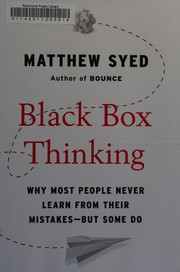
Matthew Syed · 2015

Why aviation learns from every failure while fields like medicine hide theirs.

Recommended by: Richard Branson, Daniel Ek
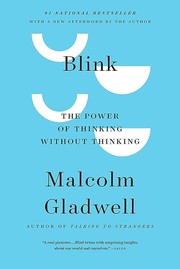
Malcolm Gladwell · 2004

How snap judgments work, when to trust them and when they mislead.

Daniel Kahneman, Amos Tversky · 2000

Papers on how people choose under risk, from prospect theory to framing.

Where it sits in the reference 2

Academics
Investment philosophy

Topics

Decision MakingPsychology and BehaviourCognitive biases, judgement and decisions