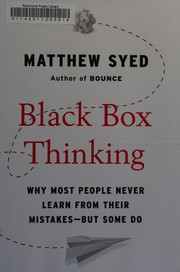
Black Box Thinking
Summary
Syed contrasts two professional cultures. Aviation investigates every accident and near miss through an independent body, publishes the findings, and requires that the resulting changes be adopted across the industry, with data from every flight recorded automatically. Healthcare, by contrast, treats errors as individual failures, conceals them under litigation exposure, and does not systematically collect or share the information that would prevent repetition.
His argument is that the difference in outcomes follows from the difference in how failure is treated, and that the aviation approach is available to any field that chooses it. The supporting material covers specific aviation cases including United 173, which ran out of fuel while the crew addressed a landing gear problem and which produced crew resource management training, and specific medical cases including the death of Elaine Bromiley during a routine procedure, investigated by her husband, an airline pilot.
He extends the argument to criminal justice, where he documents prosecutors refusing to accept DNA exonerations because accepting them requires accepting that they convicted an innocent person, and to business, where he covers randomised testing, marginal gains in cycling under Dave Brailsford, and the difference between organisations that run experiments and those that rely on the judgment of senior people.
His general claim is that a closed loop, in which failure is explained away rather than investigated, is what prevents learning, and that the explanation is usually available and psychologically comfortable. The cognitive dissonance material overlaps heavily with Tavris and Aronson. Syed is a journalist and the cases are selected. The aviation and healthcare comparison is the strongest evidence and is well documented.
Key takeaways 8
- Aviation investigates every accident and near miss through an independent body, publishes the findings, and requires industry-wide adoption of the changes.
- Healthcare treats errors as individual failures, conceals them under litigation exposure, and does not systematically collect the information that would prevent repetition.
- The difference in safety outcomes between the two fields follows from how failure is treated rather than from any difference in the difficulty of the work.
- A closed loop, in which failure is explained away rather than investigated, is what prevents learning, and the explanation is always available.
- Professionals resist acknowledging error because their identity and their institution depend on their judgment being reliable.
- Prosecutors refuse to accept DNA exonerations because accepting them requires accepting that they convicted an innocent person.
- Randomised testing produces information that the judgment of senior people does not, which is why organisations that test outperform those that decide.
- Accumulated small improvements, each individually trivial, produce large aggregate gains where the measurement system can detect them.
Who should read it
Leaders designing how their organisation handles failure, wanting the aviation comparison and the specific mechanisms that make investigation work.
Who recommended it 2 · 1 direct
Similar books 6
Chosen by shared topics, the entries that hold them, and the people who recommended both.
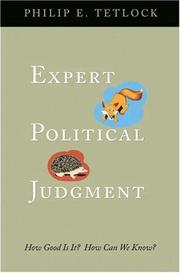
A 20-year test of 28,000 expert forecasts: foxes with many models beat hedgehogs.
“All pundits and commentators should publish their prediction track records, yet don't. What to pay attention to and what to ignore.” — Marc Andreessen
Source: @pmarca, 'Thread: Books I've recently read and recommend'
Recommended by: Marc Andreessen, Michael Mauboussin and 2 others
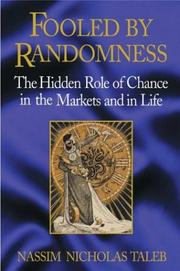
Why people mistake luck for skill, above all in markets.
“Fooled by Randomness is a serious, intellectually sophisticated book, well worth reading carefully. At times, the book is condescending. Nevertheless, there are some great insights.” — Barton Biggs
Source: Biggs on a sophisticated book worth reading carefully
Recommended by: Barton Biggs, Michael Mauboussin and 11 others

Builds out Munger's latticework idea from primary sources.
“…books I've recommended, highlighted to death, or forced on friends.” — Andrew Wilkinson
Source: Andrew Wilkinson's Bookshelf, neverenough.com
Recommended by: Andrew Wilkinson, Nat Eliason and 8 others
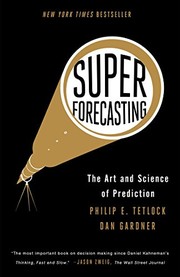
The Good Judgment Project; the practices that measurably improve forecasts.
Recommended by: Patrick Collison and 9 others

Kahneman's synthesis of behavioral economics is the cognitive science underpinning every negotiation tactic. Anchoring, loss aversion, framing effects, and the planning fallacy — understanding why these biases operate, not just that they exist, makes you harder to exploit and more honest about your own irrationality.
“…books I've recommended, highlighted to death, or forced on friends.” — Andrew Wilkinson
Source: Andrew Wilkinson's Bookshelf, neverenough.com
Recommended by: Andrew Wilkinson, Charles de Vaulx and 32 others

How the wish for agreement in close groups led to fiascos like the Bay of Pigs.
“One of my favourite books, Groupthink by Irving Janis, breaks down how small, cohesive groups of very smart people can make very bad decisions.” — Adam Weiss
Source: Weiss naming Groupthink one of his favourite books
Recommended by: Adam Weiss, Barton Biggs
Where it sits in the reference 3
Topics